Russia just flipped the script on its aerial campaign. For years, we've watched the night sky over Ukraine light up with tracers and explosions as Shahed drones hummed overhead. But on Friday, May 1, 2026, the strategy took a dark, daylight turn. Hundreds of drones swarmed Ukrainian cities in the middle of a working Friday, marking one of the largest daytime assaults since the invasion began.
This isn't just about more hardware. It's a calculated psychological and economic pivot. If you're wondering why Moscow would send slow-moving drones into the teeth of Ukrainian air defenses while the sun is up, you have to look at the "terror fatigue" they’re trying to induce.
The May 1 assault by the numbers
Between 8:00 a.m. and 3:30 p.m., the Russian military launched a staggering 409 attack UAVs. This wasn't a concentrated strike on a single frontline outpost; it was a nationwide deluge. Drones were detected in almost every region, from the eastern hubs to the western city of Ternopil.
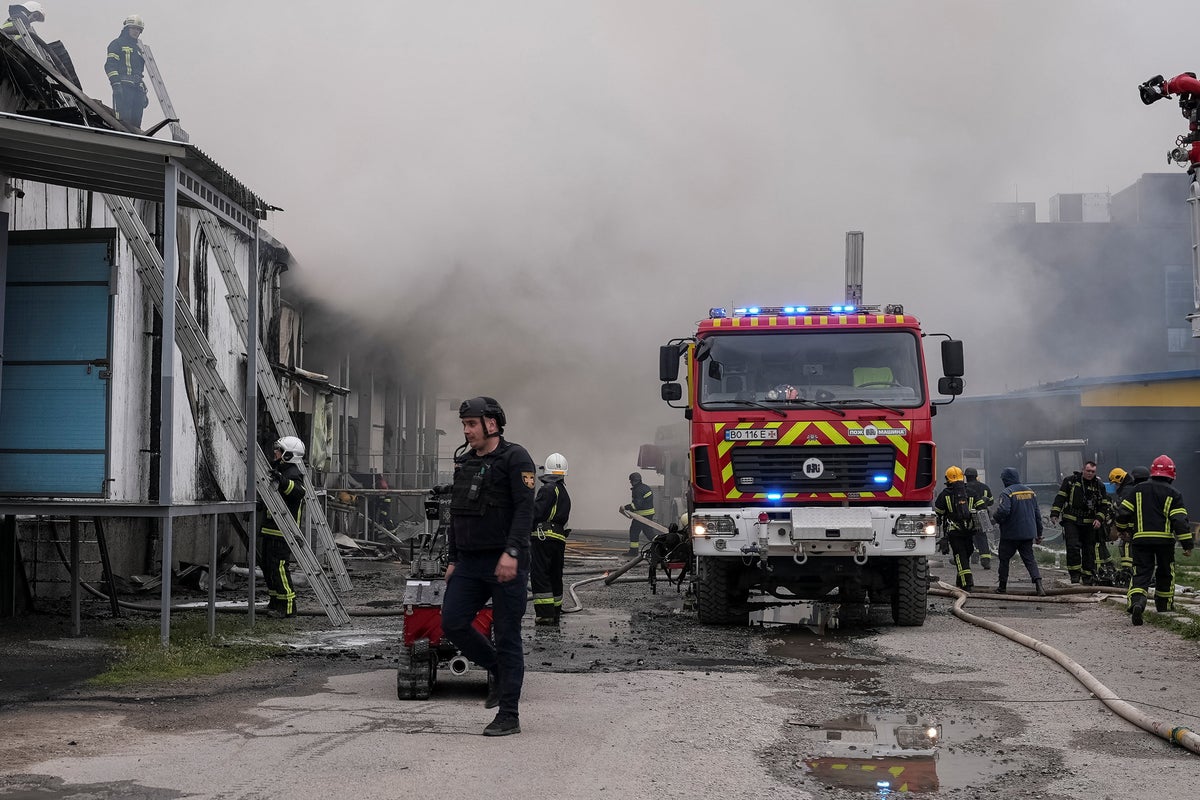
Ukraine’s Air Force reported they intercepted 388 of those 409 drones. That’s a roughly 95% success rate, which sounds like a total win for Kyiv. But focus on the 21 that got through. Hits were recorded at six different locations. In Ternopil, residents were forced into shelters as explosions rocked the city, causing immediate power outages and thick plumes of smoke.
Why daytime strikes are the new normal
Historically, Russia used the cover of night to hide these lawnmower-sounding drones from visual detection. So, why change?
- Maximizing civilian chaos: When strikes happen at 2:00 p.m., people aren't in their beds; they're in offices, schools, and markets. The goal is to paralyze daily life. Mayor Serhiy Nadal of Ternopil had to issue urgent warnings for people to abandon public transport and seek cover immediately.
- Economic strangulation: You can't run a factory or a tech hub when the air raid sirens are wailing for six hours straight during business hours. These attacks are designed to stop the Ukrainian economy from functioning.
- Air defense saturation: By attacking during the day, Russia forces Ukraine to use its most sophisticated sensor fusion and mobile fire groups when visibility is high but the volume of targets is overwhelming.
The tech inside the swarm
We’re not just seeing the standard Shahed-136 anymore. The debris recovered from recent strikes shows a mix of "jet-powered" variants and cheaper, decoy-style drones like the Italmas and Gerbera.
Investigators recently found something even more troubling. Despite years of "crushing" sanctions, the drones downed in May contained Western-made components manufactured as recently as 2025. We're talking about activation blocks and microchips from Germany, Japan, Switzerland, and the U.S.
How Ukraine is fighting back without breaking the bank
You can't keep firing million-dollar Patriot missiles at $20,000 drones. It’s bad math. To survive this, Ukraine has pivoted to what they call "interceptor drones."
These are basically high-speed "hunter" UAVs—like the JEDI Shahed Hunter—that can fly at over 350 km/h. They ram into the Russian drones or explode nearby to take them out. It’s 25 times cheaper than using a traditional missile. In April 2026 alone, Ukraine downed a record 33,000 drones using a mix of these interceptors and AI-assisted machine guns mounted on pickup trucks.
What this means for the coming months
The "Donbass Dome" and other electronic warfare shields are being tested to their limits. While the interception rates are hovering near 90%, the sheer volume of 6,500+ drones per month means the "leakers"—the ones that get through—are still hitting critical infrastructure.
If you're in Ukraine, the "safety" of daylight has vanished. Moscow is betting that by making the day as dangerous as the night, they can break the will of the population where the military front has stalled.
Don't expect the numbers to drop. Russia has stabilized its production lines and found gaps in the global supply chain. For Ukraine, the next step isn't just better air defense; it's about hitting the launch sites and factories inside Russia before the swarms ever take flight. Keep your eyes on the "interceptor" production numbers—that's the real metric that will determine if Ukraine can afford to keep its lights on this summer.