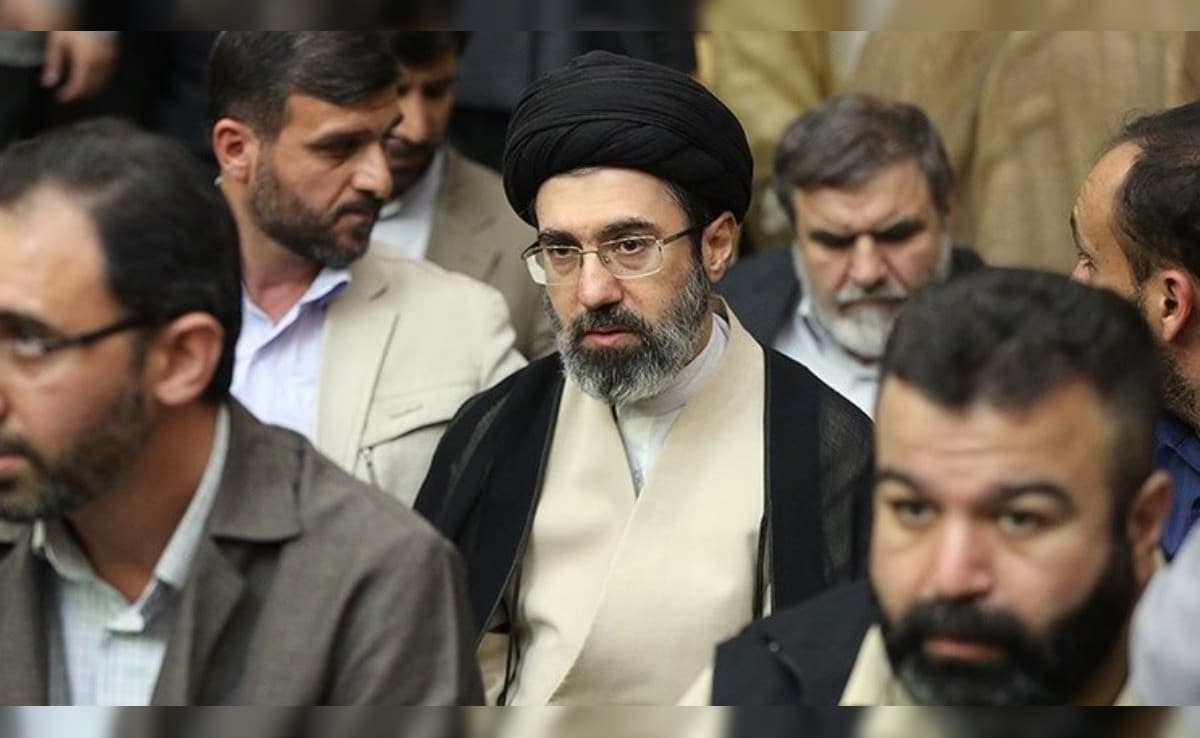
Iran is staring at its most significant power shift in three decades and most people are looking in the wrong direction. While international headlines focus on drone strikes and nuclear enrichment, the real earthquake is happening inside the walls of the Office of the Supreme Leader. Mojtaba Khamenei, the second son of Ali Khamenei, is no longer just a shadow figure. He’s the frontrunner to inherit the most powerful position in the country.
This isn't a simple case of "like father, like son." The potential elevation of Mojtaba represents a fundamental shift in how the Islamic Republic functions. It moves the needle from a revolutionary theocracy toward something resembling a dynastic security state. If you want to understand why the streets of Tehran are quiet but tense, you have to understand the man who might soon hold the keys to the entire apparatus.
The Quiet Power of Mojtaba Khamenei
For years, Mojtaba was a ghost. You wouldn't see him giving fiery Friday sermons or touring factories for the cameras. He stayed in the background. But in a system like Iran's, visibility is often inversely proportional to actual power. While public officials took the heat for economic failures, Mojtaba was busy building a fortress within the state.
He's widely believed to be the primary gatekeeper to his father. In the Iranian system, the "Beit-e Rahbari" (the House of the Leader) is the true center of gravity. Nothing reaches the Supreme Leader without passing through a small circle of advisors. Mojtaba sits at the heart of that circle. He doesn't just deliver messages. He filters information. He manages access. He shapes the worldview of the man who makes the final call on every major policy.
His influence over the Basij and the Islamic Revolutionary Guard Corps (IRGC) is where things get serious. During the 2009 Green Movement protests, reports surfaced that Mojtaba played a direct role in orchestrating the crackdown. He isn't a reformer. He’s a hardliner who views dissent as a terminal threat to the system. This history with the security forces gives him a base of support that other candidates simply don't have.
Why the Succession Crisis is Different This Time
The death of President Ebrahim Raisi in a helicopter crash in 2024 changed everything. Raisi was the hand-picked successor. He was the "safe" choice—a man who had proven his loyalty through decades of judicial service and who wouldn't rock the boat. With him gone, the path for Mojtaba cleared significantly.
But there's a massive hurdle: the ideology of the revolution itself.
The 1979 Revolution was built on the rejection of hereditary rule. The Shah was ousted specifically to end a monarchy. For the Assembly of Experts to appoint the current Leader’s son feels, to many Iranians, like a betrayal of the revolution's founding myths. It’s a PR nightmare for a regime that already struggles with legitimacy.
Despite that, the "Deep State" in Iran—the intelligence services and the IRGC—prioritizes stability over optics. They want someone who will protect their economic interests and maintain the status quo. Mojtaba is a known quantity. He’s one of them. In their eyes, a messy competition between rival clerics is far more dangerous than the optics of a father-to-son handoff.
Clerical Credentials and the Legitimacy Gap
To be the Supreme Leader, you technically need to be a high-ranking cleric. This has always been Mojtaba’s weak point. He spent years studying in Qom, but he lacks the "Grand Ayatollah" status that traditionally commands respect in the seminaries.
To fix this, there’s been a coordinated effort to boost his religious standing. A few years ago, he began teaching advanced jurisprudence classes. This was a calculated move. It was a signal to the clerical establishment that he’s putting in the work to justify a promotion.
Does the average person in Tehran care about his clerical rank? Not really. They care about inflation, the morality police, and the lack of basic freedoms. But the Assembly of Experts—the 88-member body responsible for choosing the leader—needs that religious cover to make the appointment look legitimate. It’s a performance for the sake of the system's internal rules.
The IRGC Connection
You can't talk about Mojtaba Khamenei without talking about the Revolutionary Guard. The IRGC isn't just a military branch. It’s a multi-billion dollar conglomerate that controls ports, construction companies, and telecommunications. They are the stakeholders of the status quo.
Mojtaba has spent two decades cultivating these guys. He understands that the Supreme Leader only stays in power as long as the men with the guns stay loyal. If he takes over, expect the IRGC’s grip on the economy to tighten even further. He’s the candidate of the "security-military-intelligence" complex.
This creates a feedback loop. The IRGC supports Mojtaba because he guarantees their power. Mojtaba stays in power because the IRGC suppresses any opposition. It’s a marriage of convenience that leaves very little room for the "Republic" part of the Islamic Republic.
Key Factors in the Succession Race
- Age and Health: Ali Khamenei is in his mid-80s. The clock is ticking, which makes the lack of a clear, public successor a recipe for chaos.
- The Assembly of Experts: This body is currently packed with loyalists. They aren't there to debate; they’re there to ratify a decision that has likely already been made in private.
- Public Sentiment: The "Woman, Life, Freedom" protests showed a deep-seated rage against the establishment. A Mojtaba succession could be the spark for a new wave of unrest.
- Foreign Policy: A Mojtaba-led Iran would likely double down on the "Look to the East" policy, strengthening ties with Russia and China while remaining hostile to the West.
The Risks of a Dynastic Shift
If the regime goes through with this, they're taking a massive gamble. They are essentially admitting that the ideological fervor of 1979 is dead and has been replaced by a standard authoritarian survival instinct.
Internal rivalries won't just vanish. There are other powerful clerics and politicians who feel slighted. While they might stay quiet while Ali Khamenei is alive, a Mojtaba-led government could face internal sabotage from the start. Iran’s history is full of examples where the "chosen one" was quickly sidelined once the old guard passed away.
The most likely scenario isn't a smooth transition. It's a period of intense purging as the new leader tries to consolidate power. We’ve seen this in other authoritarian states. The first few years are the most dangerous.
What to Watch For Next
The signal that the deal is done won't come in a press release. Watch for these three things:
- Increased Media Presence: If Mojtaba starts appearing in official photos alongside foreign dignitaries or senior military commanders, the transition is in its final phase.
- Clerical Endorsements: Look for senior Ayatollahs in Qom suddenly praising his "brilliance" and "scholarship." That’s the religious establishment falling in line.
- New Security Measures: Any sudden reshuffling of the top brass in the IRGC or the intelligence services usually means the incoming leader is installing his "own people" to prevent a coup during the transition.
The era of the "Old Revolutionaries" is ending. Whether Iran becomes more stable or more volatile under Mojtaba Khamenei depends on whether he can manage the internal rot of an economy under sanctions while keeping a lid on a population that has largely moved on from the regime's ideology.
If you're tracking Middle Eastern stability, keep your eyes on the announcements coming out of the Assembly of Experts over the next 12 months. The decision they make will define the region for the next quarter-century. Start by monitoring the official statements from the Iranian state news agency (IRNA) regarding "leadership readiness" and pay close attention to any changes in the frequency of Mojtaba's public religious lectures. These are the breadcrumbs of a looming coronation.