The business press is currently drowning in a sea of sentimental drivel. They are painting a picture of a legendary founder riding off into the sunset, leaving behind a "legacy of innovation" and a "stable leadership team." It’s a comfortable narrative. It’s also a total fabrication.
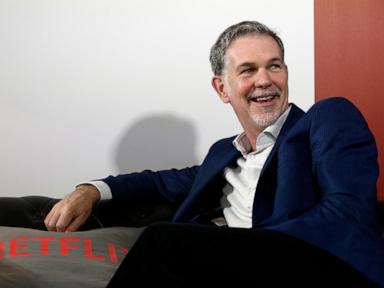
Reed Hastings leaving the Netflix board isn't a victory lap. It’s a strategic exit from a burning building.
The mainstream take is that Hastings is simply handing over the keys because the hard work of the "pivot" to advertising and password-sharing crackdowns is done. They say the stock is up, the subscriber count is growing, and the transition to Greg Peters and Ted Sarandos has been smooth.
They are wrong. They are looking at the speedometer while the engine is melting. Hastings is the ultimate rationalist; he knows exactly when a model has reached its mathematical limit. By stepping away now, he preserves his reputation as the man who disrupted Hollywood, rather than staying to be the man who oversaw the slow, painful transformation of Netflix into a legacy cable company with better UI.
The Myth of the Infinite Growth Engine
The "People Also Ask" section of the internet is currently obsessed with whether Netflix has "won" the streaming wars. The premise of the question is flawed. Winning implies there is a sustainable prize at the end.
Netflix didn't win the streaming wars; they merely survived the first wave of a war of attrition that has destroyed the economics of the entire industry. Hastings pioneered a model based on cheap debt and the suspension of disbelief regarding Content Acquisition Costs. For a decade, Netflix operated on a simple, brilliant, and ultimately unsustainable logic: Spend more on content than you make in profit to capture the entire market.
Now, the bill is due.
The move to an ad-supported tier isn't a "new growth lever." It’s a confession. It is an admission that the pure-play SVOD (Subscription Video on Demand) model is dead. By introducing ads, Netflix has effectively admitted that they cannot survive on subscription fees alone in a saturated market. They are no longer a tech company; they are a broadcaster.
Hastings is a software guy. He built an algorithm. He didn't sign up to run a 1990s-era media conglomerate where you have to beg Procter & Gamble for a slice of their quarterly spend. He's leaving because the "pure tech" dream is over.
The Creative Debt Crisis
Industry insiders love to talk about Netflix’s "data-driven" approach to content. Having spent years analyzing content budgets for major players, I can tell you that "data-driven" is often just code for "creatively bankrupt."
Netflix has spent the last five years building a mountain of junk. They optimized for quantity to reduce churn, creating a library of "Background Noise" TV—shows designed to be watched while scrolling on a phone. This worked when interest rates were at zero and the goal was total subscriber dominance.
But content ages like milk, not wine. Unlike Disney, which has a century of IP that can be monetized through parks, merchandise, and endless reboots, Netflix has a catalog of ephemeral hits that disappear from the cultural consciousness forty-eight hours after they drop.
- The Problem: Netflix owns very few "perpetual assets."
- The Reality: They are on a treadmill where they must spend $17 billion a year just to keep the subscriber count from dropping.
Hastings sees the cliff. He knows that the cost of maintaining that treadmill is rising while the marginal utility of each new show is falling. He's letting Peters and Sarandos deal with the creative debt.
The Trap of the Password Crackdown
The recent surge in Netflix’s stock is largely attributed to the "successful" crackdown on password sharing. Wall Street is cheering. They should be terrified.
A password crackdown is a one-time event. You can only "monetize" those extra viewers once. It is a sugar high—a short-term spike in revenue that masks a long-term stagnation in actual user growth. When you force your brother-in-law to get his own account, you haven't created a new fan; you've extracted a toll from an existing one.
This is "harvesting" the user base, not growing it. In any other industry, when a company starts hunting down its customers for extra fees, it’s a sign of a maturing, stagnant business.
The Board Seat as a Liability
Why leave the board entirely? Most founders stay on as a "Chairman Emeritus" or a powerful director for decades.
Hastings is leaving because he understands the coming regulatory and competitive storm. The next phase of the streaming industry involves consolidation or acquisition. Netflix, once the hunter, is now the prey. In a world where Big Tech (Apple, Amazon, Google) uses streaming as a loss leader to sell hardware or Prime memberships, Netflix is a specialized player with no ecosystem to hide in.
If Netflix has to sell in the next three years—and given the math, they might have to—Hastings doesn't want to be the one at the table justifying why the disruptor got disrupted. He wants to be on his ranch, or focusing on his education philanthropy, while the suits figure out how to merge with a legacy studio just to keep the lights on.
The Culture of Radical Candor is Now a Weapon
Netflix’s famous "Culture Memo" preached radical candor and "The Keeper Test." It was a brutal, effective way to build a high-performance team. But that culture only works when the stock is going up and the options are worth millions.
When a company enters its "maintenance phase," radical candor turns into office politics. The high-talent density Hastings obsessed over is now becoming a cost centers. Expect to see the "Keeper Test" used as a tool for mass layoffs rather than excellence. Hastings built a machine designed for war. He has no interest in presiding over a machine designed for austerity.
Stop Asking if Netflix is "Fine"
The question isn't whether Netflix will exist in five years. It will. The question is whether it will be a company worth caring about.
By stepping down now, Reed Hastings is executing the most brilliant trade of his career: He is selling his association with the brand at the absolute peak of its perceived stability. He is leaving the "lazy consensus" to celebrate his departure while the structural rot in the streaming business model begins to show through the wallpaper.
The pivot to ads is a retreat. The password crackdown is a desperate tax. The board exit is an escape.
The era of the "Tech Disrupter" in Hollywood is officially over. We are back to the era of the "Media Mogul," and Reed Hastings is too smart to want that job.
The house of cards is still standing, but the architect just walked out the door and took the blueprints with him. Don't be the last one left in the foyer.
Burn the "Legacy" articles. Read the balance sheet. Hastings did. That's why he's gone.