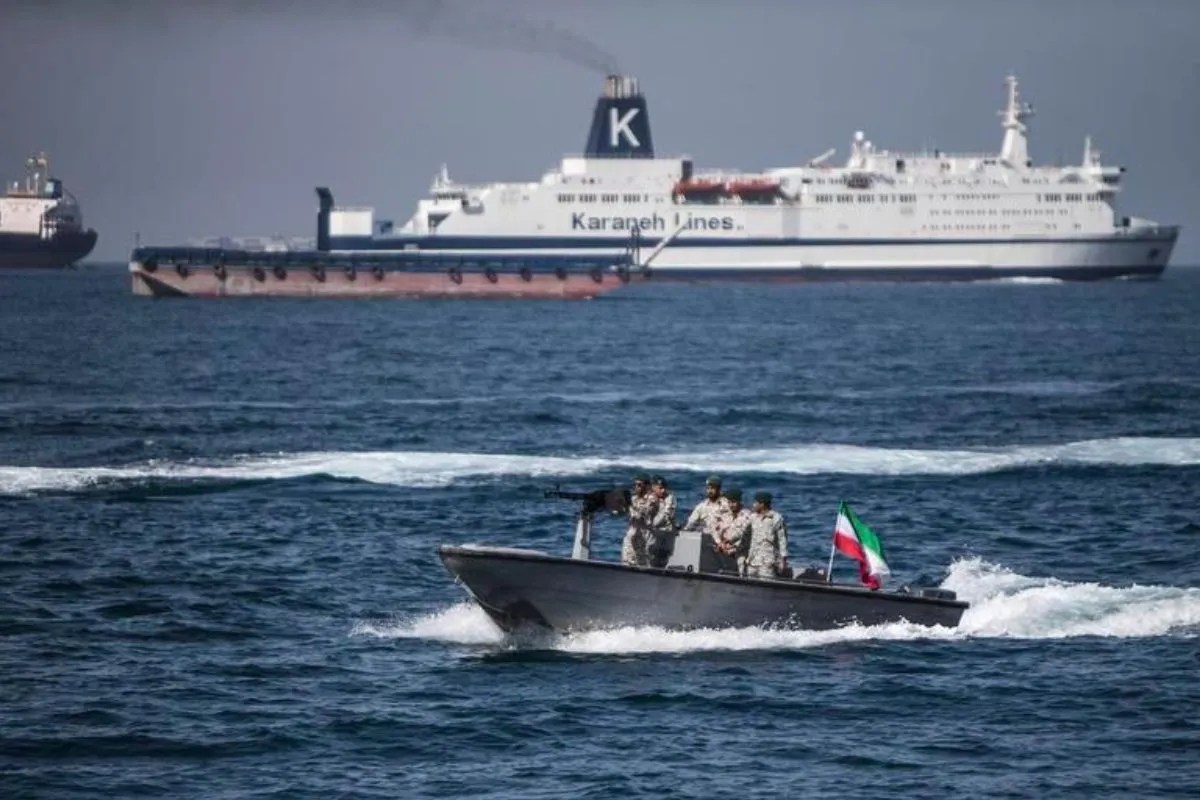
The maritime corridor through the Bab el-Mandeb strait is no longer just a shipping lane. It has become a high-stakes bargaining chip in a shadow war that is now spilling into the light. Recent Iranian warnings to the United States regarding the blockade of Yemeni ports represent a dangerous escalation in rhetoric, framing the ongoing naval restrictions as a direct violation of ceasefire agreements. Tehran is signaling that if the economic pressure on its regional allies does not lift, the flow of global trade through the Red Sea will remain under a state of permanent threat.
This isn't a simple border dispute. It is a calculated move to force Washington’s hand. By positioning the port restrictions as an act of war, Iran is providing a "legal" and moral framework for its proxies to continue their campaign against commercial vessels. The strategy is clear. They want to make the cost of supporting Israel and maintaining the current Middle Eastern status quo too expensive for the West to bear.
The Logistics of a Modern Blockade
A blockade in the 21st century doesn't always look like a line of battleships on the horizon. It looks like insurance premiums rising until a route becomes unprofitable. It looks like container ships taking the long way around the Cape of Good Hope, adding twelve days and millions of dollars in fuel costs to every journey. When Iran accuses the U.S. of violating a ceasefire via port blockades, they are referring to the strict controls on the Hodeidah port in Yemen.
These controls were designed to prevent the smuggling of sophisticated missile components and drone technology. However, from the perspective of the Houthi movement and their backers in Tehran, these measures are a form of economic strangulation that negates any progress made during diplomatic talks. They argue that a ceasefire that doesn't allow for the free flow of goods—even those that the U.S. classifies as dual-use—is no ceasefire at all.
This creates a paradox for maritime security. If the U.S. relaxes the inspections to save the ceasefire, they risk a massive influx of weaponry that will eventually be used against their own assets. If they maintain the inspections, they give the Houthis a pretext to launch more "retaliatory" strikes on global shipping.
Tehran’s Tactical Calculations
The Iranian leadership has watched the global reaction to the Red Sea disruptions with intense interest. They have seen how fragile the "just-in-time" supply chain truly is. By threatening to shut down the Red Sea entirely, they aren't just talking to the White House. They are talking to the boardrooms of every major logistics company in Europe and Asia.
The threat of a total shutdown is likely an exaggeration of capability, but it serves a psychological purpose. To truly "close" the Red Sea, Iran or its proxies would need to maintain a level of kinetic activity that would almost certainly trigger a full-scale conventional war. Currently, they prefer the "gray zone"—an area of conflict where they can cause significant damage while maintaining just enough deniability to avoid a direct strike on Iranian soil.
The Missile Math
The cost-to-kill ratio is currently skewed heavily in favor of the insurgents. An Iranian-designed drone costing roughly $20,000 can be intercepted by a sophisticated Western air defense missile that costs over $2 million. This math is unsustainable for the U.S. Navy in a prolonged engagement.
- Asymmetric Warfare: Using low-cost tech to force high-cost responses.
- Economic Attrition: Draining the military budgets of adversaries through constant, low-level harassment.
- Diplomatic Leverage: Using the threat of global inflation to force concessions at the negotiating table.
The Failed Promise of Maritime Coalitions
Operation Prosperity Guardian was launched with the intent of providing a "highway patrol" for the Red Sea. While it has successfully intercepted dozens of threats, it has failed to restore confidence in the shipping industry. The biggest players in the maritime world, such as Maersk and Hapag-Lloyd, still largely avoid the route for their primary fleets.
The reason is simple. No CEO wants to explain to shareholders why a billion-dollar vessel was lost because of a geopolitical gamble. The Iranian ultimatum targets this specific vulnerability. By framing the U.S. naval presence as the "violator" of peace, they are attempting to peel away international support for the coalition. They want the world to see the U.S. as the agitator and the Houthis as the defenders of Yemeni sovereignty.
The Energy Factor
While much of the focus is on consumer goods, the real danger lies in the energy markets. The Red Sea is a vital artery for oil and liquified natural gas (LNG) traveling from the Gulf to Europe. If the "blockade" rhetoric escalates into actual kinetic strikes on tankers, the resulting spike in oil prices could trigger a global recession.
Tehran knows that a global economic downturn is the one thing that could force the international community to pressure the U.S. into making major concessions. This isn't just about Yemen or the Levant. It is about restructuring the power dynamics of the entire region. They are betting that the West’s appetite for economic stability is greater than its commitment to maintaining maritime blockades.
Intelligence Gaps and Miscalculations
The U.S. intelligence community has often struggled to predict the exact threshold for Iranian escalation. For years, the assumption was that Tehran would avoid any action that directly threatened global oil flows for fear of a unified international response. That assumption has been proven wrong.
The current Iranian administration appears more willing to take risks than its predecessors. They have seen that the international community is fragmented. China and Russia have shown little interest in helping the U.S. secure the Red Sea, largely because the current chaos serves to distract American resources from other theaters like Ukraine or the South China Sea.
The Myth of the Limited Conflict
There is a dangerous belief in some diplomatic circles that this situation can be "managed." The idea is that as long as the U.S. performs enough strikes to degrade Houthi capabilities without hitting Iran directly, a balance can be maintained. This is a fallacy.
Every time a U.S. missile hits a launch site in Yemen, it reinforces the Iranian narrative of Western aggression. This narrative is then used to recruit more fighters and justify further disruptions. The "ultimatum" issued regarding the port blockade shows that the cycle is not de-escalating; it is evolving into a more formal state of hostility.
The Shipping Industry’s New Reality
For the shipping industry, the Red Sea is now a permanent risk zone. Even if a formal ceasefire is signed tomorrow, the precedent has been set. Non-state actors now know they can bring global trade to its knees with a few thousand dollars worth of technology and some well-placed rhetoric.
Companies are already looking at "friend-shoring" and alternative routes that bypass the Middle East entirely. This shift will take years and billions in infrastructure investment. In the meantime, the Red Sea remains a volatile theater where a single miscalculation by a drone operator or a naval commander could spark a fire that no diplomat can put out.
The Iranian ultimatum isn't a plea for peace. It is a declaration of the new rules of engagement. They are stating that the price of their "cooperation" is the total removal of Western influence over the transit of goods in their backyard. The U.S. and its allies now have to decide if they are willing to pay that price or if they are prepared for a long, expensive, and potentially bloody campaign to keep the sea lanes open.
The era of uncontested maritime dominance is over. The "chokehold" is real, and it is tightening. Every ship that diverts around Africa is a silent admission that the current strategy is failing to provide the one thing the global economy needs most: certainty. Without a fundamental shift in how the U.S. addresses the source of these threats, the Red Sea will continue to be a graveyard for the rules-based international order.
The conflict has moved beyond the exchange of fire. It is now a war of nerves where the primary targets are the ledgers of global corporations and the political will of Western capitals. Tehran has made its move. The response will determine the shape of global trade for the next decade.
The maritime world is waiting for a solution that doesn't involve a choice between economic ruin and perpetual war. As of now, no such solution is on the table. The rhetoric from Tehran ensures that the tension will remain at a boiling point, keeping the world’s most critical waterway in a state of constant, precarious flux.