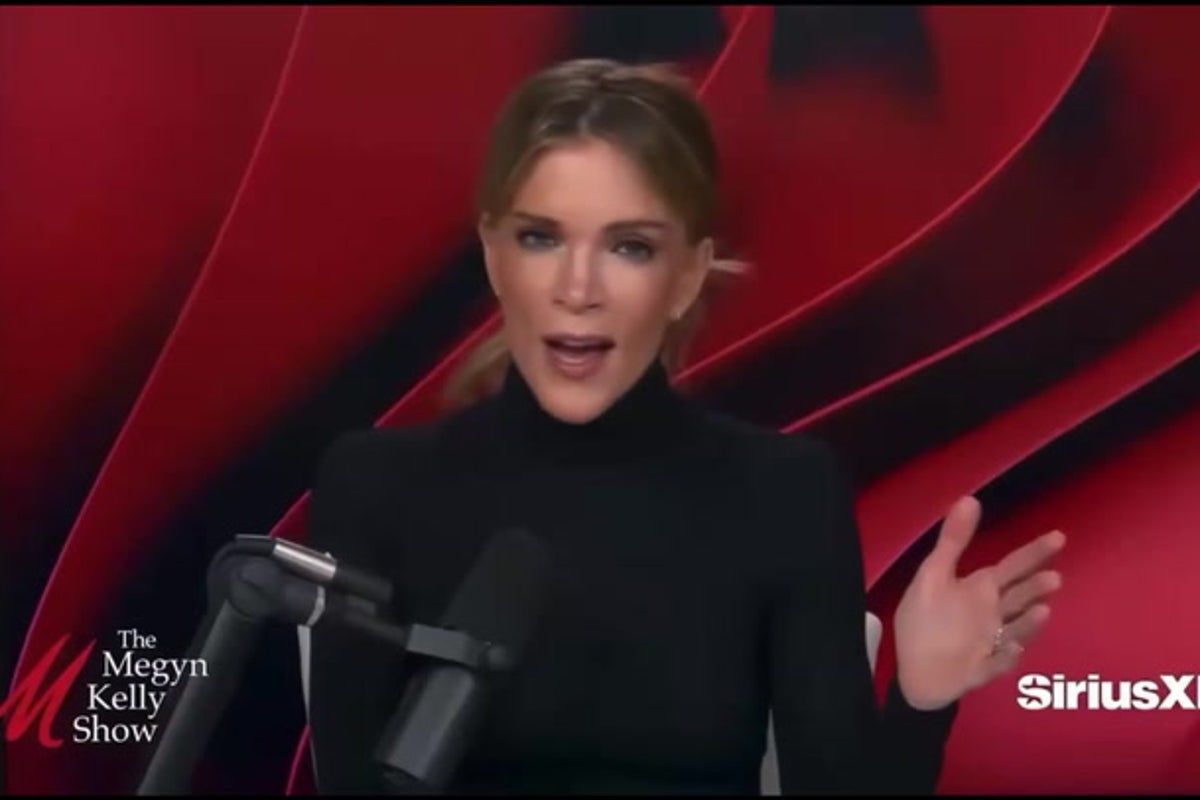
The air in a broadcast studio is uniquely thin. It carries a manufactured stillness, a vacuum-sealed quiet that exists only because, in a matter of seconds, it will be filled with words that reach millions. Megyn Kelly knows this silence. She has lived her life in the sharp transition between the hush of the "on-air" light and the roar of national discourse. But recently, the veteran journalist found herself staring at a different kind of void—a rhetorical one where the gravity of war meets the casual volatility of a social media post.
The subject was Iran. The speaker was Donald Trump. The reaction was visceral.
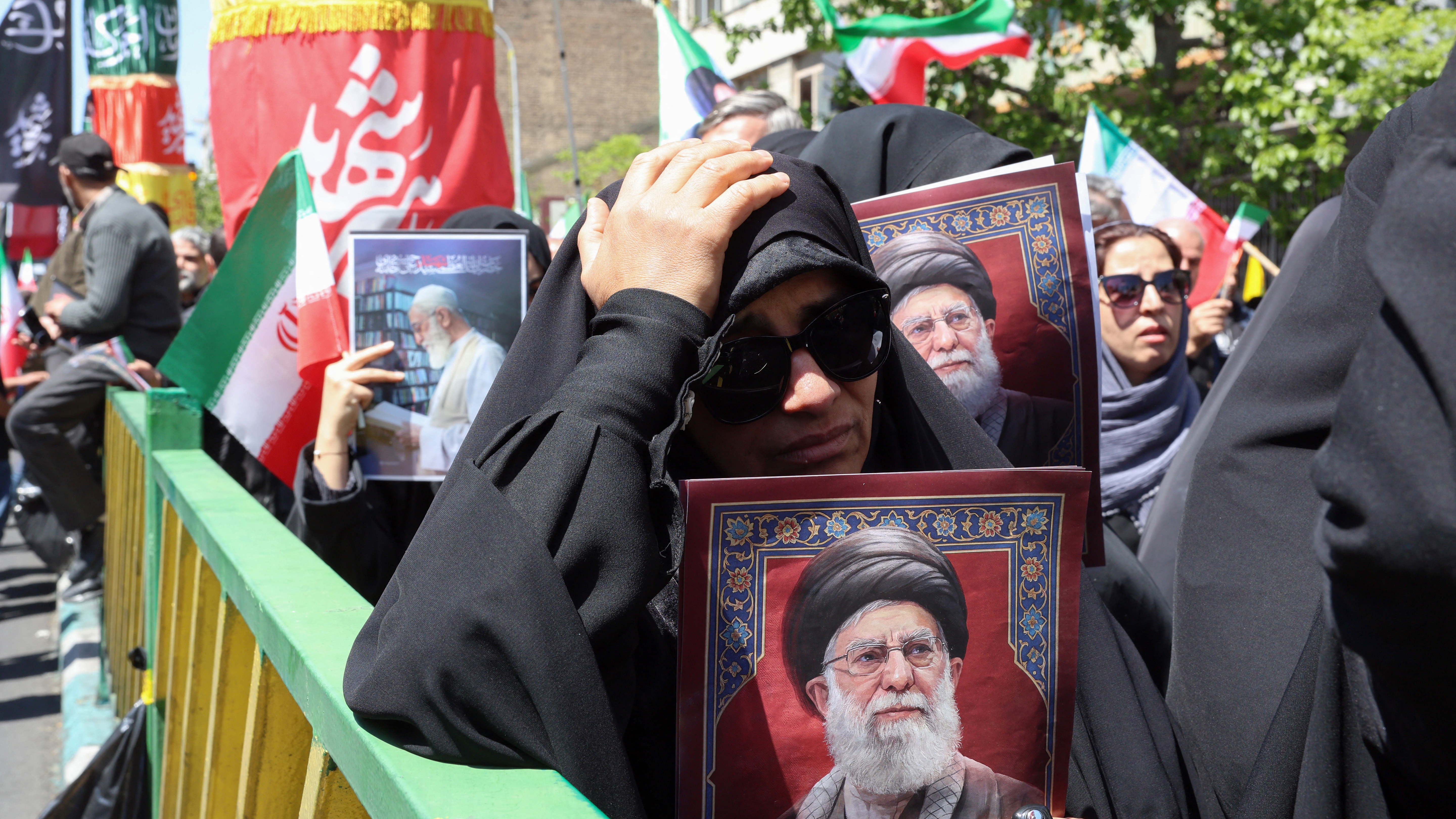
Politics often feels like a theater of the absurd, a series of choreographed jabs and rehearsed outrage. Yet, there are moments when the stakes shift from the abstract to the physical. When a former commander-in-chief suggests that if a foreign adversary "assassinates" a political figure, the response should be to "wipe that country off the face of the earth," the air doesn't just feel thin. It feels combustible.
The Weight of the Invisible Crown
Power is not just about the ability to sign executive orders or move carrier strike groups across the map. It is about the weight of words. To the average citizen, a threat is a burst of frustration. To a leader, or a former leader seeking to reclaim the mantle, words are precursors to action.
Kelly didn't mince words on her program. She called the rhetoric "disgusting." This wasn't a critique of policy or a disagreement over diplomatic strategy. It was a recoil from the normalization of mass destruction as a talking point.
Think of a small town where two neighbors have been feuding for decades. There is tension, occasional shouting, perhaps a legal battle over a fence line. Then, one neighbor stands on his porch and announces to the neighborhood that if the other so much as scratches his car, he will burn the entire block to the ground. The neighbors don't see a "tough guy." They see a man who has lost his grip on the proportional reality of human life.
The international stage is that neighborhood, only the houses are made of nuclear-capable nations and the "block" is the global economy.
When Rhetoric Outruns Reality
The core of the controversy stems from a Truth Social post where Trump reacted to reports of Iranian plots against his life. The threat from Tehran is real. Intelligence briefings have confirmed it. The desire for a strong defense is universal. But there is a canyon-sized gap between "we will hunt down anyone who harms an American official" and "we will eradicate a nation of eighty-five million people."
Kelly’s critique centers on this loss of proportion. She argued that this kind of language treats the lives of millions of civilians—mothers walking children to school in Isfahan, elderly men playing backgammon in Tehran parks, students dreaming of a future beyond their borders—as disposable collateral for a political statement.
It is easy to be tough behind a screen. It is harder to account for the ripples.
When a leader speaks this way, they aren't just talking to their base. They are talking to the hardliners in the Iranian Revolutionary Guard who use those exact words to justify their own extremism. They are talking to allies in Europe and the Middle East who begin to wonder if the American security umbrella is held by a steady hand or a trembling one.
The Human Cost of Hyperbole
Hypothetically, consider a young intelligence officer tasked with monitoring regional escalations. Their job is to distinguish between "noise" and "signal." For years, the signal has been clear: Iran is a bad actor, a sponsor of terror, and a destabilizing force. But the noise has changed. Suddenly, the rhetoric from the West matches the apocalyptic tone of the regime they are trying to contain.
When the language of the "Great Satan" meets the language of "Total Eradication," the space for diplomacy, for surgical strikes, or for strategic pressure vanishes. Everything becomes a binary choice between total submission or total destruction.
This is the "disgusting" element Kelly tapped into. It is the cheapening of the ultimate price.
History is littered with the bones of those who died because a leader felt the need to sound bigger than the room. We remember the grand speeches of the 20th century not for their bloodlust, but for their resolve. Churchill didn’t promise to wipe Germany off the map; he promised to defend an island. Kennedy didn’t threaten to glass the Soviet Union; he spoke of the "uncertain balance of terror" that stayed the hand of God.
The Mirror of Modern Discourse
The reaction to Kelly's stance was predictable. In our current era, nuanced criticism is often viewed as a betrayal. If you aren't for the total destruction of an enemy, are you for the enemy?
This binary trap is where the truth goes to die. Kelly, who has been both a target of Trump’s ire and a defender of many of his policies, found herself in the crosshairs of her own audience. But her point remains grounded in a fundamental human truth: you cannot claim to value life while casually threatening its industrial-scale extinction.
The stakes are invisible until they aren't. They are invisible in the quiet offices where treaties are drafted. They are invisible in the bunkers where soldiers wait for orders. They stay invisible right up until the moment a word becomes a missile.
We have become so accustomed to the "shock jock" style of political communication that we have forgotten what it sounds like when a person in power speaks with the gravity of their position. We have traded the scalpel for the sledgehammer and then wondered why the patient is bleeding out.
The real problem lies in the erosion of our collective imagination. We can no longer picture the reality of the words we use. "Wipe them out" is a phrase used in video games and action movies. In the real world, it is a smell. It is the smell of burning concrete, the silence of a dead city, and the generational trauma of those left to pick through the ash.
Megyn Kelly’s "blast" wasn't just a news cycle highlight. It was a plea for a return to a world where the words we choose are as heavy as the consequences they carry.
She stood in that thin studio air and reminded us that the "on-air" light is always on, and the world is always listening. The tragedy isn't that a politician said something provocative. The tragedy is that we have reached a point where calling for the survival of eighty-five million people over the ego of one is considered a controversial take.
The red line isn't just a mark on a map in the Middle East. It is the line between a leader who protects and a leader who performs. Once that line is erased by the steady drip of hyperbole, there is no easy way to draw it back. We are left standing in the dust, wondering when the noise finally became the signal.