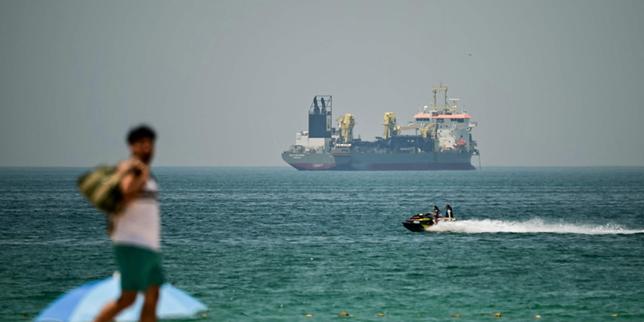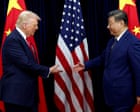
Donald Trump arrives in Beijing today for a summit that was never supposed to happen under these conditions. While the official talking points focus on the expiration of the Busan trade truce and the "big, fat hug" Trump promised on social media, the reality in the West Wing is one of quiet desperation. The U.S. is currently locked in a two-month war with Iran alongside Israel, and the Strait of Hormuz—the world’s most vital oil artery—is effectively a parking lot. Trump isn't just going to China to sell soybeans; he is going because Xi Jinping holds the only key to the Iranian exit door that Washington can no longer find.
The Strait of Hormuz Deadlock
The war with Iran has shifted from a series of surgical strikes to a grinding regional crisis. Beijing is the primary customer for Iranian crude, and despite U.S. sanctions, the flow of "dark fleet" oil has kept Tehran’s economy from total collapse. Trump’s strategy of maximum pressure has hit a wall where Chinese interests begin.
For Xi, the calculation is cold. Half of China’s crude oil passes through the Strait of Hormuz. While China has stockpiled enough energy to weather a short-term spike, the looming threat of a global recession caused by a prolonged Middle East conflict is the only thing that truly keeps the Politburo awake at night. Exports account for a fifth of China’s GDP. If the American consumer stops spending because gas prices are at historic highs, the Chinese manufacturing engine stalls.
Xi isn't acting out of a desire for global peace. He is acting to protect the Chinese Communist Party's domestic stability.
The High Cost of the Trade Truce
The "Busan truce" that paused the trade war is set to expire in November. Before the Iran conflict erupted, the White House was prepared to walk into Beijing with a list of aggressive demands. Now, the leverage has flipped. Trump needs Xi to lean on Tehran; Xi needs Trump to drop the 145% tariff threats that were nearly enacted last year.
The Missing Pieces of the Negotiation
- Fentanyl Precursors: Washington wants a total crackdown on the chemical labs in Wuhan and Guangdong.
- Rare Earth Access: China has teased restrictions on the minerals required for U.S. defense systems and EV batteries.
- AI Guardrails: There is a growing, silent panic in the Pentagon about Chinese breakthroughs in autonomous drone swarms.
Trump has publicly praised Xi as a "tremendous guy," a classic tactic used to soften the ground for a deal. But behind the pageantry, the U.S. delegation, which includes tech titans like Elon Musk and Apple’s Tim Cook, is there to ensure that the "de-risking" of the American supply chain doesn't turn into a full-scale economic heart attack during an election cycle.
The Taiwan Shadow
While Iran is the immediate fire, Taiwan remains the slow-burning fuse. Xi has observed the U.S. military’s stretch across two theaters—Ukraine and now Iran. The Chinese leader knows that American munitions and diplomatic focus are finite. In February, Xi pointedly raised the issue of U.S. arms sales to Taipei. During this summit, he is expected to demand a "clearer understanding" of the U.S. position in exchange for any help with Iran.
It is a high-stakes trade. If Trump agrees to even a minor pivot on Taiwan to secure a victory in the Middle East, he risks a bipartisan revolt in Congress. If he refuses, Xi may simply let the Strait of Hormuz remain closed, watching as the American economy takes the brunt of the damage.
The Pageantry of Power
Expect the red carpet to be longer than usual. Xi Jinping understands Trump’s affinity for high-level recognition and the optics of a "historic" deal. The Chinese government has mastered the art of giving Trump the "win" on paper—increased soybean purchases or a symbolic energy agreement—while keeping the strategic advantages for themselves.
The delegation of CEOs traveling with the President is a tell. They are not there for the photo ops. They are there because they are terrified that the "temporary" trade barriers are becoming permanent features of the global economy. Larry Fink and David Solomon are looking for stability that the current geopolitical climate cannot provide.
The Fentanyl and Tech Trade-Off
A overlooked factor in these talks is the quiet negotiation over artificial intelligence. The U.S. is pushing for a "hotline" to prevent AI-driven military accidents. China, however, views its AI progress as its primary tool for bypassing U.S. traditional military superiority. Any agreement on AI will be shallow at best, a face-saving measure that masks a deeper, unregulated arms race in the digital world.
Trump’s visit is a gamble that personal chemistry can override structural rivalry. It is a bet that Xi values the global economy more than he values seeing the U.S. bogged down in a third Middle Eastern war. But as the President’s plane touches down in Beijing, the reality is that the U.S. is asking for a favor from its greatest competitor. In the world of high-stakes diplomacy, those favors are never free.
Watch the price of oil. If it drops after the first day of meetings, Xi has decided that a stable U.S. economy is currently more useful to China than a weakened U.S. military. If prices stay high, the "big, fat hug" was just for the cameras.
Trump Xi Summit 2026: Trade, Iran, and AI on Beijing Agenda
This video provides a breakdown of the specific geopolitical tensions—ranging from the Iran conflict to AI competition—that are defining the 2026 summit.