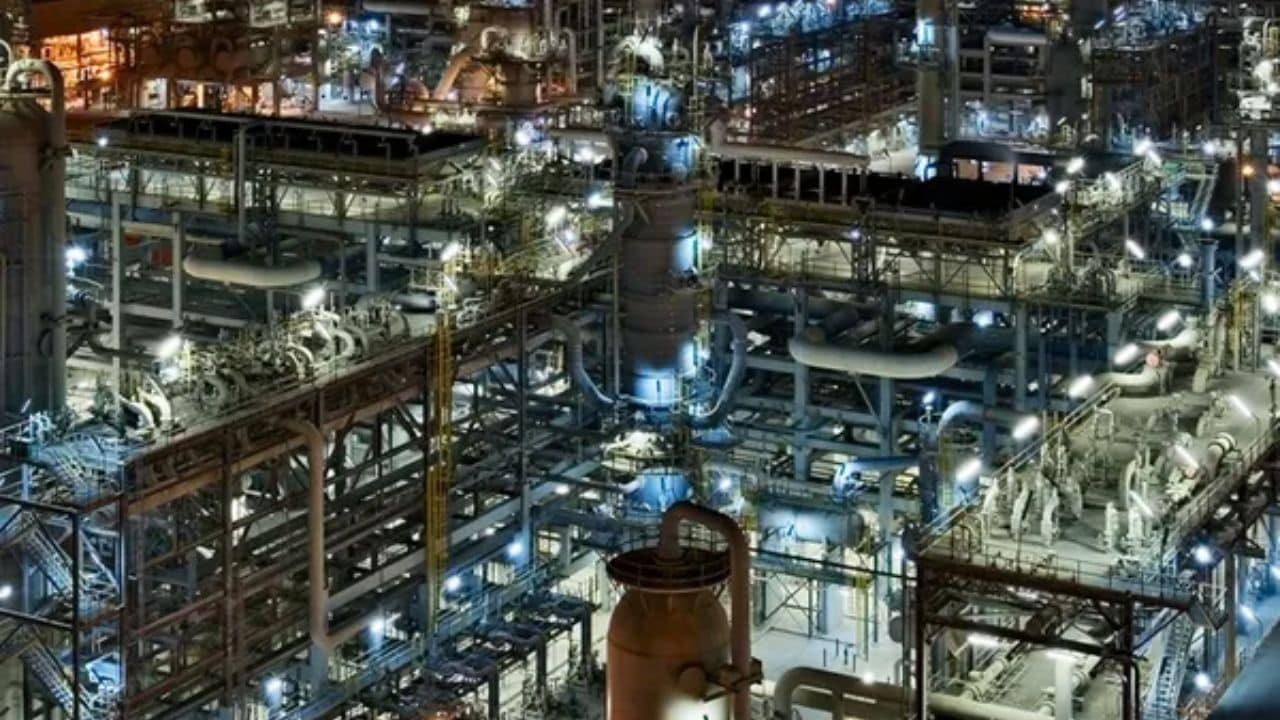
You probably thought Qatar's energy wealth was untouchable. I did too. But the reality on the ground at Ras Laffan right now is a nightmare that's going to haunt global markets for the next half-decade. Iranian missile strikes didn't just cause a "disruption"—they've effectively carved out a massive chunk of the world’s energy security and tossed it into the Gulf.
If you're wondering why your heating bill or industrial gas costs are about to go vertical, look at the numbers. QatarEnergy CEO Saad al-Kaabi just confirmed that two major LNG trains and a gas-to-liquids (GTL) facility are trashed. We aren't talking about a few weeks of downtime. We’re looking at three to five years of sidelined production. That's 12.8 million tons of LNG per year simply gone.
Why the Five Year Repair Window is Real
People hear "five years" and assume it's an exaggeration to juice prices. It isn't. I've seen how these facilities are built. They're not like LEGO sets you can snap back together. The damaged units, specifically LNG trains S4 and S6, are incredibly complex pieces of custom engineering.
- Custom Parts: Many of the cryogenic heat exchangers and specialized turbines have lead times that stretch into years even without a regional war.
- Specialized Labor: You can't just hire any contractor to fix a facility that handles gas at $-162^\circ\text{C}$.
- Security Halt: Work on the massive North Field expansion project has stopped completely. You can't build the future when the present is on fire.
The sheer scale of the destruction has reportedly set the region back 10 to 20 years in terms of infrastructure stability. QatarEnergy is already preparing to declare force majeure on long-term contracts. If you're in Italy, Belgium, South Korea, or China, the gas you were counting on might not show up until 2031.
The Massive Financial Hole
Let’s be blunt about the money. We’re looking at an estimated $20 billion in lost annual revenue. That’s a staggering hit even for a nation as wealthy as Qatar. The damaged units themselves cost roughly $26 billion to build.
It’s not just about the gas, either. The ripple effect is hitting every byproduct:
- Condensate exports are expected to drop by 24%.
- Helium output—critical for South Korean chipmakers—is falling by 14%.
- Even LPG for Indian restaurants is taking a 13% hit.
This isn't just a "Qatar problem." It’s a systemic failure of the global supply chain. When 17% of a country's capacity is wiped out, and that country provides a fifth of the world's supply, the math for global energy security simply doesn't add up anymore.
What This Means for Your Portfolio
If you’re waiting for a quick dip and a recovery, don't hold your breath. The Strait of Hormuz is currently a no-go zone, and the physical damage to Ras Laffan means that even if a ceasefire happened tomorrow, the supply gap is baked in.
- Europe's Winter: Europe is particularly vulnerable. They've been trying to refill storage after a high-demand winter, and losing Qatari volumes means they'll have to outbid China and Japan for American cargoes.
- Price Benchmarks: We've already seen gas prices jump 25% and oil hit $119 a barrel. Expect high volatility to be the new baseline.
- Shipping Costs: Alternative volumes from the US or Australia have to travel further, which means higher freight costs and slower delivery.
Honestly, the "safe haven" image of the Gulf has been shaken to its core. This was supposed to be the reliable alternative to Russian gas. Instead, it’s become the latest flashpoint in a conflict that shows no signs of cooling down.
Taking Action on Energy Volatility
You can't fix the pipes in Ras Laffan, but you can protect your interests from the fallout.
- Audit Energy Exposure: If you run a business, re-evaluate your 2026-2030 energy procurement strategy now. The "cheap gas" era is officially dead.
- Watch the Force Majeure Notices: Monitor QatarEnergy's official filings closely. The specific contracts they drop will tell you which regional markets will see the highest price spikes.
- Diversify Suppliers: If you're reliant on Middle Eastern LNG, start looking toward West African or North American spot markets, even if the premiums look painful right now.
The era of assuming the taps will always stay open is over. Prepare for a very expensive half-decade.