In a small, dust-choked room in a city whose name most people can’t find on a map, a mother is doing a silent, desperate calculation. It isn’t about interest rates or stock portfolios. It is about grams of flour. It is about how many hours she can stretch a single liter of clean water before her youngest child begins to wilt like a neglected houseplant.
This isn't a scene from a history book. It is happening right now, at this very second.
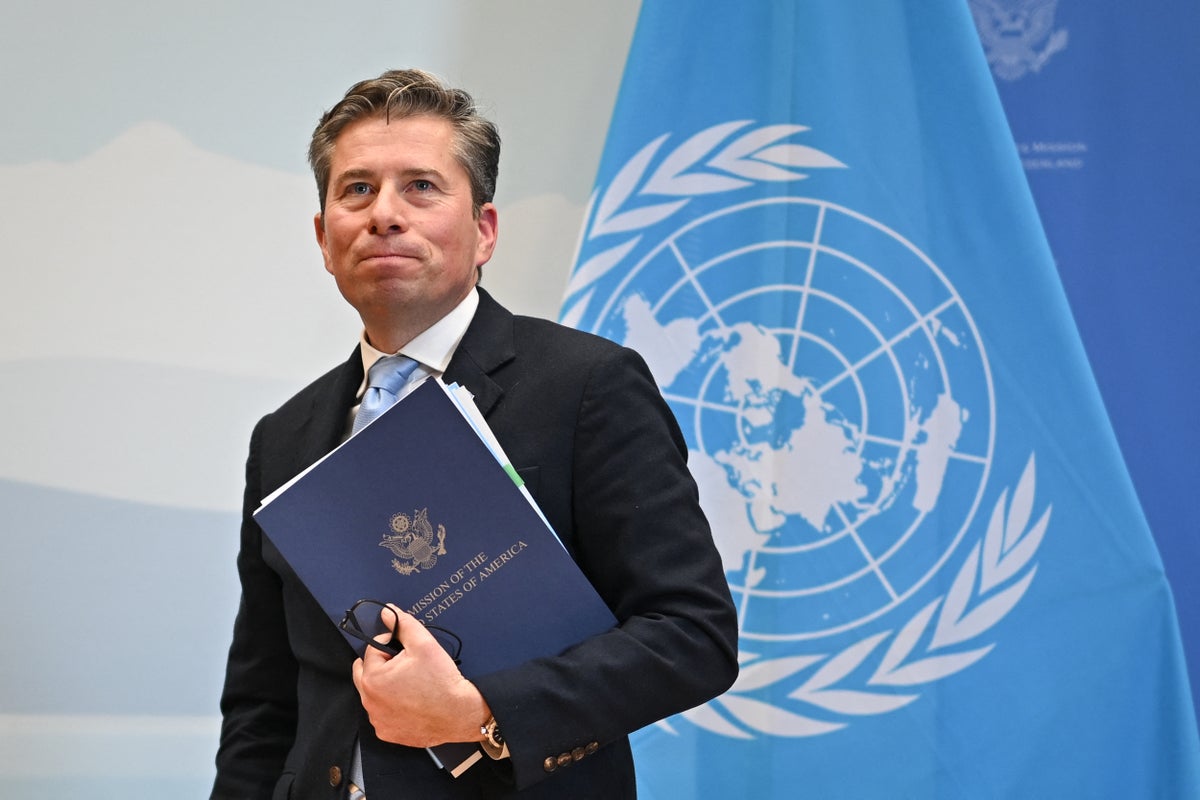
Martin Griffiths, the man tasked with overseeing the world’s humanitarian pulse, recently stood before a podium and used a word that should make us all flinch: "Cataclysmic." He wasn't talking about a meteor strike or a sudden volcanic eruption. He was talking about a choice. Specifically, the choice by wealthy nations to slash aid budgets at the exact moment the world is shivering under the weight of unprecedented crises.
The Mathematics of Misery
When we hear about "budget cuts" in the news, our eyes tend to glaze over. We think of spreadsheets. We think of gray-suited bureaucrats arguing over decimal points in sterile boardrooms. But in the world of international aid, a 10 percent cut isn’t a line item. It is a death sentence.
Consider a hypothetical village in South Sudan. Let's call a resident there Amara. For Amara, the "funding gap" means the difference between a truck arriving with life-saving grain and her children eating boiled leaves. When the UN announces it can only reach half of the people it intended to help, it means someone—a real person with a name, a favorite song, and a dream of becoming a teacher—is being told they are the "wrong" half.
The numbers are staggering. We are looking at a shortfall that runs into the billions. But the human brain isn’t wired to understand billions. We are wired to understand the look in a father’s eyes when he realizes he cannot protect his family from the gnawing ache of hunger. That is the invisible stake.
The Myth of the Island
There is a seductive lie we tell ourselves in the comfort of more stable nations. We believe we are islands. We think that if we pull up the drawbridge and tighten our belts, the chaos beyond our borders will stay out there. We view kindness as a luxury—something we can afford only when our own houses are perfectly in order.
This is a dangerous misunderstanding of how the world breathes.
When aid is gutted, the consequences don’t stay localized. They ripple. Displacement increases. Conflict flares up over dwindling resources. Health systems collapse, providing the perfect petri dish for the next global pandemic to simmer before it eventually hitches a ride on an international flight.
The "solidarity" Griffiths calls for isn't just a warm, fuzzy sentiment. It is a survival strategy. It is the recognition that a fire in your neighbor’s kitchen will eventually scorch your own walls if you refuse to help them find a bucket of water.
The Erosion of the Human Spirit
The most devastating part of these cuts isn't just the physical deprivation. It is the loss of dignity.
I remember talking to a field worker who had spent years in refugee camps. He told me that the hardest part isn't the heat or the lack of sleep. It’s the moment a mother stops asking for help and starts looking at the sky with a hollow, vacant stare. That is the sound of hope evaporating.
We have built a global system that relies on the idea of a "humanitarian community." We tell the world’s most vulnerable people that if they are caught in the crossfire of wars they didn’t start, or scorched by a climate they didn’t break, the world will see them. We promise them a safety net.
But right now, we are cutting the ropes.
The rhetoric often shifts toward "efficiency" or "prioritization." These are cold, sterile words used to mask a terrifying reality. You cannot prioritize which child gets to survive a famine without losing a piece of your own soul in the process.
The Cost of Silence
Why is this happening now? The reasons are a messy knot of geopolitical fatigue, domestic economic pressures, and a growing sense of isolationism. We are tired. We have lived through a pandemic, we are watching wars on our screens daily, and the cost of living is biting at our own heels.
It is easy to feel that we have nothing left to give.
But kindness is not a finite resource. It isn’t like oil or gold. It is more like a muscle; the more we use it, the stronger it becomes. The "cataclysmic" nature of these cuts isn't just about the money being withheld—it's about the silence that follows. It's about the message we are sending to the rest of humanity: You are on your own.
A Different Kind of Accounting
If we were to look at the world through a different lens, we would see that the cost of inaction far outweighs the price of aid. It costs exponentially more to fight a war than to prevent one through food security and education. It costs more to manage a global health emergency than to fund a basic clinic in a remote province.
We are choosing the expensive, bloody path because it feels easier in the short term to say "no."
Imagine if we redirected even a fraction of the world’s military spending toward the humanitarian gaps Griffiths is shouting about. We aren't talking about a sacrifice that would lower our standard of living. We are talking about a shift in perspective.
The stakes are invisible until they aren't. They are invisible until the refugee crisis reaches a breaking point, or the localized conflict becomes a regional war, or the hunger becomes so profound that an entire generation is lost to stunted growth and missed potential.
The Thread Between Us
There is a thin, golden thread that connects a person drinking a latte in London to a person digging for water in a parched field in Yemen. We share the same biology, the same capacity for grief, and the same fundamental need for security.
When we allow aid to be slashed, we aren't just saving pennies. We are fraying that thread. We are betting against our own humanity.
The "cataclysm" isn't just the hunger or the disease. It is the hardening of the human heart. It is the moment we decide that some lives are worth the investment and others are simply a rounding error in a budget report.
Somewhere, that mother is still doing her math. She is waiting to see if the world remembers her name, or if she has become part of the "cataclysmic" silence.
The floor is cold. The water is low. And the clock is ticking.


