The wind across the Saskatchewan prairie doesn't just blow; it hunts. It searches for a weakness in the thatch, a cured patch of fescue, or a single discarded cigarette butt that hasn't been fully extinguished. When the air turns brittle and the humidity drops into the single digits, the province stops being a collection of farms and towns. It becomes a tinderbox.
Last Tuesday, the sky wasn't blue. It was a bruised, hazy orange.
In a standard news report, you would read that fire bans have been implemented across multiple rural municipalities. You would see a list of coordinates and a quote from a government official about "volatile conditions." But those facts don't capture the smell of acrid smoke drifting through a screen door in the middle of the night. They don't describe the way a rancher’s hands shake when he looks at a horizon that shouldn't be glowing.
The Anatomy of a Grass Fire
To understand why the government is currently locking down the province’s fire pits and industrial sites, you have to understand how a grass fire behaves. It is not like a forest fire. A forest fire is a heavy, lumbering beast. A grass fire is a sprinter.
In Saskatchewan, the "dead" period occurs just after the snow melts but before the new green growth—the "green-up"—arrives. This is the danger zone. The previous year’s tall grass is dry, hollow, and chemically ready to combust. When a fire starts in these conditions, it can move faster than a person can run. It jumps roads. It breathes.
Consider a hypothetical farmer named Elias. He has lived near Swift Current for sixty years. He knows the land. He knows that a controlled burn is often the best way to clear a ditch. But Elias is looking at a wind gauge that hasn't dropped below forty kilometers per hour in three days. He knows that if one ember escapes his perimeter, he isn't just losing a fence line. He is potentially erasing his neighbor's livelihood.
This isn't an abstract fear. Recent blazes near Moose Jaw and Maidstone have already proven how quickly a "small" issue becomes a provincial emergency. When the ground is this thirsty, the math is simple and terrifying. One spark plus forty-mile-per-hour winds equals a kilometer of scorched earth in minutes.
The Invisible Stakes of a Fire Ban
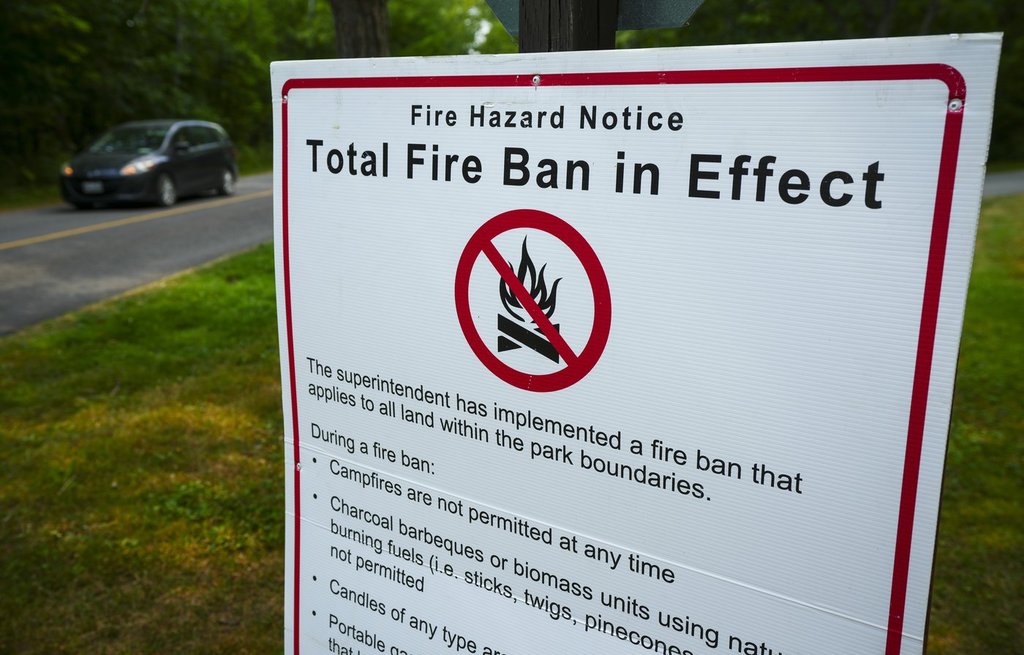
A fire ban is often viewed as a nuisance by those in the city. It means no charcoal briquettes at the park, no cozy evening in the backyard with a beer and a fire pit. It feels like government overreach on a beautiful spring weekend.
But for the volunteer firefighters in small-town Saskatchewan, a fire ban is a lifeline.
These aren't full-time professionals sitting in a station waiting for a bell. These are mechanics, teachers, and grocery store clerks. When the page goes out, they leave their jobs and their families. They head into a wall of smoke where the heat is high enough to melt the tires on a brush truck.
The bans currently taking effect across the central and southern regions are designed to protect these people. Every time someone ignores a ban to burn a pile of brush or set off fireworks, they are gambling with the lives of their neighbors. The province isn't just protecting the grass; it is protecting the human infrastructure that keeps rural life viable.
Why This Year Feels Different
There is a specific kind of tension in the air this season. It's the cumulative weight of a dry winter followed by a sudden, hot spring. We are seeing "extreme" fire risk ratings earlier than usual.
The science behind this is rooted in "fine fuel moisture." Fine fuels—like the dead grass and leaves lining our highways—react to the atmosphere in hours, not days. If the afternoon is hot and the wind is high, that grass becomes as flammable as gasoline.
We often think of disasters as sudden, unpredictable bolts from the blue. But a prairie fire is a predictable disaster. We can see it coming in the way the soil cracks and the way the poplar buds seem to struggle to open. The fire bans are a collective holding of the breath. We are waiting for the rain that hasn't come, and in the meantime, we are stripping away every possible variable that could lead to a catastrophe.
The Weight of Responsibility
The regulations vary depending on where you stand. In some municipalities, the ban is total—no open flames of any kind. In others, it’s a "Level 1," allowing for supervised, contained fires in CSA-approved appliances.
But the legality isn't the point.
The point is the social contract. Living in a place as vast and unforgiving as the Canadian Prairies requires a certain level of communal trust. We trust that the person upwind of us is being careful. We trust that the person driving the tractor has checked their bearings for friction heat.
I remember talking to a woman who lost her barn in a grass fire five years ago. She didn't talk about the money or the insurance. She talked about the sound. She said it sounded like a freight train coming through her bedroom. By the time she smelled the smoke, the heat had already shattered the windows on the north side of her house.
That fire started because of a chain dragging behind a trailer on the highway. A single spark hit the ditch, and within ten minutes, three decades of her life were gone.
The Waiting Game
So, we wait.
We watch the weather apps, looking for the little cloud icons that signify relief. We check the provincial fire maps, watching the red zones creep upward toward the boreal forest. We pack away the fire pits and check the pressure in our garden hoses, even though we know a hose is a toothpick against a wildfire.
It is a humbling experience to realize that an entire province can be held hostage by the weather and the whims of a single spark. It forces a certain kind of mindfulness. You stop looking at the wind as a mild annoyance that ruins your hair and start seeing it as a delivery system for heat.
The bans are a reminder that we are not the masters of this landscape. We are guests here, and right now, the land is telling us to be very, very quiet.
The real story isn't the map of the fire bans. It’s the silence in the evenings where there used to be the crackle of wood. It’s the way we look at the horizon every time we catch a whiff of something toasted. It's the shared understanding that until the green-up arrives, we are all standing on a giant, golden fuse.
One morning soon, the rain will come. It will be a heavy, soaking downpour that turns the dust into gumbo and the yellow grass into a vibrant, wet emerald. The bans will be lifted. The volunteer firefighters will sleep through the night. The tension will leave our shoulders, and we will finally strike a match to start the grill.
Until then, we live in the orange haze. We watch the wind. We wait for the hunt to end.