Mary sits at her kitchen table in Ohio, staring at a small plastic orange bottle. Inside are sixty white tablets—her lifeline. For years, Mary never gave a second thought to where those pills came from. They were just there, waiting at the pharmacy counter. But those tablets have traveled further than she has in a decade. They likely started their journey in a sprawling chemical plant in the Jiangsu province of China or an industrial park outside Mumbai.
This is the invisible reality of the American medicine cabinet. Most of us assume our healthcare is a domestic affair. It isn't. It is a fragile, globalist tightrope. And right now, that rope is being yanked by a shift in trade policy that treats life-saving medication not just as a commodity, but as a strategic asset of war.
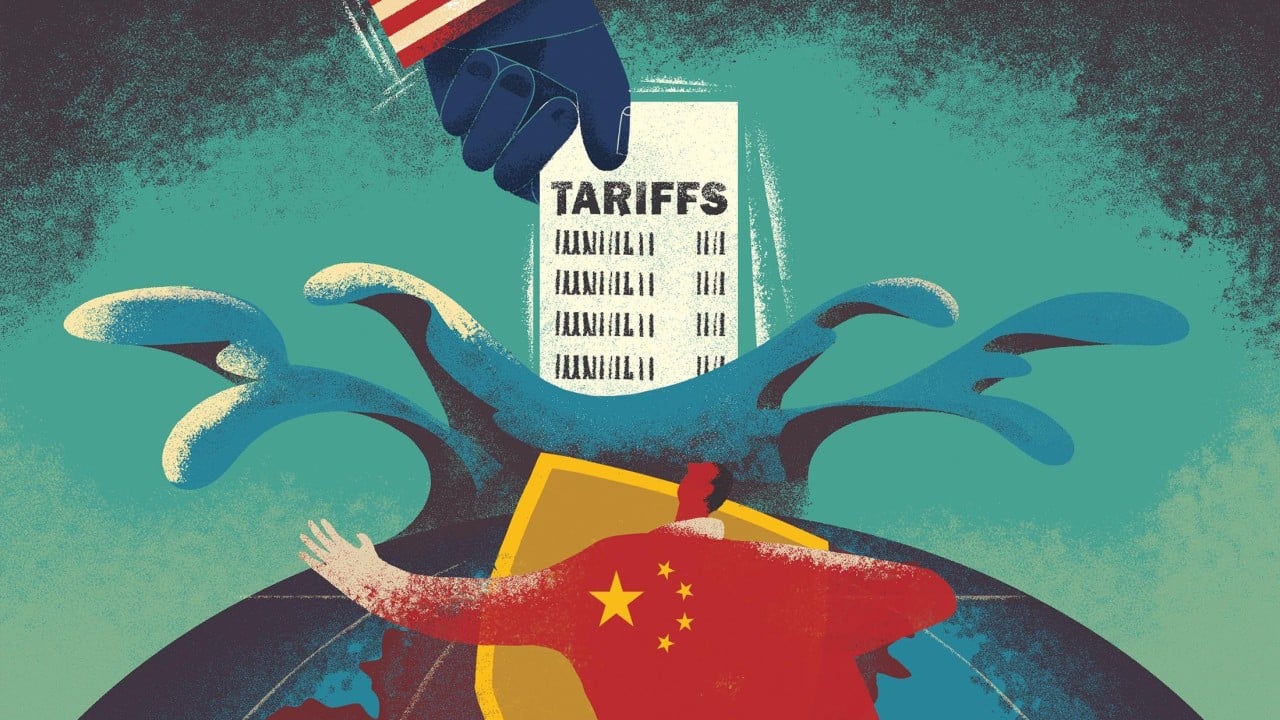
The move to impose tariffs on imported medicines—specifically targeting products coming from nations like China—isn't just a line item in a federal budget. It is an aggressive, high-stakes gamble to force the hands of pharmaceutical giants. The goal? To bring the factories back to American soil.
The Ghost Factories
Walk through the Rust Belt and you see them: the skeletal remains of industry. For decades, the logic was simple and cold. Labor was cheaper elsewhere. Environmental regulations were more relaxed elsewhere. So, we exported our pollution and our production, keeping only the research labs and the marketing departments.
We traded resilience for efficiency.
When the global supply chain hums, this system works beautifully. Pills are cheap. Margins are high. Investors are happy. But then the humming stops. A pandemic hits, or a geopolitical rivalry turns sour, and suddenly, the realization sinks in that the United States can no longer manufacture basic antibiotics or generic blood pressure medication on its own.
The new tariffs are designed to be a shock to this system. By making it expensive to bring foreign-made drugs into the country, the administration is effectively building a wall of cost. They want the pharmaceutical CEOs to look at the math and realize that building a multi-billion dollar facility in North Carolina or Texas is finally cheaper than paying the tax on shipments from overseas.
But factories don't appear overnight. They aren't grown from seeds. They take years of permitting, construction, and specialized engineering. In the meantime, the cost of that wall is often passed down to the person holding the orange bottle at the kitchen table.
The Chemistry of Risk
Consider the complexity of a single drug. It isn't just the final pill that matters; it is the Active Pharmaceutical Ingredient (API). Currently, a staggering percentage of the world’s API comes from China and India. If a trade war escalates, these ingredients become leverage.
Imagine a scenario where a foreign power decides to throttle the export of ingredients needed for common heart medication. It wouldn’t require a single shot being fired to create a national crisis. This is the "why" behind the policy. Proponents argue that a 10% or 20% increase in the cost of a prescription today is a small price to pay to ensure that the medicine is actually available tomorrow.
It is a hard-nosed philosophy. It suggests that national security is more important than short-term consumer pricing.
Critics, however, see a different picture. They see a tax on the sick. If a drug company is hit with a massive new tariff on a specialized cancer drug manufactured in Europe or a generic manufactured in Asia, they rarely absorb that cost. They move it. It ends up on the invoice sent to the insurance company, which then raises premiums or increases the co-pay for Mary in Ohio.
The friction is real. On one side, you have the macro-economic desire to re-industrialize America—to create jobs, secure the supply chain, and reduce dependence on adversaries. On the other, you have the immediate, micro-economic reality of a senior citizen on a fixed income trying to figure out why her monthly expenses just jumped by fifty dollars.
A Legacy of Dependence
Why did we let it get this way? The answer is a mix of corporate greed and consumer demand for the lowest possible price. We became addicted to the "Just-in-Time" delivery model. We stopped stockpiling. We stopped maintaining the infrastructure for basic chemical synthesis.
For a long time, the pharmaceutical industry was the darling of the globalized world. It was the proof that we could collaborate across borders to solve human suffering. But that collaboration was built on a foundation of peace and predictable trade. When those things vanish, the foundation cracks.
The current administration's push is a form of "de-risking." It is an admission that the world is no longer a friendly neighborhood. By targeting medicines for tariffs, the government is signaling that it views the pharmaceutical supply chain with the same level of concern it views microchips or steel. It is an end to the era of the "borderless" pill.
The Human Coefficient
If you talk to a plant manager in a newly opened domestic pharmaceutical facility, they will tell you about the pride of "Made in the USA." They will talk about the precision, the high-paying jobs for chemists, and the security of knowing exactly what goes into every batch. This is the dream. A rejuvenated American manufacturing sector that doesn't just make cars and planes, but also the molecules that keep us alive.
But if you talk to a hospital administrator, the tone changes. They are worried about shortages. They are worried that if the tariffs are implemented too quickly, the foreign suppliers will simply walk away from the American market before the domestic factories are ready to fill the void.
It is a race against time.
The transition is messy. It is loud. It involves lobbyists roaming the halls of D.C. and backroom deals over which specific drugs get "exemptions" and which ones get hit with the full force of the tax. The list of exempted drugs is often where the real power lies. If a drug is deemed "essential" and has no domestic alternative, it might escape the tariff. But who defines essential?
In this landscape, every pill becomes a political statement.
We are watching a fundamental reordering of how a superpower takes care of its citizens. For forty years, the strategy was: buy it from wherever it is cheapest. The new strategy is: make it here, no matter the cost.
Mary puts the cap back on her bottle. She hears the news reports about trade wars and tariffs, and they feel like abstract concepts debated by men in suits thousands of miles away. She doesn't care about the trade deficit or the GDP. She cares about whether the pharmacy will have her refill next month and whether she can afford it.
The bridge between the high-level strategy of a president and the daily survival of a patient is narrow and precarious. We are crossing it now. The wind is picking up. We are betting that the temporary pain of higher prices will lead to a future where we aren't beholden to anyone for our health.
It is a bold, perhaps even reckless, vision of self-reliance.
As the sun sets over the dormant factories of the Midwest, there is a flicker of movement. Some of those old sites are being surveyed. Ground is being broken. The machines are coming back, but they are arriving in a world that has forgotten how to be patient. We want the security of the old world with the prices of the new one, and the math simply doesn't add up.
The true cost of this shift won't be measured in treasury reports or stock tickers. It will be measured in the quiet moments at kitchen tables across the country, where the value of a single tablet is weighed against the security of a nation. We are learning, painfully and slowly, that independence is never free; it is just a different kind of debt.
The bottle on Mary's table is more than just medicine now. It is a tiny, white piece of a much larger struggle—a fragment of a country trying to remember how to build its own future, one molecule at a time.