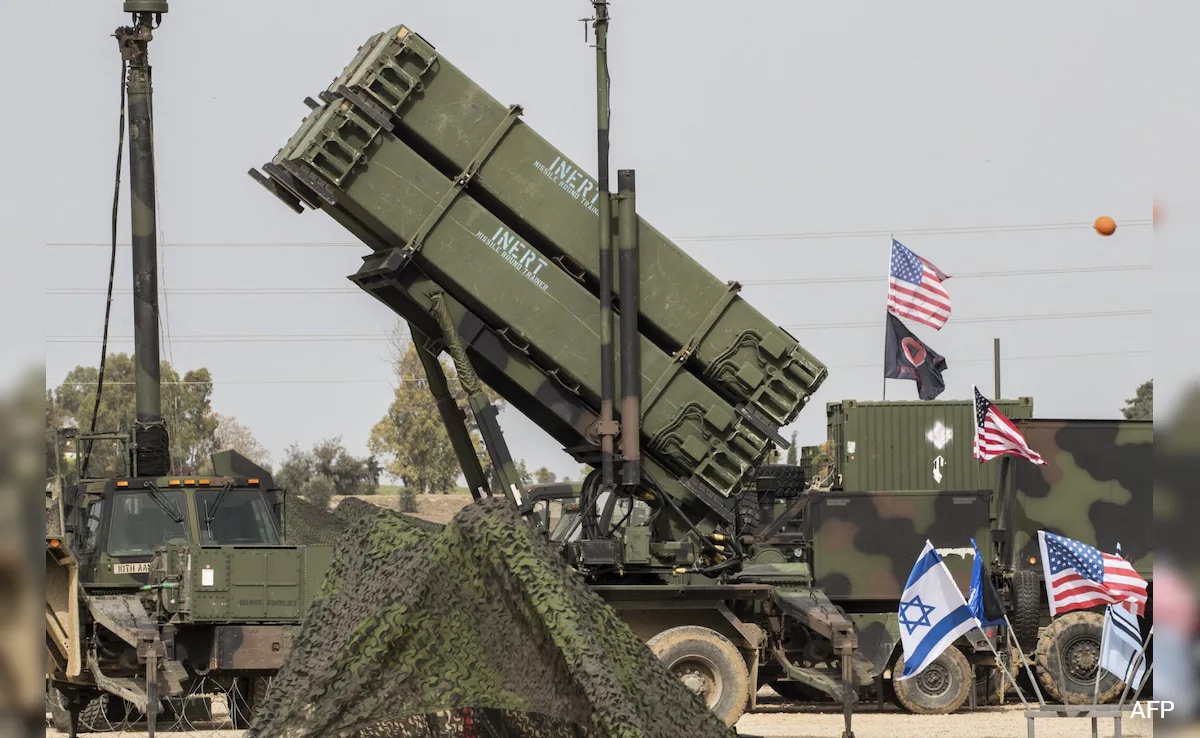
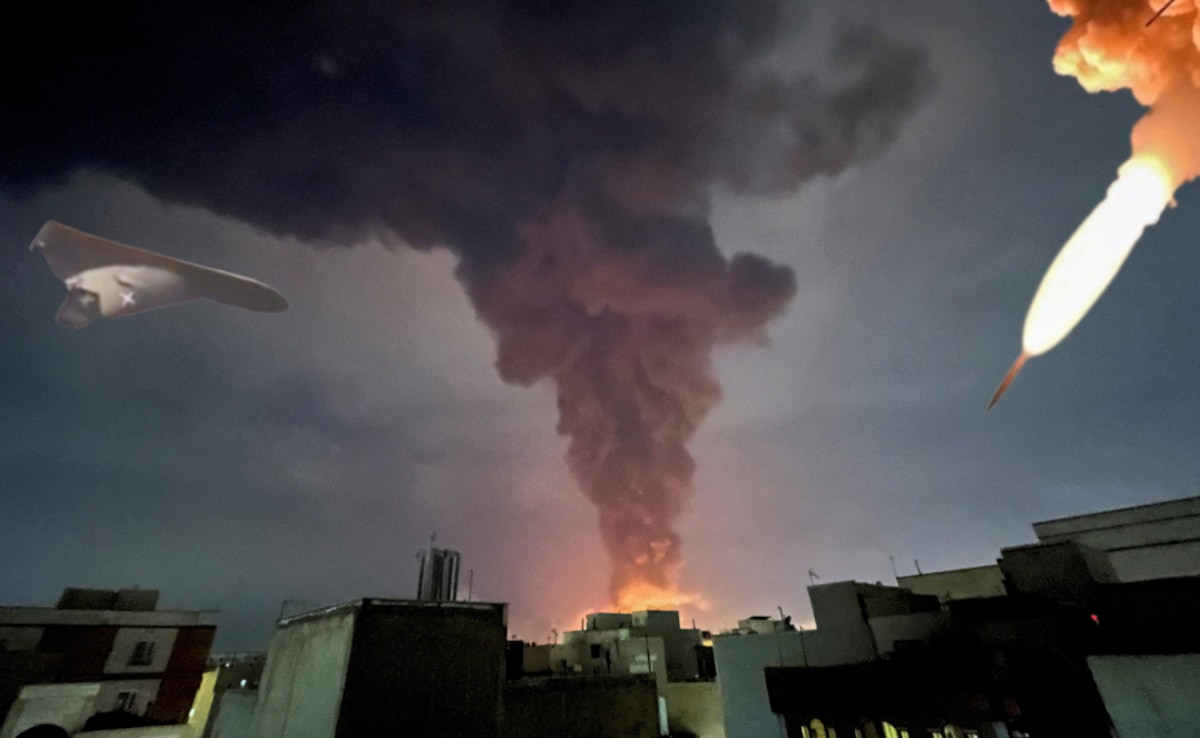
Military ethics is currently stuck in a sentimental loop. Every time a tragic story surfaces about a civilian caught in the crosshairs of an automated targeting system, the chattering classes rush to the same tired script: the machines are heartless, the algorithms are "black boxes," and we are descending into a digital dark age where no one is accountable.
They are wrong. They are focusing on the tragedy of the individual to avoid the uncomfortable math of the collective. Learn more on a related issue: this related article.
The "lazy consensus" suggests that AI in warfare is making the world more dangerous. In reality, the alternative to algorithmic targeting isn't a world of peaceful diplomacy and surgical precision; it’s a return to the era of "dumb" munitions and human fatigue—a world where the margin for error is measured in city blocks rather than meters. If you think a software bug is terrifying, you haven't studied the historical variance of a tired 22-year-old with a map and a radio.
The Human Error Tax
We treat human judgment as a sacred gold standard, yet history shows it is a leaky bucket of biases and biological failures. Humans get tired. Humans get angry. Humans seek revenge. An algorithm doesn't have a cousin who was killed by an IED. It doesn't suffer from a lack of sleep or a rush of adrenaline that leads to "spray and pray" tactics. Further analysis by MIT Technology Review highlights similar perspectives on the subject.
When we analyze the "dead student" narrative—the heartbreaking story of a civilian misidentified by a system—we are looking at a failure of data, not a failure of intent. The critic argues that the machine didn't "know" he was a student. But would a human analyst, staring at the same grainy satellite feed for twelve hours straight, have known better?
The data suggests otherwise. Human-centric targeting in previous conflicts yielded collateral damage ratios that would make modern AI developers sick. We are holding AI to a standard of perfection that we have never demanded from ourselves, and in doing so, we are slowing the adoption of technologies that actually reduce the total body count.
The Accountability Trap
The loudest outcry against automated warfare is the "accountability gap." Who do we jail when the code kills the wrong person? This is a lawyer's question, not a strategist's.
In traditional warfare, accountability is a ghost. When a pilot drops a bomb based on bad intelligence, the blame is diffused through a dozen layers of command. It vanishes into the fog of war. With an algorithm, every decision is logged. Every weighting, every neural pathway, and every data input is auditable.
We aren't losing accountability; we are gaining traceability.
For the first time in history, we can actually perform a forensic autopsy on a military mistake. We can see exactly why the system thought $P(target) > 0.9$. We can patch the logic. We can't "patch" a human's subconscious bias against a certain demographic or their inability to process three simultaneous data streams.
The move to AI is a move toward a world where war has a paper trail.
The Logic of Probability
Let’s talk about the math that the critics find "cold." In a conflict zone, you are constantly dealing with $P(H)$—the probability of a hit—versus $P(C)$—the probability of collateral damage.
Human analysts are notoriously bad at Bayesian reasoning. They over-index on recent events and under-index on statistical base rates. An AI system can balance thousands of variables—proximity to schools, time of day, historical movement patterns, and signal intelligence—to produce a risk profile in milliseconds.
Imagine a scenario where a strike is authorized.
- Human decision: "It looks like him, and he’s in a known rebel house. Take the shot."
- Algorithmic decision: "The physical match is 85%, but the gait analysis is only 40%. The pattern of life suggests this individual attends a university 15 miles away. Strike aborted."
The tragedies we see in the news are the 1% of cases where the system failed. We never see the 99% of cases where the AI saved lives by vetoing a trigger-happy human commander. We are suffering from a massive case of survivorship bias—only the failures make the front page.
The Ethics of Delay
There is a deep, moral cowardice in the "wait and see" approach. Every year we spend debating the "ethics" of AI is a year we spend using less accurate, more destructive traditional methods.
If an autonomous system is 10% more accurate than a human, every day you delay its deployment, you are effectively choosing to kill 10% more civilians. That is the "Humanitarian’s Dilemma." By clinging to the comfort of human "intuition," we are sentencing innocents to death by inaccuracy.
I have seen the internal metrics of targeting groups. I have seen the "battle scars" of missions where humans panicked and leveled a building because they thought they saw a weapon. The machine doesn't panic. It doesn't have a survival instinct that overrides its programming.
The Myth of the "Innocent Observer"
One of the most disruptive truths of modern warfare is the erasure of the "civilian-combatant" binary. In the digital age, a "civilian" can be a logistics hub, a propaganda amplifier, or a tactical spotter without ever touching a rifle.
The competitor’s article mourns the "civilian caught in the age of warfare." But it fails to address the reality of Hybrid Warfare. When sensors are everywhere, your metadata is your uniform. If you carry the phone of a known commander, or if you consistently occupy spaces used for insurgent coordination, you are—mathematically speaking—part of the infrastructure.
Is it tragic? Yes. Is it an "error"? Not necessarily.
The algorithm is identifying roles, not souls. If your digital footprint looks exactly like a combatant's, the machine is doing its job by flagging you. The solution isn't to break the machine; it’s to understand that in the 21st century, there is no such thing as being "off the grid" in a war zone.
Stop Asking if AI is Good
The question "Is AI warfare ethical?" is a waste of breath. It’s like asking if gunpowder is ethical. The technology exists, and it is being used. The real question—the one the industry insiders are actually whispering about—is: How do we optimize the slaughter?
That sounds brutal because it is. War is the organized destruction of people and property. The goal of AI is to make that destruction more efficient. Efficiency, in this context, means achieving the military objective with the minimum amount of wasted energy—where "wasted energy" includes unintended civilian casualties.
We need to stop treating AI as a monster and start treating it as a high-performance tool that requires better data, not more "human oversight." Human oversight is often just a euphemism for "adding more bias back into the system."
The Actionable Reality
If you are a policymaker or a concerned citizen, stop calling for bans. Start calling for Data Transparency.
- Demand that the datasets used to train targeting AI are diverse and representative.
- Insist on "Explainable AI" (XAI) where the system must justify its "Kill" recommendation with a logical proof.
- Accept that "Zero Collateral Damage" is a fantasy, and start aiming for the "Statistical Minimum."
The status quo is a world of messy, emotional, and imprecise killing. The algorithmic future is cold, calculated, and vastly more precise. I’ll take the cold math over the "warm" human heart that’s been hardened by three tours of duty and a thirst for vengeance every single time.
If you’re still worried about the "dead student," ask yourself: would you rather he be killed by a mistake we can analyze and fix, or by a stray mortar shell fired by a man who was just aiming in the general direction of his fears?
The machine isn't the enemy. Our nostalgia for human-led warfare is.
Stop mourning the end of human judgment. Start welcoming the end of human error.
.jpeg?width=1200&auto=webp&trim=0%2C106%2C0%2C128)