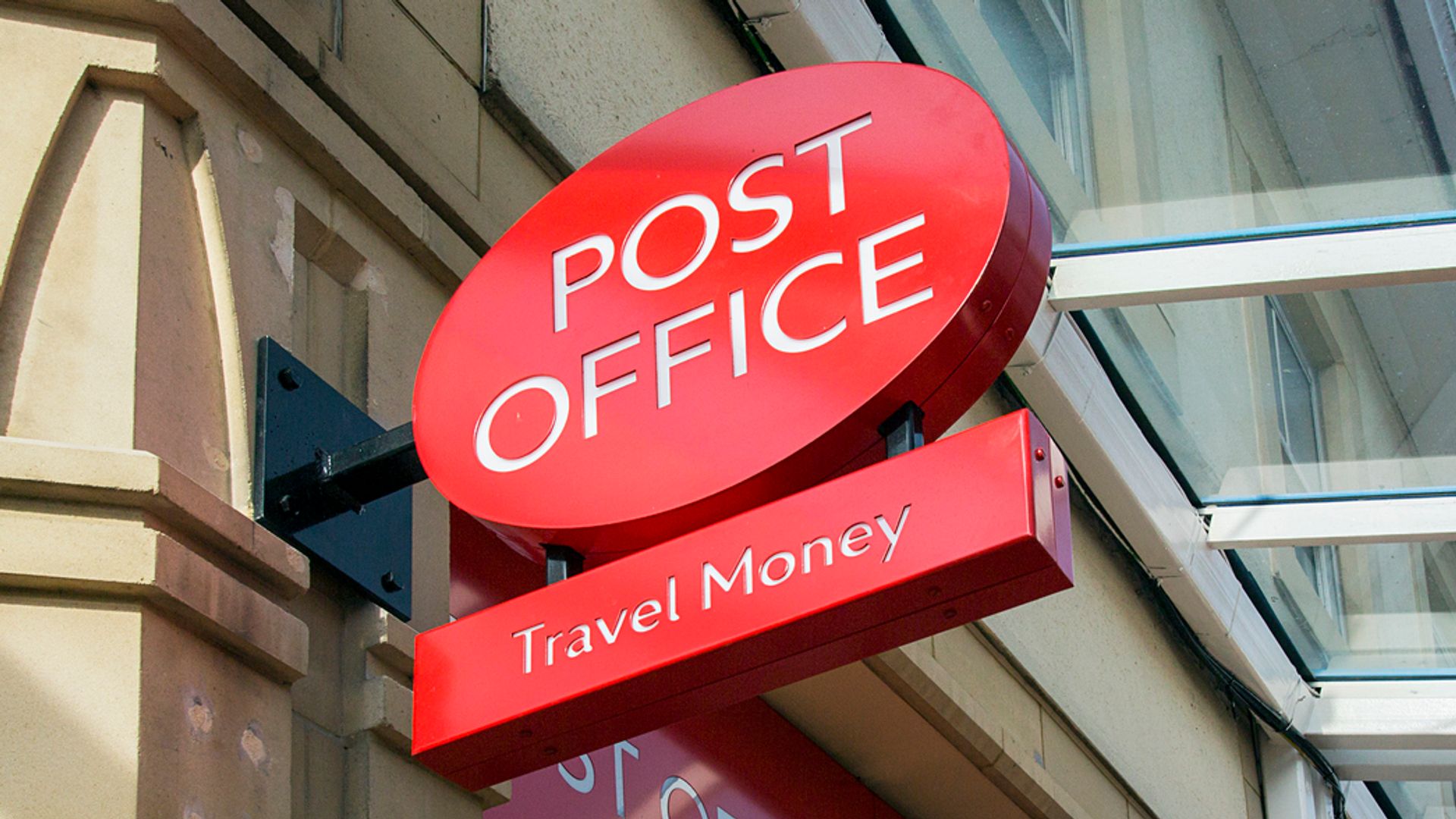
The expenditure of £2.4 million by the Post Office on crisis communications during the peak of its litigation with sub-postmasters represents a profound failure in risk-mitigation logic. While the organization framed this as a defensive necessity, the capital allocation reveals a strategy that prioritized perception management over structural remediation. By examining the mechanics of this expenditure against the backdrop of the Horizon IT scandal, we can identify a feedback loop where defensive spending actually accelerated institutional decay.
The Asymmetry of Resource Allocation
The £2.4 million contract signed with a specialist PR firm illustrates a specific corporate pathology: the substitution of narrative control for liability resolution. To understand the gravity of this figure, one must weigh it against the specific opportunity costs present during the 2017–2019 period.
During the High Court battles led by Alan Bates and 554 other sub-postmasters, the Post Office operated under a constrained balance sheet. Every pound diverted to reputation management was a pound removed from the potential settlement fund or the technical audit of the Horizon system. The organization treated the scandal as a "narrative risk" rather than a "systemic insolvency risk." This misclassification led to three distinct strategic errors:
- The Inflation of Sunk Costs: By investing heavily in a PR-led defense, the Post Office incentivized its legal and executive teams to double down on losing positions. Admitting fault became more expensive because it would invalidate the millions already spent on asserting innocence.
- Signal Interference: High-priced PR messaging created a false sense of security within the Board of Directors. It shielded decision-makers from the reality of the courtroom, where technical evidence was systematically dismantling the corporate narrative.
- The Trust Deficit Multiplier: In crisis management, there is a point of diminishing returns where aggressive PR becomes counterproductive. When the public and the judiciary perceive a gap between "curated statements" and "evidentiary facts," the reputation of the organization does not merely stagnate; it collapses at an accelerated rate.
The Mechanics of Crisis PR in State-Owned Entities
The Post Office is not a standard private corporation; it is a government-owned entity (GOE) with a social mandate. This status changes the calculus of crisis spending. In a private firm, PR spending is evaluated against shareholder value. In a GOE, it must be evaluated against the "Public Interest Test."
The procurement of a £2.4 million contract suggests the Post Office used public funds to obfuscate its own failures to the public. This creates an ethical circularity. The taxpayer effectively funded a campaign designed to prevent the taxpayer from learning the truth about how their money was being mismanaged in the Horizon system.
Strategic Pillar: The Fortress Defense
The PR strategy employed during the litigation can be categorized as a "Fortress Defense." This framework relies on:
- Information Siloing: Restricting the flow of technical data to the media and stakeholders.
- Credibility Undermining: Characterizing claimants as outliers or "isolated cases" to prevent the perception of a systemic flaw.
- Procedural Exhaustion: Using PR to signal to the opposition that the organization has bottomless resources, aiming to force a low-value settlement through attrition.
This framework failed because it ignored the "Verification Threshold." In the digital age and within a rigorous legal system, the ability to verify claims via leaked emails and technical logs happens faster than a PR firm can pivot the narrative. The £2.4 million was spent attempting to maintain a "perceived reality" that was being killed by "physical reality" in the High Court.
The Cost Function of Delayed Admission
Corporate strategy often fails to account for the "Time-Value of Truth." The longer an organization waits to admit a systemic failure, the higher the ultimate cost becomes. We can break down the Post Office's financial hemorrhaging into a specific cost function:
Total Liability = (Initial Error) + (Legal Defense Costs) + (PR Friction) + (Compounded Interest on Settlement)
The PR friction component is often underestimated. By spending £2.4 million to delay the inevitable, the Post Office increased its legal defense costs and the final settlement figures. The delay allowed interest to accrue on the damages owed to sub-postmasters and allowed the legal fees for both sides to balloon into the tens of millions.
The strategy was functionally a "short position" on the truth. The Post Office bet that they could outlast the scandal before the truth became public. When the truth finally broke through, they were "squeezed," facing a much larger liability than if they had settled early and used that £2.4 million for forensic accounting instead of press releases.
The Mechanism of Narrative Collapse
The collapse of the Post Office’s PR strategy provides a blueprint for how institutional gaslighting fails. The process follows a predictable decay curve:
Stage 1: The Outlier Hypothesis
The organization claims that the issue is limited to a small number of "bad actors" or "user errors." The PR spend here focuses on highlighting the reliability of the system for the majority.
Stage 2: Technical Obfuscation
When evidence of systemic failure emerges, the narrative shifts to complexity. The PR team uses technical jargon to argue that the issue is too nuanced for the public to understand, buying time for the legal team.
Stage 3: The Pivot to "Lessons Learned"
As the legal position becomes untenable, the PR strategy shifts from defense to "reform." This is the stage where the £2.4 million contract likely transitioned from denying the scandal to managing the "transformation" narrative. However, because the previous stages destroyed the organization's credibility, the "lessons learned" phase is viewed with extreme skepticism by the judiciary and the public.
Institutional Blindness and the PR Buffer
The presence of a high-tier PR firm often creates a "buffer" between executive leadership and the consequences of their actions. In the Post Office case, the executive team could rely on daily "sentiment reports" and "media monitoring" rather than engaging with the visceral reality of the sub-postmasters’ lives.
This buffer leads to Decision Pathological Rigidity. Leadership becomes convinced that if they just find the "right way to say it," the problem will vanish. This prevents them from taking the only action that actually mitigates risk: fixing the underlying technical and legal errors.
Quantitative Analysis of the PR ROI
If we evaluate the Return on Investment (ROI) for the £2.4 million contract, the result is deeply negative.
- Direct Cost: £2.4 million.
- Indirect Cost: Massive loss of brand equity, increased scrutiny from the Department for Business and Trade, and a galvanized opposition.
- Outcome: The Post Office lost the Group Litigation Order (GLO) case, was forced into a massive compensation scheme, and faced a public inquiry.
The spending did not save the brand; it merely prolonged its agony. From a strategy perspective, this is the "Gambler’s Ruin" applied to communications. They kept betting more money on a losing hand, hoping the next card (the next press release) would change the game.
The Structural Alternative
A data-driven strategy would have dictated a "Total Disclosure" model as early as 2012. By diverting the PR budget into an independent, transparent technical audit and a preemptive settlement fund, the Post Office could have:
- Capped Liability: Early settlements are significantly cheaper than those mandated by a judge after years of litigation.
- Preserved Operational Continuity: Instead of a decade of distractions, the organization could have moved to a functional IT system.
- Maintained Political Capital: By being the "whistleblower" on its own system, the Post Office could have shaped the remediation process rather than having it forced upon them by the government and the courts.
Strategic Play: The Resolution Mandate
The Post Office must now move beyond narrative management. The £2.4 million spend is a sunk cost that serves only as a cautionary data point. To stabilize the institution, the following logic must be applied:
The organization must strip all defensive layers from its communication. Every remaining pound of the "Crisis Budget" should be reallocated to the "Expedited Claims Process." In any scenario where a GOE faces a systemic failure, the only path to brand recovery is through Operational Velocity—the speed at which victims are made whole.
The tactical move is to stop trying to "explain" the scandal and start "solving" the ledger. This requires a shift from a PR-led strategy to a Finance-and-Operations-led strategy. Reputation is a lagging indicator of performance; it cannot be managed directly through contracts. It can only be restored by changing the physical state of the litigation and the financial state of the victims. Any further spend on "perception" while "reality" remains broken is a dereliction of fiduciary duty.