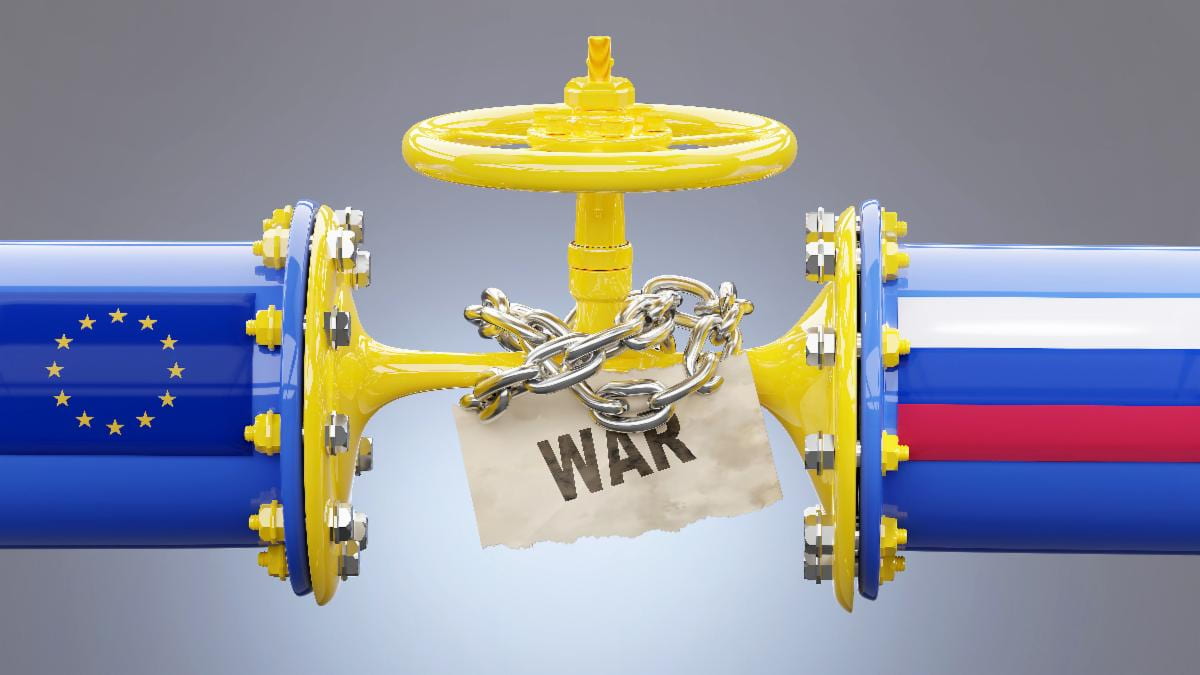
The escalation of conflict involving Iran has triggered a systemic reconfiguration of global fertilizer trade routes, creating a high-margin vacuum that the Russian Federation is uniquely positioned to fill. While mainstream analysis focuses on immediate price spikes, the deeper structural reality involves a massive arbitrage opportunity where Russia leverages its integrated production chains to capture market share abandoned by Middle Eastern competitors. This is not merely a "windfall" of luck; it is the result of a specific intersection between nitrogen-phosphorus-potassium (NPK) supply inelasticity and the degradation of maritime security in the Persian Gulf and Red Sea.
The Triad of Fertilizer Supply Inelasticity
The global fertilizer market operates on a rigid supply-demand curve defined by three critical variables: feedstock access, energy costs, and logistical throughput. When conflict involves Iran—a major producer of urea and a gatekeeper of the Strait of Hormuz—these variables shift violently.
1. The Feedstock Advantage
Russia possesses the world’s most significant reserves of apatite ore and natural gas, the primary inputs for phosphate and nitrogen-based fertilizers. While Iranian production is frequently hampered by aging infrastructure and intermittent sanctions-related maintenance delays, Russian firms like PhosAgro and EuroChem operate at a lower cash cost per ton. In a wartime environment, the risk premium added to Iranian exports makes Russian product the "safe-haven" commodity for agricultural giants like Brazil and India.
2. The Energy Cost Differential
Nitrogen fertilizer production is essentially the process of turning natural gas into ammonia.
The Haber-Bosch process can be represented by the simplified chemical equation:
$$N_2 + 3H_2 \rightleftharpoons 2NH_3$$
Because natural gas accounts for approximately 70% to 80% of the variable cost of ammonia production, Russia’s internal gas subsidies provide a floor for profitability that Middle Eastern producers cannot match when regional instability drives up insurance and security costs.
3. Logistical Displacement
The conflict creates a physical bottleneck. Iran’s primary export terminals are vulnerable to maritime interdiction. Conversely, Russia has successfully rerouted its export volumes through Baltic and Black Sea ports that, while under pressure, remain outside the immediate kinetic zone of the Middle East. This displacement forces Asian and Latin American buyers to choose between the high-risk, high-discount Iranian barrels and the high-reliability, premium-priced Russian supply.
Quantifying the Geopolitical Risk Premium
Standard economic models often fail to account for the "Insurance Wall." As kinetic actions in the Middle East increase, the cost of War Risk Insurance for vessels loading in the Persian Gulf can jump from 0.05% to over 1.0% of the hull value within 48 hours. This cost is rarely absorbed by the producer; it is passed to the buyer, effectively pricing Iranian urea out of the spot market.
Russia’s strategic play involves a two-tier pricing mechanism. By offering "stable supply contracts" to BRICS+ partners, Russia secures long-term volume commitments while the spot market stays inflated by Middle Eastern volatility. This allows Russian exporters to realize a Netback Price—the effective price received at the factory gate after subtracting logistics and marketing—that is significantly higher than the global average.
The Phosphorus-Nitrogen Nexus: A Structural Breakdown
To understand the scale of this shift, one must analyze the NPK (Nitrogen, Phosphorus, Potassium) complex not as a monolith, but as a series of interlocking dependencies.
The Nitrogen Gap
Iran is a global heavyweight in Urea production. When Iranian exports are throttled or redirected due to naval blockades, the global "S-D" (Supply-Demand) balance tightens instantly. European producers, already struggling with high feedstock costs, cannot ramp up fast enough to fill the gap. Russia, holding the world's largest export share of nitrogen fertilizers, steps in as the "swing producer." The result is a forced transfer of wealth from agricultural importers to the Russian treasury.
The Phosphate Security Play
Phosphate fertilizers are even more sensitive to trade route disruptions. The proximity of major phosphate deposits in North Africa to the Mediterranean conflict zones means that any widening of the Iran-Israel-Hamas axis puts the transit of phosphoric acid at risk. Russia’s dominance in high-purity monoammonium phosphate (MAP) and diammonium phosphate (DAP) provides a hedge for global food security, albeit one that increases international dependency on Russian exports.
Counter-Cyclical Market Capture
While the West attempts to isolate the Russian economy, the fertilizer sector has remained largely exempt from the most stringent sanctions due to fears of global famine. Russia has utilized this "humanitarian carve-out" to execute a masterclass in market capture.
The mechanism is straightforward:
- Disruption: Conflict in the Middle East removes Iranian and potentially Qatari or Saudi volumes from the competitive landscape.
- Price Discovery: Global benchmarks (like the New Orleans or Middle East Granular Urea indices) spike.
- Volume Displacement: Russia fills the volume gap, often transacting in non-USD currencies (Yuan, Dirhams, or Rubles) to bypass Western banking friction.
- Relationship Locking: By providing "stability" during a Middle Eastern crisis, Russia secures 5-to-10-year trade agreements with developing nations, effectively locking out Western or Middle Eastern competitors for the next decade.
The Cost Function of Global Agriculture
The impact of this windfall extends beyond the balance sheets of Russian corporations. It fundamentally alters the cost function of global caloric production. When fertilizer prices rise due to geopolitical arbitrage, the "yield-to-cost" ratio for farmers in the Global South deteriorates.
Lower application of NPK leads to lower crop yields, which in turn leads to higher food inflation. Russia, as a major exporter of both the fertilizer AND the grain, gains a double-leveraged position on the global food supply chain. This is the "Grain-Fertilizer Feedback Loop": higher fertilizer prices increase the value of the grain Russia produces on its own soil, while simultaneously increasing the revenue from its fertilizer exports.
Structural Risks and The Limits of Arbitrage
This strategy is not without its failure points. The primary risk to Russia’s fertilizer dominance is a rapid de-escalation in the Middle East combined with a collapse in natural gas prices. If Iran were to achieve a stable, sanction-free export environment, its low-cost nitrogen production would flood the market, eroding the price premium Russia currently enjoys.
Furthermore, the "China Factor" remains a wildcard. China periodically restricts fertilizer exports to protect domestic food security. If China decides to release its massive domestic stockpiles into the global market to stabilize prices, the Russian windfall would evaporate.
Strategic Execution for Market Participants
For global procurement officers and agricultural hedge funds, the strategy is no longer about tracking weather patterns or soil health; it is about monitoring the "Hormuz Risk Coefficient."
The tactical play for the next 18 months involves:
- Diversification of NPK Sources: Shifting away from Persian Gulf dependencies toward North American or West African expansion projects, despite the higher Capex.
- Hedged Logistics: Securing long-term freight charters that bypass the Red Sea entirely, even if it adds 12 days to the transit time.
- Currency Neutrality: Establishing payment rails that do not rely on the SWIFT system for fertilizer settlements, mirroring the Russian-Indian "Oil-for-Rupee" model.
The "windfall" described by observers is actually a massive structural shift. Russia is not just selling fertilizer; it is selling the absence of risk in a region defined by it. As long as the Middle East remains in a state of kinetic or near-kinetic friction, the Kremlin’s grip on the global breadbasket through the NPK complex will only tighten. The move for competitors is not to wait for peace, but to build infrastructure that renders the Russian-Iranian trade-off irrelevant. This requires a multi-decade investment in alternative ammonia synthesis—specifically Green Hydrogen—to decouple the fertilizer price from the volatility of natural gas and the whims of regional despots.