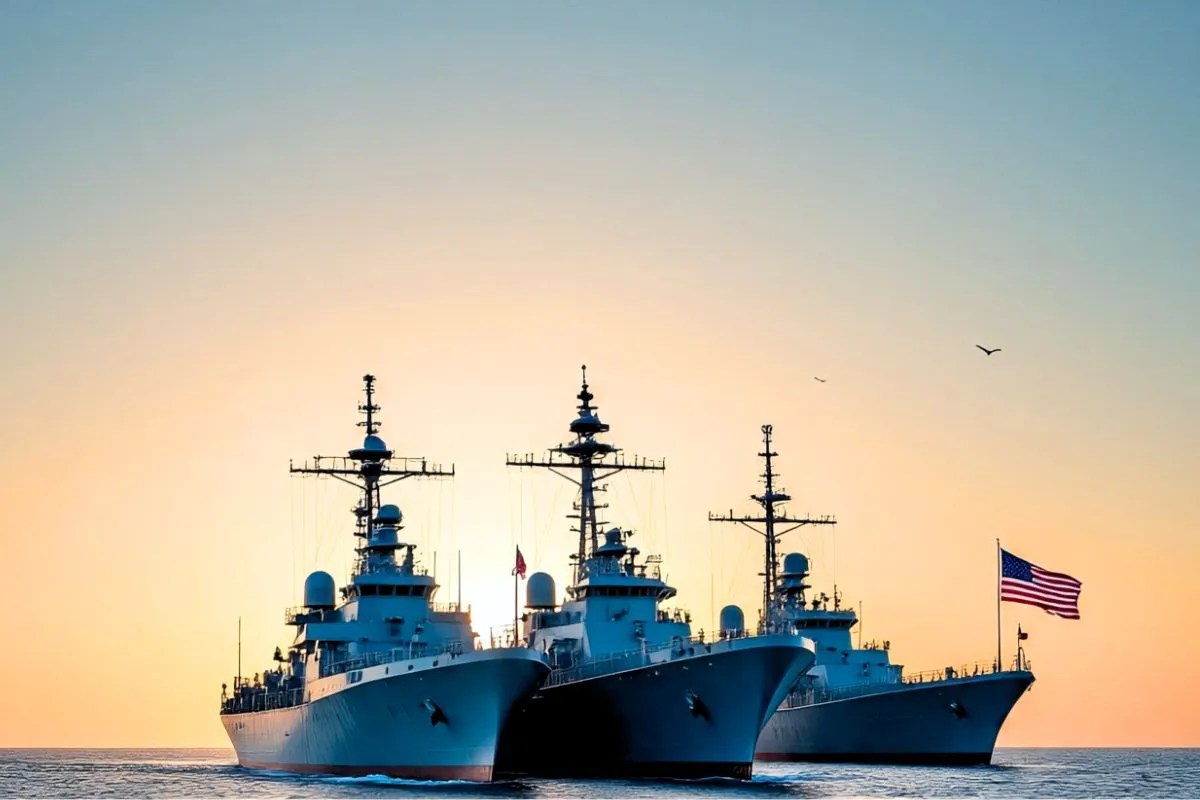
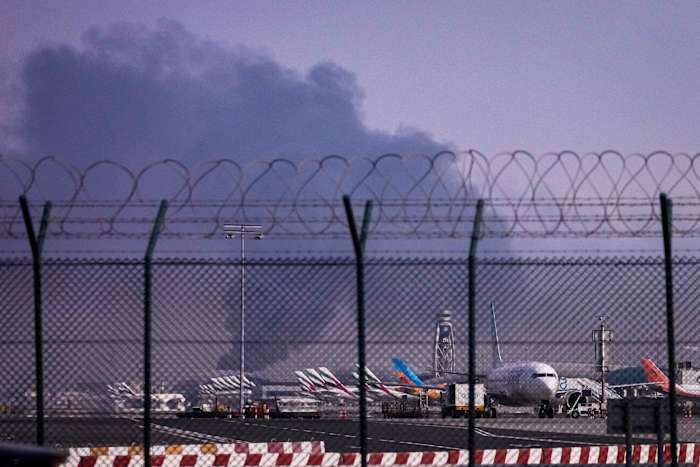
The United States is moving thousands of additional troops into the Middle East, a decision that officially aims to deter regional escalation but effectively cements a permanent shift in American power projection. This isn't just about a temporary spike in tensions. It is a massive logistical realignment that suggests the era of "pivot to Asia" was always more of a slogan than a reality. By deploying a combination of fighter jet squadrons, naval strike groups, and boots on the ground, the Department of Defense is signaling that the region remains the gravity center of American foreign policy.
Money follows the metal. While the headlines focus on the number of uniforms, the real story lies in the mobilization of high-end hardware. We are seeing the arrival of F-22, F-15E, and F-16 squadrons, backed by an increased presence of A-10 Warthogs. These assets don't just sit in hangars. They require an enormous tail of contractors, fuel supplies, and maintenance infrastructure that pumps billions into the defense industrial base while anchoring the U.S. to specific geographic coordinates for the foreseeable future.
The Illusion of the Withdrawal
For years, the prevailing narrative in Washington suggested a drawdown. Policymakers talked about "right-sizing" the footprint. They were wrong. The current surge proves that the U.S. military remains trapped in a cycle of reactive deployment. Every time the Pentagon attempts to pull back, a vacuum opens, and the subsequent rush to fill it requires double the force originally extracted.
This surge is not a defensive crouch. It is an active build-up of offensive capabilities intended to provide the White House with a menu of kinetic options. When you send an aircraft carrier strike group into the Gulf, you aren't just "monitoring" the situation. You are placing a mobile airfield within striking distance of every major infrastructure point in the region. The sheer cost of maintaining this posture—upwards of tens of millions of dollars per day—demands a level of engagement that makes "leaving" a mathematical impossibility.
Logistics as Destiny
Military power is often measured in firepower, but it is defined by logistics. To move several thousand troops, the U.S. Transportation Command must coordinate a massive bridge of C-17 and C-5 Galaxy cargo planes. This is where the business of war becomes visible.
The Cost of Readiness
- Fuel Consumption: A single carrier strike group consumes hundreds of thousands of gallons of fuel daily.
- Contractor Support: For every soldier deployed, there is a hidden network of private contractors providing food, laundry, and technical maintenance.
- Munitions Stockpiling: Moving troops means moving "iron." The prepositioning of precision-guided munitions is a clear indicator that the Pentagon expects these forces to stay.
The hardware being moved is not geared toward counter-insurgency. This isn't about training local police or building schools. The deployment of F-22 Raptors—stealth fighters designed for air-to-air combat against sophisticated adversaries—indicates that the U.S. is preparing for a state-on-state confrontation. This is a shift from the "War on Terror" footing to a "Great Power Competition" footing, even if the theater remains the same.
The Failure of Deterrence through Presence
There is a fundamental flaw in the "deterrence" model. The theory suggests that by showing overwhelming force, you prevent the enemy from acting. In practice, however, increasing the troop count often provides more targets. It creates a target-rich environment for non-state actors and proxy forces who use asymmetric warfare to bleed the U.S. treasury and public patience.
We have seen this movie before. In 2019, a similar "surge" was intended to force a diplomatic breakthrough. It resulted in a stalemate that only increased the risk of accidental engagement. By flooding the region with more troops, the U.S. effectively limits its own diplomatic maneuverability. Once the troops are there, bringing them home without a "win" looks like a retreat, which keeps them stationed there indefinitely.
The Economic Ripples of the Surge
The global markets watch the troop carriers more closely than they watch the diplomats. When the U.S. adds five digits worth of personnel to the region, oil futures react. The cost of maritime insurance for tankers in the Strait of Hormuz spikes. This isn't just a military maneuver; it is a massive intervention in the global energy market.
Energy Security and Military Might
The U.S. may be energy independent on paper, but the global price of crude is still set by the stability of the Middle East. By deploying these troops, the U.S. is essentially subsidizing the security of global energy lanes. This benefits every major economy, yet the U.S. taxpayer carries the entire bill. It is a security guarantee that the rest of the world has come to expect for free.
Defense stocks usually see a bump following these announcements. Companies like Lockheed Martin, Raytheon, and General Dynamics aren't just selling planes and missiles; they are selling the "sustainment" packages that keep those machines running in harsh desert environments. A surge is a long-term revenue stream for the beltway's largest employers.
The Strategy of No Return
What no one in the Pentagon wants to admit is that there is no "exit criteria" for this deployment. The mission is "to prevent escalation." But how do you measure something that didn't happen? This vague objective allows for a permanent presence. If nothing happens, the surge worked, and the troops must stay to keep it that way. If things explode, the surge was necessary, and more troops are needed.
This is the "sunk cost" of American foreign policy. We have invested so much in the infrastructure of these bases—from Al Udeid in Qatar to the facilities in Bahrain—that the military now exists to justify the existence of the bases themselves. The troops are simply the blood in the veins of a massive, stationary beast.
The Risk of Proximity
Putting thousands of young Americans in range of ballistic missiles and suicide drones is a gamble. The Pentagon argues that their presence makes the region safer, but history suggests that proximity breeds friction. A single miscalculation by a drone operator or a local commander can ignite a conflict that the surge was supposedly designed to prevent.
The technical term for this is "accidental escalation." When two heavily armed forces are staring at each other across a narrow body of water, the margin for error disappears. The U.S. is currently betting that its sheer technological superiority will keep the peace. But technology is a brittle shield against a motivated, decentralized enemy.
Hard Power in a Multipolar World
This deployment is also a message to Beijing and Moscow. It is a way of saying that despite the domestic political turmoil in the U.S., the military’s reach remains global and instantaneous. It is an expensive way to send a telegram. While the U.S. focuses on moving iron into the Middle East, its rivals are making inroads through infrastructure projects and trade deals.
The U.S. is playing a 20th-century game of troop counts in a 21st-century world of economic influence. You can't shoot a trade deficit with an F-16. You can't bomb a diplomatic alliance into non-existence. The surge provides a sense of control, but it is an expensive facade that hides a lack of long-term strategic vision.
The Reality of the "Rotational" Force
The Pentagon often calls these "rotational" forces to avoid the political headache of a permanent increase. This is a semantic trick. If Squadron A leaves and is immediately replaced by Squadron B, that is a permanent presence. The distinction only exists to satisfy congressional oversight and to keep the public from realizing that the "forever wars" have simply evolved into "forever deployments."
These rotations take a massive toll on the equipment and the personnel. The high operational tempo wears down airframes and exhausts crews. We are burning through the lifespan of our most expensive jets to fly "presence" missions that have little tactical value. It is a slow-motion cannibalization of the Air Force's future readiness for a temporary sense of security today.
The deployment of thousands more troops to the Middle East is the ultimate admission that the United States cannot, or will not, find a way to exist in the world without a massive military shadow. We have built a system that requires constant expansion just to maintain the status quo. This isn't a new strategy. It is the old strategy on a larger, more expensive scale, and the bill is coming due.
Check the flight manifests at Dover Air Force Base if you want to know where the next decade of American treasure is going.