Rain slicked the windows of a small logistics office in Richmond, British Columbia, as Sarah watched the digital ticker of a shipping lane. She isn’t a diplomat. She doesn’t draft treaties. She manages the flow of specialized lumber—western red cedar—bound for high-end construction in Jakarta and Hanoi. For a decade, Sarah has operated on a knife’s edge. One month, a sudden tariff spike in a distant port eats her entire margin. The next, a regulatory shift in a single Southeast Asian nation leaves her containers rotting on a pier.
Sarah represents the quiet, anxious heart of Canadian trade. She is the human face of a country that has realized, perhaps a little late, that putting all its eggs in one basket is no longer a strategy. It is a liability.
The basket, of course, is the United States. For generations, the border to the south was the only direction that mattered. It was easy. It was familiar. But easy is dangerous. When the Free Trade Agreement (FTA) between Canada and the Association of Southeast Asian Nations (ASEAN) finally crosses the finish line, Sarah’s world changes. The "Centrality" of ASEAN isn't just a buzzword for bureaucrats in Ottawa; it is the difference between a business that survives and one that thrives.
The Weight of the Giant Next Door
Canada’s economic relationship with the United States is less of a partnership and more of a gravitational pull. Roughly 75% of Canadian exports head south. When the American consumer sneezes, the Canadian economy catches a fever. We have lived in this shadow for so long that we forgot the sun rises in the East.
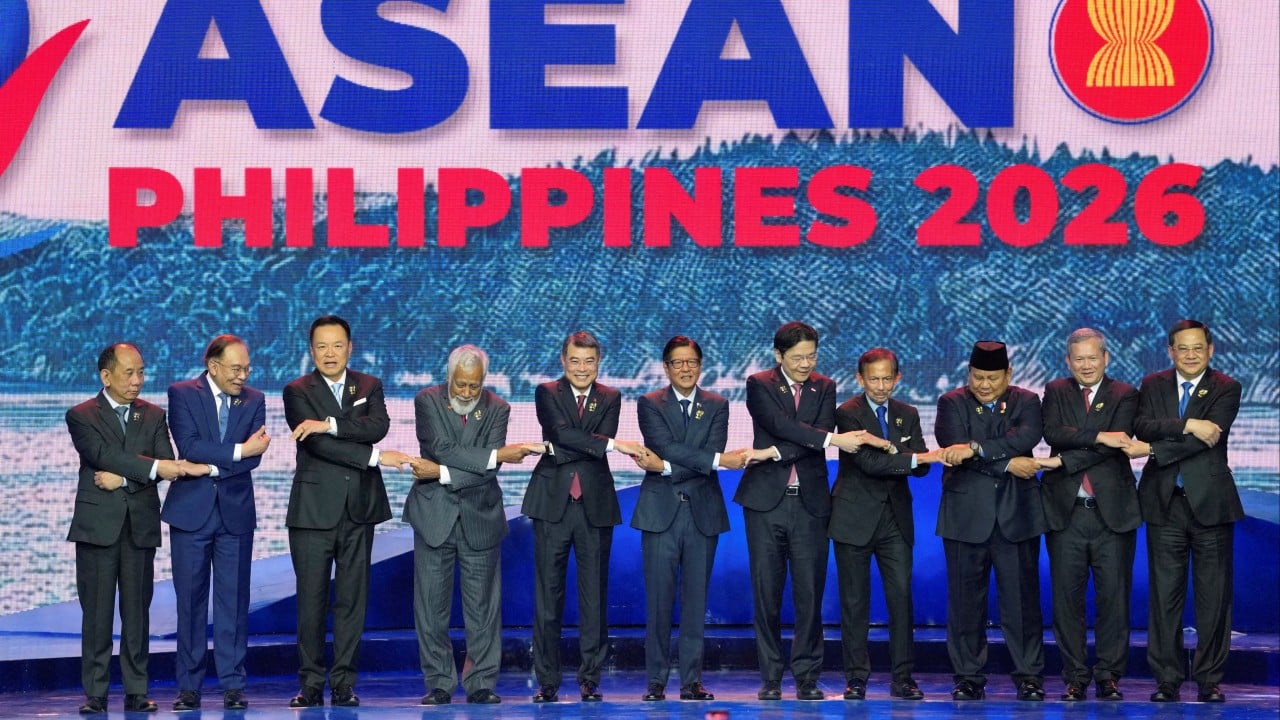
The proposed Canada-ASEAN FTA is the long-overdue correction to this imbalance. ASEAN—a bloc of ten nations including powerhouses like Vietnam, Indonesia, and Thailand—represents the fastest-growing middle class on the planet. These aren’t just emerging markets. They are emerged. They are hungry for the exact things Canada excels at: food security, green technology, and advanced manufacturing.
Think about the math of a middle class. By 2030, the global middle class is expected to reach 5.5 billion people, and a massive chunk of that growth is concentrated in the Indo-Pacific. These are families who want better protein for their children. They want reliable energy. They want the digital infrastructure that Canada has spent decades perfecting.
If we don't build the bridge now, someone else will. The bridge isn't made of steel. It’s made of signed papers, lowered tariffs, and aligned rules.
The Ghost at the Table
To understand why this agreement matters, you have to understand the fear of the "Standard."
Imagine a Canadian fintech startup trying to sell its software in Malaysia. Without an FTA, they are playing a game where the rules change every time they cross a border. They face "non-tariff barriers"—invisible walls of red tape that favor local players or larger competitors from countries that already have trade deals.
When Canada sits at the ASEAN table, it isn't just asking for lower taxes on wheat or wood. It is fighting for a seat in the room where the rules of the 21st-century economy are written. If Canada is absent, those rules will be written by others, often in ways that prioritize state-led economies over the transparent, merit-based system Canadian firms rely on.
This is the "Centrality" the diplomats talk about. ASEAN is the geographic and economic hub of the Indo-Pacific. It is the pivot point. By securing an FTA, Canada moves from being an occasional visitor to a permanent resident of the world's most dynamic economic zone.
The Hypothetical Farmer and the Real Stakes
Let’s look at a hypothetical farmer named Marc in Saskatchewan. Marc grows pulses—lentils and chickpeas. Currently, his ability to sell to Vietnam or the Philippines is a gamble. A sudden policy shift in a local ministry can shut down his access overnight.
With an FTA, Marc gains something more valuable than a tax break: he gains certainty.
Certainty is the oxygen of investment. When Marc knows the rules of the game in Jakarta are the same as the rules in Calgary, he buys the new tractor. He hires the extra hand. He expands his acreage. The FTA provides a legal framework that protects him from the whims of protectionist politics.
Canada’s Indo-Pacific Strategy, of which this FTA is the crown jewel, is effectively an insurance policy for the Canadian middle class. It is the acknowledgement that the world of 1995—where the West dictated the terms of global trade—is dead. We are now in a multipolar world. In this reality, diversification isn't just a "nice to have." It is a survival trait.
The Friction of Distance
One might ask: why has this taken so long?
The answer lies in the friction of distance and culture. Canada has often been perceived in Southeast Asia as a "polite but distant" relative. We show up for the weddings and funerals, but we aren't there for the day-to-day work of building a neighborhood.
Negotiating with ten different nations, each with its own internal politics and economic priorities, is a Herculean task. Indonesia’s needs are not Singapore’s needs. Vietnam’s manufacturing sector has different concerns than the Philippines' service economy.
But the friction is where the value is created. By doing the hard work of aligning these interests, Canada is proving it is a reliable partner. We are showing up with more than just a sales pitch; we are showing up with a commitment to long-term stability. This is why the "ASEAN Centrality" concept is so vital to the Canadian narrative. It signals a shift in mindset. We are no longer just looking across the fence at our neighbor; we are looking across the ocean at our future.
The Invisible Winners
The headlines will focus on the big numbers—the billions in projected GDP growth, the percentage drops in tariffs for canola oil. But the real winners are the people you’ll never see on the news.
It’s the software engineer in Waterloo whose app is suddenly the default choice for logistics firms in Thailand because the data-privacy rules were harmonized in the treaty.
It’s the university student in Halifax who finds a co-op placement in a green-energy firm in Manila because the FTA made it easier for professional services to move across borders.
It’s the consumer in a Toronto grocery store who sees more stable prices because our supply chains are no longer tethered to a single, volatile trade route.
The FTA is a shock absorber. It distributes the risk of global instability across a wider surface area. When one region falters, another holds steady.
The Silence of the Paperwork
There is no fireworks display when a trade agreement is signed. There is only the sound of pens on paper and the quiet clicking of keyboards as customs codes are updated.
But for Sarah in Richmond, that silence is profound. It means the red cedar she ships isn't just a commodity anymore; it’s a piece of a larger, more stable world. It means she can stop watching the ticker with a knot in her stomach.
The Pacific isn't a barrier. It’s a corridor. For the first time in a generation, Canada is finally walking down it with intent. We are stepping out of the shadow of the giant and into the light of a broader, more complex, and infinitely more promising horizon.
The anchor has been dropped. Now, we wait for the tide to rise.