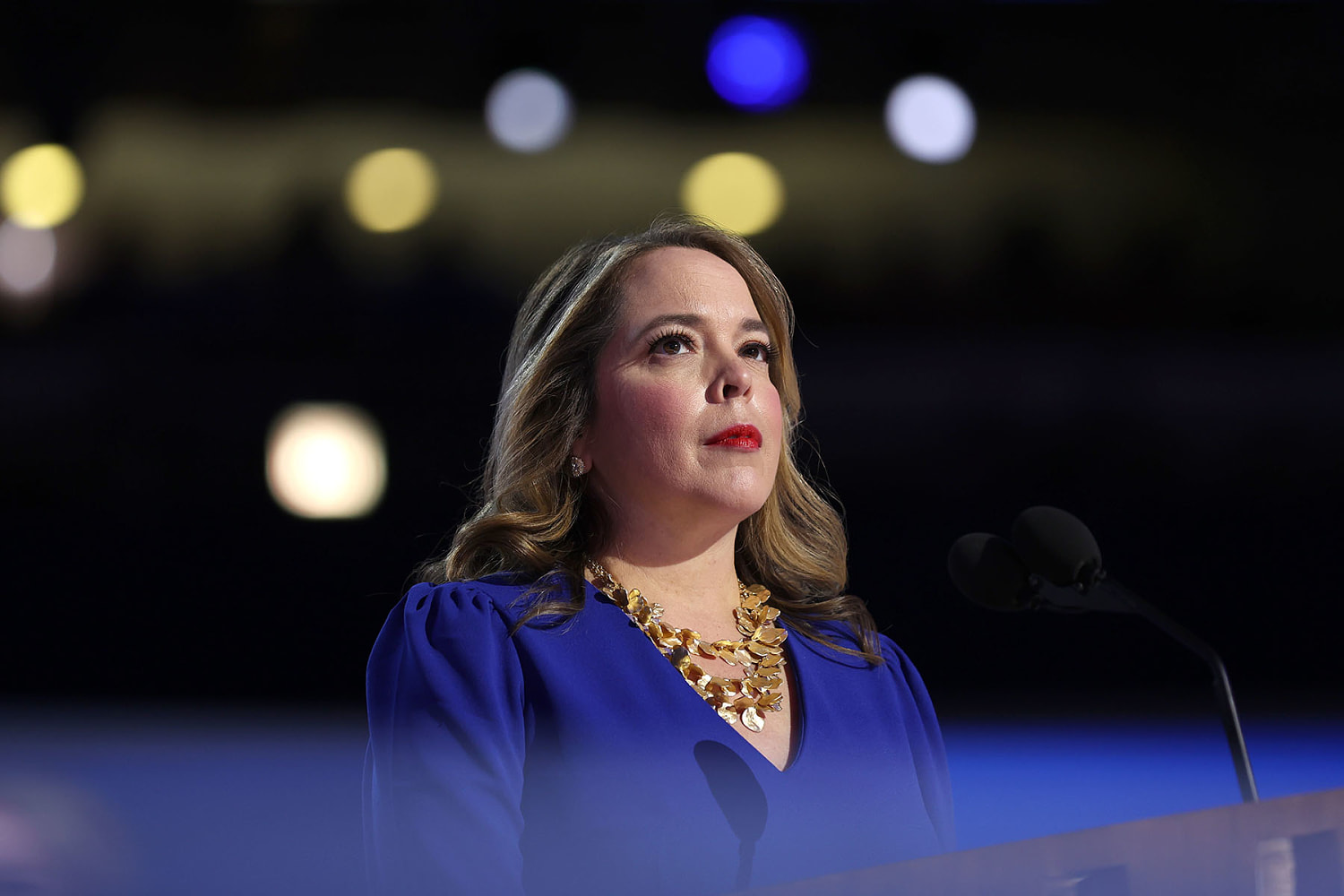
Olivia Troye isn't just switching lanes; she's jumping the median and driving into oncoming traffic. The former homeland security adviser to Mike Pence officially launched her campaign for Congress as a Democrat in Virginia’s newly proposed 7th District. It’s a move that feels inevitable to some and like a betrayal to others. But for Troye, it’s the climax of a five-year divorce from the party she grew up in.
She isn't coming to the table as a fresh-faced progressive. She’s a national security hawk who spent years in the windowless rooms of the Pentagon and the Department of Homeland Security. You don't just "unlearn" that kind of background. Her pitch to voters is simple: I saw the machine from the inside, I saw it break, and I’m the only one who knows how to fix the wiring.
From the West Wing to the Campaign Trail
Troye’s trajectory shifted during the COVID-19 pandemic. While serving on the White House Coronavirus Task Force, she claims she witnessed a "staggering" disregard for human life. She resigned in August 2020, but she didn't go quietly. She became one of the most visible "Never Trump" Republicans, even speaking at the Democratic National Convention.
Now, she’s trading her role as a professional critic for a seat at the legislative table. Her campaign video doesn’t pull punches. She talks about the "evil" she saw in the West Wing and framed her departure not as a career move, but as a moral necessity.
The Redistricting Gamble
There’s a massive catch to Troye’s announcement. The district she wants to represent—Virginia's 7th—doesn't technically exist in its current form yet. Her run depends on a high-stakes redistricting referendum scheduled for April 21, 2026.
If voters approve the new map, the district becomes a "lobster claw" shaped stronghold for Democrats. It’s designed to give the party a 10-1 advantage in Virginia’s congressional delegation. Republicans are already screaming about gerrymandering, but Troye is leaning into the chaos. She’s the first to jump into a field that’s expected to get crowded very fast.
Why a Former Republican Might Actually Win
You might think a former Pence staffer would be a tough sell for Democratic primary voters. You're probably right. She’s going to face heat from the left for her past work in the Bush and Trump administrations. But Troye has a few cards to play:
- National Security Credibility: In an era of global instability, her resume at the DHS and Pentagon is hard to beat.
- The "Enemy of My Enemy" Factor: For Democrats who prioritize beating Trumpism above all else, Troye is a battle-tested ally.
- Bi-partisan Appeal: In a general election, she can talk to suburban moderates in a way a "Squad-style" progressive can't.
She’s positioning herself as a "John McCain Republican" who finally found a home in the Democratic party. Whether that resonates with the base in Northern Virginia remains to be seen.
The Crowded Field and the Road Ahead
Troye isn't the only one eyeing the seat. The potential lineup includes state lawmakers like Saddam Azlan Salim and Dan Helmer, plus Dorothy McAuliffe, the former first lady of Virginia. This won't be a coronation. It’ll be a brawl.
If you’re watching this race, keep your eye on the April 21 vote. That’s the real starting gun. If the map fails, Troye’s campaign might be over before it starts. If it passes, she’s immediately the most interesting candidate in the country.
If you want to understand where the 2026 midterms are heading, look at candidates like Troye. They aren't just changing parties; they're redefining what it means to be a "moderate" in a country that’s increasingly polarized.
Check the local Virginia redistricting polls before you place any bets on this race. The map is everything.