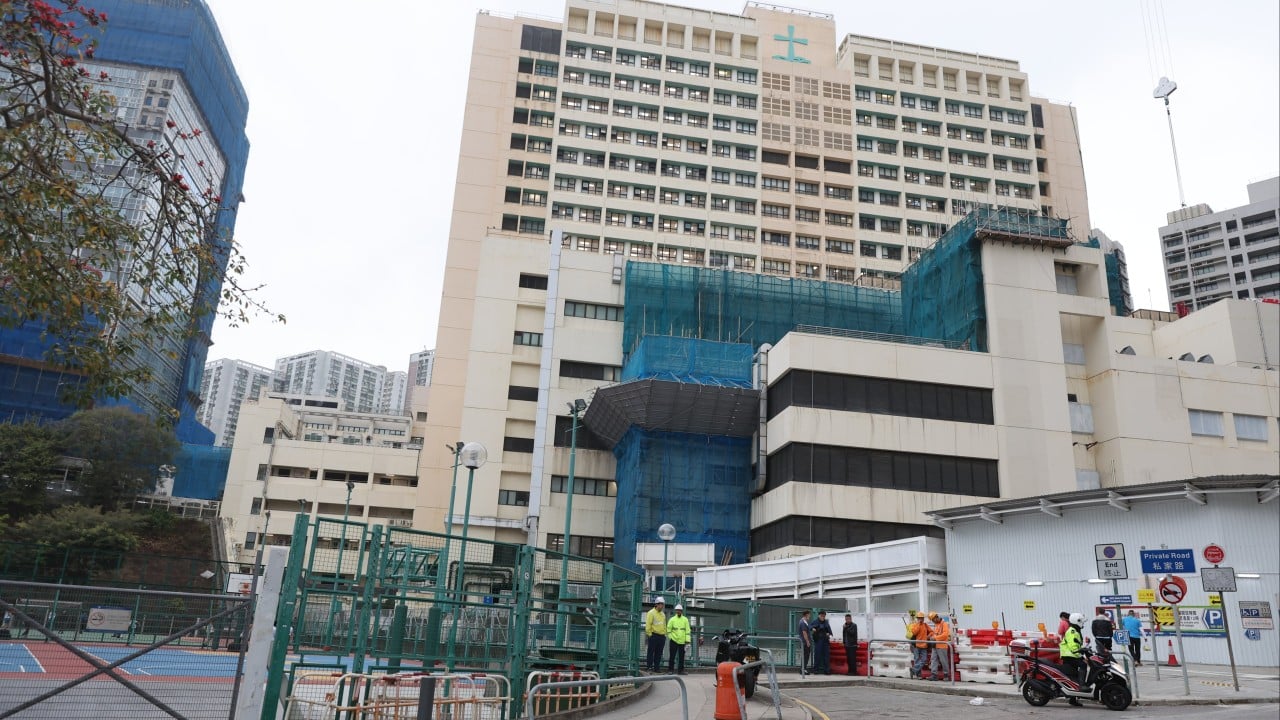
Two women are dead. One hit by a goods vehicle in Kwun Tong, another by a coach in Tsuen Wan. The standard media script is already running: "Police are investigating the driver’s conduct," "witnesses are urged to come forward," and the inevitable public outcry for stiffer penalties for professional drivers.
It is a comfortable lie.
We love blaming the human behind the wheel because it suggests the system is fine and only the individual is broken. If we just punish the "bad" drivers, the streets will be safe. This logic is not just lazy; it is a mathematical failure.
The harsh truth? These deaths are a feature of our urban design, not a bug. We have built "forgiving" environments for 12-ton machines while expecting biological entities made of flesh and bone to maintain 100% situational awareness in high-stress, low-visibility industrial zones.
The Blind Spot Fallacy
When a goods vehicle crushes a pedestrian, the first question is usually: "Did he see her?"
Wrong question.
The right question is: "Why are we still allowing vehicles with 2.5-meter-high cabs and massive structural blind spots to operate in high-density pedestrian corridors without mandatory, active-intervention safety tech?"
I’ve spent years analyzing logistics flows in hyper-dense urban centers. I have sat in the cabs of these vehicles. From the driver's seat of a heavy goods vehicle (HGV), a five-foot-tall human is effectively invisible for a significant percentage of any turn. We act shocked when an accident happens, yet we continue to permit the operation of "legacy" fleets that rely on mirrors designed in the 1970s.
Safety isn't about better training. You cannot train away a blind spot. You cannot "awareness-campaign" your way out of the physics of a 30-foot turning radius. Until we mandate 360-degree camera arrays with AI-driven emergency braking—systems that take the "choice" out of the driver's hands—these deaths are a statistical certainty.
The Myth of the "Professional" Driver
The public treats bus and truck drivers as elite operators. They aren't. They are overworked, underpaid gig workers or contractors fighting a losing battle against delivery windows and traffic congestion.
When you see a coach involved in a fatal accident, don't look at the driver’s record. Look at the company’s shift logs. Fatigue is the silent passenger in almost every heavy vehicle fatality. Research consistently shows that moderate sleep deprivation produces impairment equivalent to a 0.05% blood alcohol content.
We are effectively letting thousands of "drunk" drivers navigate our streets because the logistics industry demands 24/7 throughput. The competitor's article mentions "separate traffic accidents," but they aren't separate. They are symptoms of the same systemic rot: an economic model that prioritizes the movement of goods and commuters over the physical safety of those who occupy the space between.
Pedestrian "Safety" is Gaslighting
"Cross at the lights." "Look both ways." "Wear bright clothing."
This is victim-blaming masquerading as public service. When a 15-ton coach hits a human, the velocity and mass ensure that the pedestrian’s "caution" is largely irrelevant. We design roads as "stroads"—half-street, half-road hybrids. They are wide enough for speed but lined with shops that invite foot traffic.
This creates a high-kinetic energy environment.
In a true "street," designed for people, the geometry forces the vehicle to slow down. Bollards, raised crossings, and narrowed lanes are the only things that work. But we won't build them because it might add 90 seconds to a delivery route. We have collectively decided that a human life is worth less than the efficient movement of a shipping container.
The Failure of "Smart City" Rhetoric
Politicians love talking about Smart Cities. They show us renderings of sleek sensors and glowing lights. Yet, in the real world, the "smart" tech is being used to optimize traffic flow—meaning, how many cars can we jam through an intersection per minute—rather than pedestrian survival.
If we were serious, "Smart" would mean:
- Geo-fencing: Heavy vehicles automatically governed to 20km/h in designated pedestrian zones. No driver input required.
- Weight-based Access Fees: If you want to bring a vehicle over 5 tons into a residential or high-street area, you pay a premium that funds trauma centers.
- Automated Enforcement: Not just for speed, but for proximity.
We have the tech. We lack the spine.
Logistics is a Blood Sport
The "goods vehicle" involved in the Kwun Tong incident wasn't there for fun. It was there because of the insatiable demand for rapid-turnover retail and e-commerce. Every time we click "same-day delivery," we are adding another heavy vehicle to a street never designed to handle it.
The blood is on the hands of the urban planners who refuse to implement "Last Mile" consolidation centers. Why are we allowing individual HGVs to make point-to-point deliveries in the heart of the city?
A sane system would require heavy trucks to drop loads at a perimeter hub, with the final leg completed by small, electric, high-visibility vans or cargo bikes. It’s more expensive. It’s slower. It also doesn't crush women under its wheels.
Stop Praying for Safety
The "thoughts and prayers" cycle for traffic victims is a pathetic avoidance tactic. We don't need more "investigations." We know why people die:
- Massive vehicles.
- High speeds.
- Poor visibility.
- Inadequate physical separation.
Every fatality is a design failure. Every "accident" is a predictable outcome of a prioritized economy. If we continue to treat these as isolated incidents involving "negligent drivers," we are complicit in the next one.
The drivers will be arrested. The families will grieve. The trucks will keep rolling. And tomorrow, you will walk across a street designed to kill you, wondering why the world feels so dangerous.
It’s because we built it that way. Now, stop looking for a "guilty party" and start looking at the blueprints.
The problem isn't the man behind the wheel. The problem is the wheel itself.