In the sterile, fluorescent-lit corridors of an industrial park on the outskirts of Haifa, or perhaps in a nondescript office building overlooking the sprawling chaos of Tehran, a light stays on. It is three in the morning. A technician, fueled by dregs of bitter coffee and the low-frequency hum of a cooling server, watches a screen. This is where the modern war is fought—not with the thunder of cavalry or the whistle of falling lead, but in the binary pulse of a "zero-day" exploit and the quiet, frantic evacuation of a factory floor.
The Iranian Revolutionary Guard Corps (IRGC) recently issued a directive that felt less like a military order and more like a funeral rite for the era of plausible deniability. They told industries linked to the United States and Israel to "start evacuation." This wasn't a suggestion. It was a siren song echoing across a digital landscape that has become increasingly jagged and unforgiving.
For decades, the shadow war between these powers remained exactly that—a shadow. A centrifuge in Natanz would spin itself into scrap metal because of a piece of code called Stuxnet. A ship would experience a "mechanical failure" in the Strait of Hormuz. These were pinpricks. They were messages sent in a language only spies and engineers could translate. But the current atmosphere has shifted. The veil is thinning. When a state actor openly tells private industry to run, the architecture of global security isn't just cracking; it is being redesigned in real-time.
Consider the foreman of a chemical plant or the supervisor of a logistics hub. They are not soldiers. They didn't sign up for the front lines. Yet, they find themselves staring at a memo that tells them their workplace is now a bullseye. The "attack on Iran's nuclear sites" cited by the IRGC serves as the catalyst, a justification for moving the conflict from the silos to the streets.
Warfare used to be a matter of geography. You knew where the border was. You knew where the trenches were dug. Today, the border is a fiber-optic cable buried beneath the Atlantic. The trench is the firewall of a power grid. When the IRGC identifies "Israel-linked industries," they aren't just talking about defense contractors. They are talking about the connective tissue of the global economy. They are talking about the software that manages your local water treatment plant, the shipping company that moves your electronics, and the startups that form the backbone of modern innovation.
The fear isn't just about a physical explosion. It’s about the collapse of trust.
Imagine a hypothetical software engineer named Elias. He works for a tech firm in Tel Aviv that specializes in irrigation sensors. His work helps farmers in sub-Saharan Africa grow crops with half the water. He is a man of peace, a man of logic. Suddenly, because his company receives funding from a venture capital firm with ties to the West, he is told his office is a legitimate target. He has to explain to his daughter why he’s bringing his laptop home and why there’s a new security guard at the front gate who looks like he’s seen too much of the world.
This is the human cost of "evacuation" orders. It turns the mundane into the terrifying. It forces a decoupling of the global community that we spent thirty years trying to stitch together.
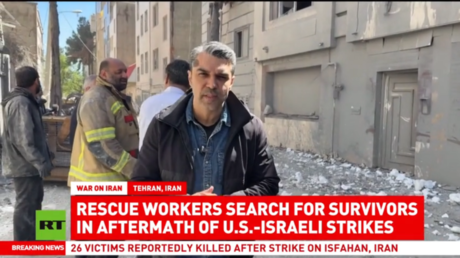
The IRGC's rhetoric is a calculated performance. By claiming that attacks on their nuclear infrastructure—sites like Natanz or Isfahan—justify a scorched-earth policy toward international industry, they are trying to hold the world’s economy hostage to their domestic security. It is a leverage play. If the world wants to keep its supply chains moving, the logic goes, it must restrain those who would strike at Iran’s heart.
But leverage is a double-edged sword. When you tell the world to leave, they might actually do it. And they might never come back.
The technical reality of these nuclear sites is a labyrinth of concrete and paranoia. These are not just buildings; they are symbols of national identity and scientific defiance. Deep underground, thousands of centrifuges hum at frequencies that defy the ears of those on the surface. To strike them is not just a tactical decision; it is a psychological one. It signals that nowhere is safe, no matter how many meters of reinforced earth you pile on top.
In response, the IRGC isn't hitting back at military bases. They are hitting back at the concept of "business as usual."
They are betting on the fact that the West is vulnerable because it is open. Our strength—our interconnectedness, our reliance on digital infrastructure, our global trade—is precisely what makes us a soft target. A drone can be shot down. A missile can be intercepted by an Iron Dome battery. But how do you intercept a directive that causes a thousand CEOs to lose sleep? How do you defend against the slow, grinding anxiety of an investment withdrawal?
The "evacuation" isn't just physical. It’s financial. It’s the sound of capital fleeing a room because the lights flickered.
We often talk about these events in the abstract. We analyze the geopolitics. We debate the nuances of the JCPOA or the precision of F-35 strikes. But we forget the person sitting in the dark, watching the screen, waiting for the red text to appear. We forget that the "industry" being evacuated is made of people who have mortgages, favorite coffee shops, and a desperate desire to believe that the world is more stable than the headlines suggest.
The IRGC’s warning is a mirror. It reflects a world where the distinction between "combatant" and "civilian" is being erased by the necessity of the struggle. If every industry linked to a rival power is a target, then there is no such thing as a non-combatant. We are all, in some small way, standing in the path of the storm.
There is a specific kind of silence that follows a declaration like this. It’s the silence of a boardroom after the lawyers leave. It’s the silence of a factory floor when the machines are cut. It’s the silence of a man like Elias, sitting on his balcony, looking at the city lights and wondering which one will go out first.
We are entering an era of the "Unprotected Space." The old rules, written in the aftermath of World War II, assumed that war had a beginning and an end. They assumed that you could distinguish between a soldier in a uniform and a coder in a hoodie. Those assumptions are now relics. They are as outdated as a musketeer on a modern battlefield.
The real tragedy isn't the threat of the attack itself. It’s the realization that we have built a world so fragile that a single memo from a paramilitary group can send tremors through the foundations of global trade. We have traded resilience for efficiency. We have traded security for speed.
The technician in the sterile room in Haifa blinks. The screen stays green. For now. He checks the news feed, sees the IRGC's latest proclamation, and feels a cold draft that has nothing to do with the air conditioning. He thinks about the evacuation order. He thinks about the people he knows who work in those "linked industries."
He realizes that the "evacuation" started long ago. It started the moment we decided that the digital world was separate from the physical one, and that we could fight in one without bleeding in the other.
The lights in the industrial park continue to burn, lonely beacons in a world that is rapidly losing its sense of direction. The shadow war is over. The sun is coming up, and it is illuminating a battlefield that encompasses every office, every server, and every home. We are no longer just witnesses to the conflict. We are the territory being fought over.
Somewhere, a dial is turned. A command is entered. A suitcase is packed. The watchmen have stopped watching the horizon and started looking at their own shadows, waiting to see which one moves first.