The silence of a high-altitude desert night is not truly silent. There is the persistent hum of the wind across the ridges of the Registan, the occasional shift of gravel under a stray animal’s hoof, and the rhythmic breathing of a city trying to sleep. But in the early hours of this Monday, that ancient quiet was shattered by a mechanical whine that belongs to a different century entirely. It is a sound that has become the new anthem of the borderlands—the frantic, high-pitched buzz of a drone motor.
When those drones appeared over Pakistani urban centers, they weren't just a military nuisance. They were a message. For years, the border between Pakistan and Afghanistan has been a line drawn in shifting sand, but the introduction of remote-controlled warfare has turned a geopolitical dispute into a terrifyingly intimate game of cat and mouse. When the Pakistani military finally decided to answer, the response didn't come in the form of diplomatic cables or border skirmishes. It came from the screaming engines of fighter jets streaking toward the outskirts of Kandahar.
The Invisible Pilot
To understand why this matters, you have to look past the maps and the troop movements. Consider a hypothetical shopkeeper in a city like Quetta or Peshawar. He is closing his shutters, thinking about the price of flour or his daughter's school fees. Suddenly, the sky above him isn't just the sky anymore. It’s a theater. Small, off-the-shelf drones—the kind you might buy for a teenager’s birthday, but modified with crude explosives—hover like lethal insects.
These aren't the billion-dollar Predators or Global Hawks we see in movies. These are "democratized" weapons. They represent a shift where non-state actors, like the various factions operating under the Taliban’s umbrella, can project power into a sovereign nation's heart without ever stepping across a checkpoint. For the Pakistani government, this was the breaking point. Sovereignty isn't an abstract concept when your citizens are looking at the clouds with fear.
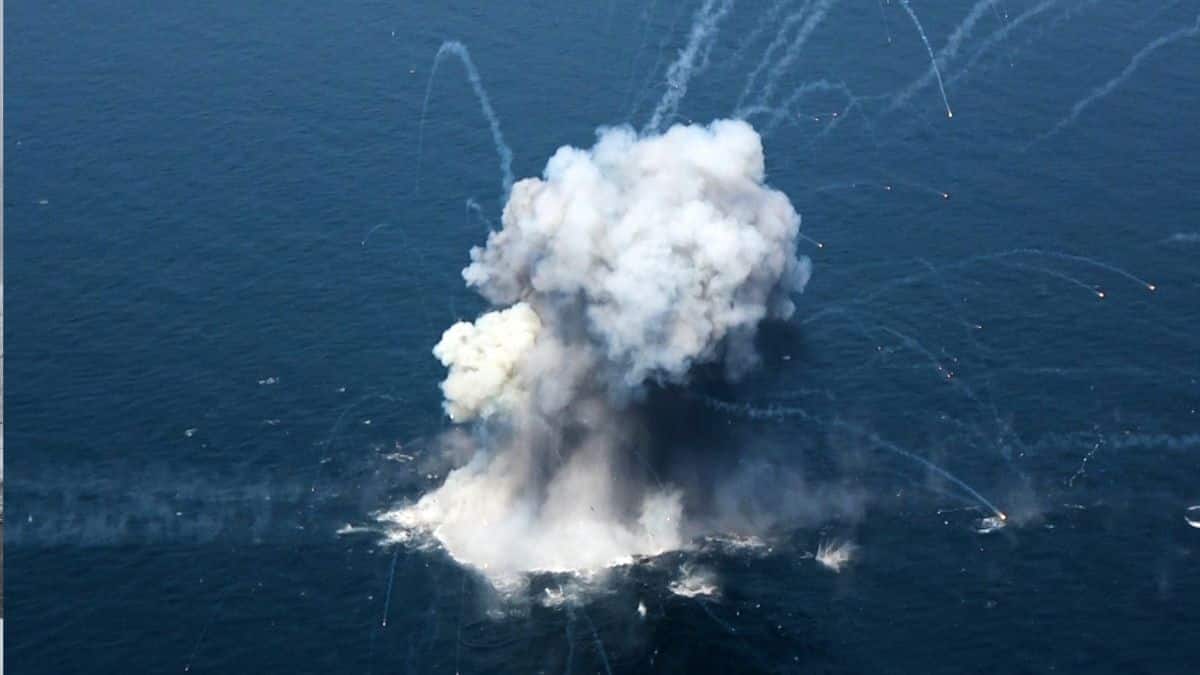
The retaliatory strikes on the outskirts of Kandahar were an attempt to reset the scales. By targeting what they identified as "terrorist hideouts" and drone launch sites, Pakistan's military was trying to scream louder than the drones. They were asserting that the age-old rules of "hot pursuit" still apply, even if the enemy is a teenager with a remote control five miles away.
The Anatomy of a Grudge
The relationship between these two neighbors is a tangled knot of shared history, shared faith, and deep-seated suspicion. For decades, the narrative was that Pakistan held the leash of the Afghan insurgency. Today, that narrative has flipped on its head. The Taliban, now the masters of Kabul, find themselves unable—or perhaps unwilling—to restrain the splinter groups that use their soil as a springboard for attacks against their former benefactors.
It is a bitter irony. The very border that was once porous for the sake of "strategic depth" has become a sieve through which insecurity flows back into Pakistan.
The strikes near Kandahar weren't just about destroying a few sheds or a dozen drones. They were an act of desperation and a show of force aimed at the Taliban leadership. It was a physical manifestation of a question: "If you cannot govern your borders, why should we respect them?"
The Human Cost of Precision
Modern military briefings love the word "surgical." They talk about "targeted strikes" and "minimized collateral." But on the ground, surgery is still a bloody business. When the missiles hit the rugged terrain outside Kandahar, the impact wasn't just felt by the militants. It was felt by the families in nearby villages who woke to the earth shaking. It was felt by the children who now associate the sound of a jet engine with the end of the world.
There is a psychological weight to this kind of warfare. When a ground invasion happens, you see the dust of the trucks. You see the uniforms. There is a tangible enemy. But in this new era of strikes and counter-strikes involving unmanned aerial vehicles (UAVs) and stand-off missiles, the threat is ghost-like. It creates a vacuum of trust.
Wait.
Think about the sheer technical leap required for this conflict to reach this stage. Ten years ago, the idea of the Taliban using drone swarms to harass Pakistani cities was the stuff of low-budget techno-thrillers. Today, it is a Tuesday morning reality. This shift suggests that the technology has outpaced the diplomacy. We are witnessing a regional arms race where the "arms" are being built in backroom workshops and guided by GPS coordinates sent via encrypted messaging apps.
A Cycle Without a Circuit Breaker
The danger now is the feedback loop. Pakistan strikes Kandahar to stop the drones. The groups in Afghanistan, fueled by a sense of violated sovereignty and religious fervor, use the strikes as a recruitment tool. They launch more drones. The Pakistani public demands more protection. The jets fly again.
This isn't a chess match. It’s a landslide.
Every time a jet crosses that line, the Durand Line—a border Afghanistan has never officially recognized—becomes more of a scar. The "invisible stakes" here aren't just about who controls which hill. They are about the total collapse of the brotherly rhetoric that once defined the two nations. We are seeing the birth of a permanent state of low-intensity war, where the frontline is everywhere and the soldiers are often invisible.
The shops in Kandahar will reopen. The dust from the Pakistani strikes will settle into the red earth. But the precedent has been set. The sky is no longer a neutral space. It is a corridor for retribution.
As the sun sets over the spinning rotors of a departing drone and the cooling engines of a returned fighter jet, the people on both sides are left with a chilling realization. They are no longer just neighbors living in the shadow of history; they are targets in a digital-age blood feud that no amount of concrete wall or barbed wire can truly stop.
The buzzing in the air isn't going away. It is getting louder.