The sound of a motorcycle engine sputtering to a halt is usually a minor annoyance. In a bustling Karachi alley or along the dust-choked roads of Rawalpindi, it is part of the daily symphony. But lately, that silence has taken on a heavy, suffocating quality. It is the sound of a choice being made between a liter of fuel and a liter of milk.
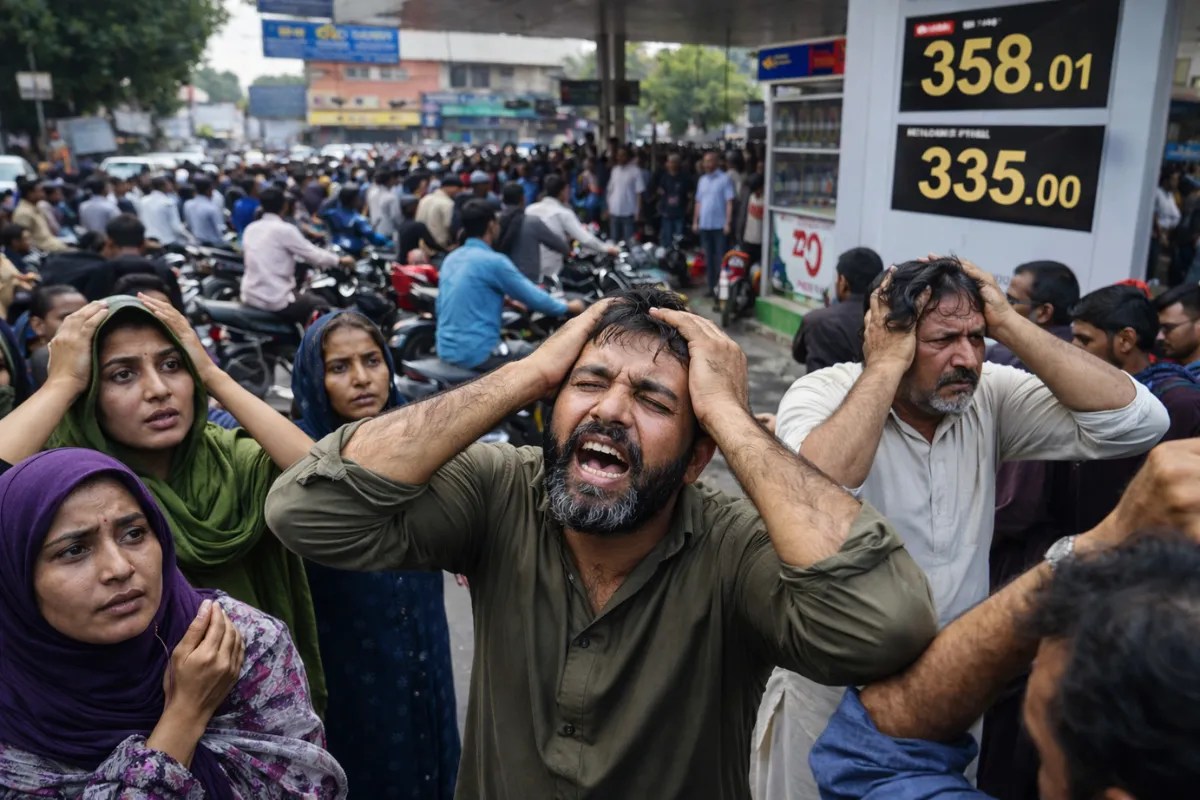
When the Pakistani government announced the latest hike in petrol and diesel prices, the reaction wasn't a loud explosion of rage. It was a collective, weary sigh. The numbers on the digital displays at the filling stations jumped again, pushing the cost of a single liter of petrol toward a threshold that felt like a fever dream just two years ago. For the average citizen, these aren't just statistics on a fiscal report. They are the invisible walls closing in on a life already squeezed by inflation.
The Math of a Breaking Point
Consider a man named Tariq. He is a composite of a thousand men you might meet near the Minar-e-Pakistan. Tariq rides a weathered Honda CD70 to his job at a textile mill. His salary hasn't moved in eighteen months. To Tariq, the "macroeconomic stabilization" touted by officials in Islamabad feels like a cruel joke.
Every time the price of petrol climbs by 10 or 20 rupees, Tariq loses a piece of his world. First, it was the weekend trips to see his mother in the village. Then, it was the fruit he used to bring home for his children. Now, he calculates his commute with the precision of a diamond cutter. He coasts downhill with the engine off. He skips lunch to ensure the tank has enough to get him home.
The government points to the International Monetary Fund. They speak of "tough decisions" and "necessary corrections." They explain that the global market is volatile and that subsidies are a luxury a bankrupt treasury cannot afford. Logic dictates that they are right. You cannot spend money you do not have. But logic is a cold comfort when you are staring at a fuel gauge that refuses to budge despite the crumpled notes you just handed to the attendant.
The Domino Effect of a Single Drop
Fuel is the blood of a modern economy. When the cost of moving that blood increases, every organ begins to fail. It is a common misconception that petrol prices only affect those with wheels.
The crates of tomatoes coming from the farms of Sindh don't fly to the markets on wings. They travel in aging trucks that gulp diesel. When the diesel price spikes, the trucker charges more. The wholesaler passes that cost to the shopkeeper. By the time that tomato reaches a kitchen in Peshawar, its price has doubled, not because the tomato is better, but because it was expensive to move.
This is why the public's "head-clutching" frustration—the matha peetna described in local headlines—is so visceral. It is the realization that a hike in fuel is actually a hike in everything. It is a tax on survival.
The energy sector in Pakistan is a tangled web of circular debt and aging infrastructure. For decades, various administrations kicked the can down the road, keeping prices artificially low to buy political peace. Now, the road has ended. The bill has arrived, and it is being delivered to the people who can least afford to pay it.
The Invisible Stakes
There is a psychological cost to this constant economic bombardment. When a society lives in a state of perpetual "price shock," the future disappears. People stop planning for next year because they are terrified of next Tuesday.
In the tea stalls of Lahore, the conversation has shifted. A few years ago, men talked about cricket or politics with a sense of fire. Now, they talk about the price of a liter of petrol with a clinical, haunting obsession. They know the rates better than they know their own birthdays. They discuss the PKR-to-USD exchange rate as if they were Wall Street traders, not because they want to be, but because they have to be.
They are living in a reality where the government’s attempt to save the state’s credit rating is effectively destroying the household’s credit.
The stakes are not just about whether a car can run or a factory can stay open. The stakes are about the social contract. When the state asks for more and more while providing less and less, the bond of trust thins to a translucent thread. People look at the luxury SUVs of the elite, idling in the same traffic, and they wonder why the "sacrifice" is always asked of the man on the motorbike.
A Journey Through the Numbers
To understand the gravity, one must look at the trajectory. We aren't just seeing a price increase; we are witnessing an era of permanent austerity.
- The Petrol Price: It has crossed the 270-280 rupee mark, fluctuating with the whims of a volatile global market and a struggling local currency.
- The Diesel Factor: High-speed diesel, which powers the backbone of transport and agriculture, often sits even higher, directly hitting the cost of bread and vegetables.
- The Kerosene Reality: Even kerosene, the fuel of the poorest households for cooking and light, has not been spared, dragging the most vulnerable further into the dark.
This isn't a temporary dip. It is a fundamental shift in the cost of living. The government argues that by removing subsidies, they are preventing a total economic collapse—a "default" that would make the current situation look like a paradise. They are essentially choosing a slow, painful surgery over a sudden, fatal heart attack.
The Resilience of the Exhausted
Yet, in the middle of this, there is a strange, quiet resilience. You see it in the carpooling groups forming in office blocks. You see it in the shift toward electric bikes, though the upfront cost remains a barrier for most. You see it in the way neighbors share a single ride to the bazaar.
But resilience has a shelf life. You can only stretch a rupee so far before it tears.
The "whirlwind" of price hikes is more than just a headline; it is a transformation of the Pakistani way of life. The vibrant, late-night culture of cities like Karachi is being dimmed by the sheer cost of getting around. The bustling markets are quieter because the "window shoppers" can no longer afford the petrol to get to the window.
The Ghost in the Machine
Behind every price notification issued by the Ministry of Finance is a ghost—the ghost of a failed energy policy that spans decades. Pakistan’s reliance on imported fuel is a noose that tightens every time the global oil price ticks upward. Without a radical shift toward domestic renewables or a massive overhaul of the power grid, these "shocks" will continue to arrive like clockwork.
The tragedy is that the "hoosh ud jayenge" (losing one's senses) reaction isn't an exaggeration. It is a literal description of the cognitive load required to survive in an economy that feels like it is actively working against you.
As the sun sets over the Indus, the flickering lights of the cities tell a story of a nation in waiting. Waiting for a break. Waiting for a stabilization that actually reaches the dinner table. Waiting for the day when a liter of petrol is just a commodity again, rather than a measure of a man’s worth or a family’s future.
The motorcycle in the alley eventually starts again, a ragged cough of exhaust signaling a new journey. But the rider doesn't look at the road ahead with the same confidence he once had. He is watching the needle. He is listening to the engine. He is wondering how many more kilometers he has left before the tank, and the patience of a nation, finally runs dry.