The mud is the first thing you notice. It isn't just dirt and water; it is a thick, suffocating grey sludge that smells of rotting vegetation and ancient, forgotten things. Beneath that sludge, something is trying to breathe.
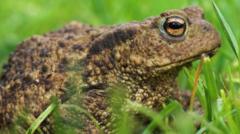
If you stood on the edge of the reservoir a week ago, the air would have been alive. You would have heard the low, rhythmic thrum of a thousand voices—a vibrating wall of sound that signals the return of spring. Common toads are not subtle creatures when it comes to love. They travel miles, crossing lethal roads and navigating treacherous gardens, driven by an internal compass that points to a single, specific body of water.
For the toads of this particular stretch of countryside, that destination was the reservoir. Until the plug was pulled.
Imagine a man named Arthur. Arthur isn't a scientist, and he doesn't work for the water company. He is a volunteer with a bucket and a headlamp. For twenty years, he has spent his March evenings patrolling the lanes, picking up cold, bumpy travelers and carrying them safely to the water’s edge. He knows the weight of a female toad—heavy with the promise of several thousand eggs—and the insistent grip of the smaller male clinging to her back.
This year, Arthur arrived at the shoreline to find a wasteland.
The water company had a job to do. Maintenance, they called it. Essential infrastructure work. From a boardroom or a spreadsheet, draining a reservoir is a logistical tick-box, a necessary step in ensuring the taps in the nearby city don't run dry in July. But the spreadsheet didn't account for the timing. It didn't see the migration maps. It didn't hear the chorus.
By the time the last of the water hissed down the drain, more than a thousand toads were left stranded in a lunar landscape of drying silt.
Biology is a cruel clock. When a toad reaches its ancestral breeding pond, its body is primed for one thing. If the water is gone, the instinct doesn't just vanish. They wait. They hunker down in the cracks of the hardening mud, gold-flecked eyes scanning for a shimmer that no longer exists. They dehydrate. Their skin, which needs moisture to exchange oxygen, begins to tighten.
The scale of the disaster is difficult to visualize until you see the buckets.
Local residents, alerted by the sudden silence where there should have been a roar of life, descended on the site with whatever they could find. Plastic pails, washing-up bowls, even Tupperware containers. They waded into the muck, sinking to their knees, reaching for the small, motionless shapes. It is backbreaking, soul-crushing work. You pick up one toad, and your torchlight reveals ten more. You pick up those ten, and the mud shifts to reveal fifty.
A thousand lives. It sounds like a statistic until you are holding number four hundred and eighty-two in your palm and feeling its throat pulse with the last of its strength.
The water company issued a statement. They spoke of "unforeseen circumstances" and "unavoidable operational requirements." They used the language of distance. When we use words like mitigation and protocol, we create a buffer between our actions and the pulse of the earth. We pretend that nature is something that can be paused, like a video, and resumed when the maintenance crew has finished their shift.
But nature doesn't have a pause button.
The eggs that were already laid—strings of black pearls draped over submerged weeds—are now nothing more than shriveled ribbons of leather baking in the sun. An entire generation of a local population wiped out in a single afternoon because a valve was opened at the wrong time.
The tragedy here isn't just about the toads. It is about the terrifying disconnect between the systems we build and the world they occupy. We have become so efficient at managing resources that we have forgotten how to coexist with the cycles of life. We see a reservoir as a tank, a volume of cubic meters to be moved and manipulated. We fail to see it as a nursery, a cathedral, or a home.
Consider the journey of a single toad. It has survived three years of predators. It has dodged the tires of cars and the beak of the heron. It has hibernated through the frost, tucked away under a log, waiting for the specific temperature, the specific humidity, and the specific moon phase that says go. It spends every ounce of its energy to reach the water.
To arrive and find only a graveyard of mud is a betrayal of the highest order.
There is a specific kind of grief that comes with being a witness to this. The volunteers don't talk much as they work. They just move, their boots making a wet, sucking sound in the silt. They are trying to save what they can, transporting the survivors to smaller, nearby ponds that are already overcrowded. It is a desperate, makeshift solution to a corporate-scale problem.
The common toad is "common" only by name. Their numbers across the country have plummeted by nearly 70% in the last thirty years. They are the canaries in the coal mine, or more accurately, the barometers of our wetlands. When they disappear, it isn't just because of one drained reservoir. It is the cumulative weight of a thousand small negligences. A paved-over garden here, a polluted stream there, and a "necessary" maintenance project at the height of the breeding season.
[Image of the life cycle of a toad]
We live in an age where we are constantly told that big, systemic changes are the only way to save the planet. We talk about carbon credits and global summits. But the reality of conservation is often much smaller, much muddier, and much more human. It is the decision of a site manager to delay a project by three weeks. It is the foresight to consult a local ecology group before turning a wrench. It is the recognition that a thousand small lives have a value that cannot be captured in a quarterly report.
The water company has promised an investigation. They will likely offer a "biodiversity enhancement" project elsewhere to make up for the loss. They might plant some trees or build a bird box. But you cannot "offset" the loss of a specific, localized population that has evolved to use this specific water source for centuries. You cannot replace a chorus with a press release.
As the sun sets over the hollowed-out basin, the silence is the loudest thing in the valley.
In the nearby ponds, the lucky ones are calling. Their high-pitched chirps carry through the cool evening air. But back at the reservoir, the mud continues to harden. There are still toads out there, buried deep, waiting for a tide that isn't coming back.
Arthur stands at the fence, his bucket empty for now, his hands stained dark with the earth. He looks out at the grey expanse and wonders if they will come back next year. He wonders if the memory of the water is stronger than the trauma of the mud.
We like to think of ourselves as the masters of the landscape, the engineers of the environment. But we are ultimately just part of the fabric. When we tear a hole in it, we don't just lose the animals; we lose a piece of our own humanity. We lose the ability to listen to the world around us.
The real test of our civilization isn't how well we can drain a reservoir. It is whether we have the wisdom to know when to leave the plug in.
Somewhere in the darkness, a single toad makes a move. It drags itself over a ridge of dry silt, its golden eye fixed on a distant, glimmering hope. It is small, it is exhausted, and it is utterly alone in a world that forgot it existed.
The night is cold. The water is gone. But the toad keeps moving.
The question is whether we are willing to move with it, or if we will continue to stand by and watch the silence grow.