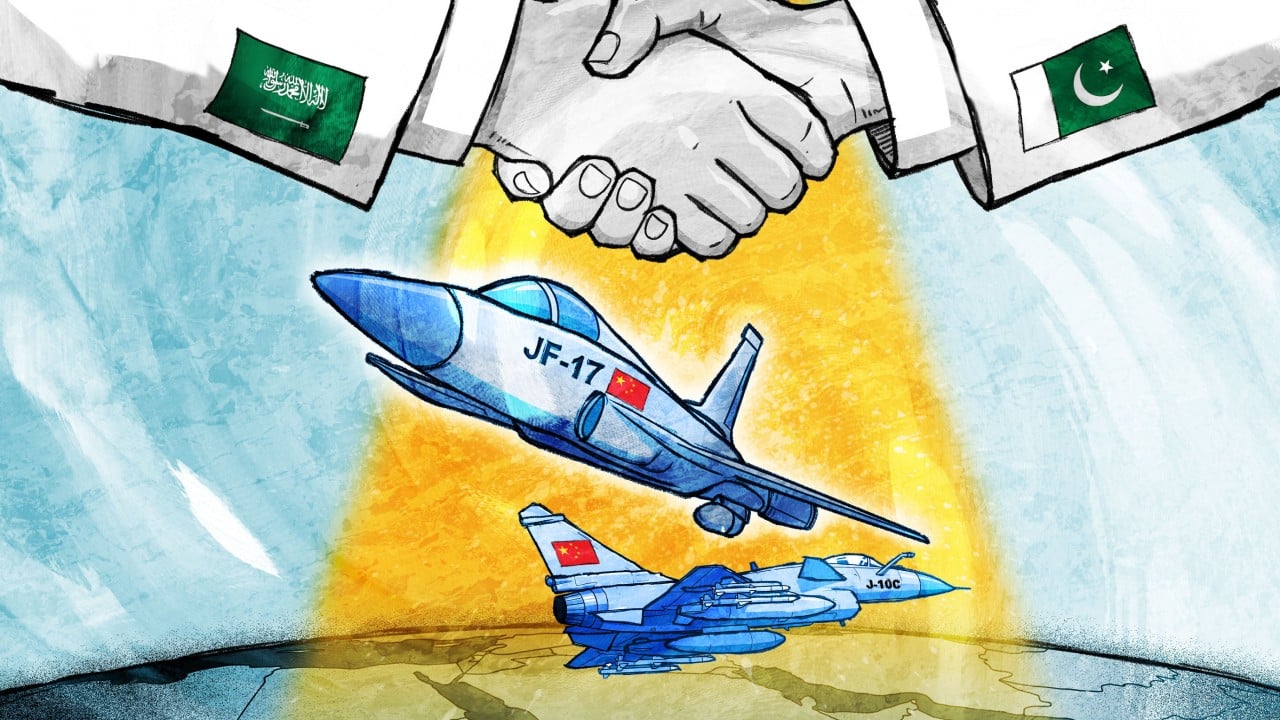
The ink is barely dry on the Strategic Mutual Defence Agreement (SMDA) signed in Riyadh, but the ripple effects are already rattling nerves from Washington to New Delhi. When Saudi Crown Prince Mohammed bin Salman and Pakistani PM Shehbaz Sharif shook hands at the Al-Yamamah Palace on September 17, 2025, they weren't just formalizing a long-standing friendship. They were essentially creating a side door for Chinese military tech to enter the heart of the Gulf without the usual political baggage.
Honestly, if you've been watching the Middle East lately, this isn't a shock. The U.S. has been playing hard to get with its F-35s and high-end missile shields. Saudi Arabia is tired of waiting. By locking in a "an attack on one is an attack on both" pact with a nuclear-armed Pakistan, Riyadh has effectively bought itself a nuclear umbrella and a massive catalog of battle-tested Chinese hardware—all under the guise of "brotherly cooperation."
The JF-17 is the Trojan Horse
Look at what happened just last month in April 2026. Pakistan deployed JF-17 Block III fighters to Saudi soil. This isn't just a training exercise. These jets are the physical embodiment of the China-Pakistan partnership. They carry Chinese sensors, Chinese PL-15E long-range missiles, and Chinese data links.
By bringing these jets into Saudi hangars, Pakistan is giving the Royal Saudi Air Force (RSAF) a front-row seat to Chinese capability. It's a low-risk trial run. If the Saudis like what they see—and let's be real, the price tag is much friendlier than Lockheed Martin's—they can buy their own fleet. Since Pakistan already manufactures these planes, the transaction looks like a "South-South" deal rather than a direct snub to the U.S. by buying straight from Beijing.
Why the West should be worried
The U.S. has always relied on the "interoperability" argument to keep Gulf states in its orbit. The idea is simple: if you buy American, you can play in our sandbox. But the SMDA changes the math. Pakistan has spent decades integrating Chinese tech into Western-style command structures. They're the bridge.
- Risk-free testing: Saudi Arabia gets to evaluate Chinese tech like the HQ-9 air defense system or the Wing Loong drones through Pakistani operations without a direct diplomatic fallout with D.C.
- The Nuclear Factor: While both sides are being quiet about it, you don't sign a "mutual defense" treaty with a nuclear power unless you want that deterrent to rub off on you. It's the ultimate insurance policy against regional rivals.
- The SIFC Engine: Pakistan’s Special Investment Facilitation Council (SIFC) is now fast-tracking defense production. They're basically inviting Saudi capital to build Chinese-designed weapons on Pakistani soil. It's a localized supply chain that is immune to Western sanctions.
It is about more than just hardware
This pact is a middle finger to the old "security for oil" status quo. For years, the U.S. was the only cop on the beat. Now, Riyadh is building what experts call a "parallel security architecture." They aren't ditching the U.S. entirely—that would be suicidal—but they're making sure they aren't dependent on a Washington that might change its mind after the next election.
The real winner here is China's defense industry. They've found a way to get their tech into the most lucrative arms market in the world without firing a single shot or signing a single controversial treaty themselves. Pakistan does the heavy lifting, Saudi Arabia provides the cash, and China provides the blueprints.
What happens next
If you're watching this space, keep an eye on the J-31 (FC-31) stealth fighter. Rumors are already swirling that Pakistan is eyeing the "Gyrfalcon" to counter India's growing air power. If Pakistan buys in, don't be surprised if Saudi Arabia is the one footing the bill for the production line in exchange for a piece of the action.
- Watch the joint drills: The frequency and complexity of "Al-Samsaam" and other joint exercises will tell you how much data the Saudis are letting Chinese-made sensors collect in their airspace.
- Follow the money: Look for Saudi "investments" in Pakistani state-owned defense firms through the SIFC. That's where the real deals are happening.
- Check the U.S. reaction: Washington will likely try to counter this by offering "watered down" versions of high-end tech, but it might be too late to stop the shift toward the East.
The "risk-free exposure" for Chinese arms is no longer a theory. It's happening in real-time, and it's being paid for in Riyals.