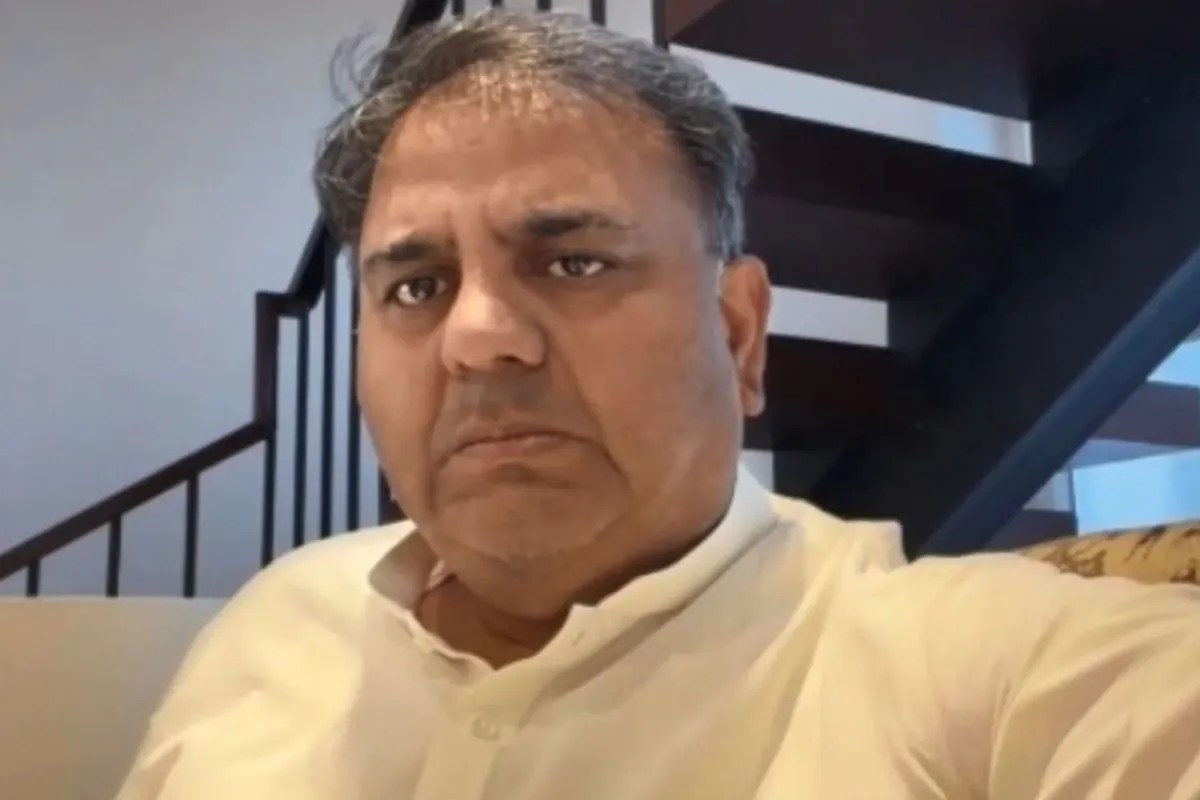
Fawad Chaudhry is stating the obvious, but he is fundamentally misreading the map. When the former Information Minister claims the Prime Minister is not the "real boss" in Pakistan, he is leaning into a tired narrative of victimization that has paralyzed the country’s political class for decades. The "establishment vs. civilian" trope is a lazy intellectual shortcut. It assumes that if you simply handed a Prime Minister total, unchecked autonomy, the country would suddenly transform into a high-functioning democracy.
It wouldn't.
The obsession with finding the "real boss" ignores a much harsher reality: the office of the Prime Minister in Pakistan is not failing because of interference; it is failing because it has been designed as a patronage hub rather than an executive office. While the media fixates on who holds the remote control, the battery in the device has been dead since the late 1980s.
The Sovereignty Trap
Politicians love to complain about the lack of "space" to govern. This is a convenient excuse for administrative incompetence. The standard argument suggests that the military’s footprint in the economy and foreign policy creates a "state within a state."
Here is the nuance the "insiders" miss: the military didn't just seize this space; they occupied a vacuum left by a political class that treats governance like a feudal inheritance. When civilian institutions fail to deliver basic judicial speed, energy security, or tax collection, the "Establishment" doesn't just intervene out of malice—it intervenes because the state's vital organs are flatlining.
Chaudhry’s critique assumes that the Prime Minister should be a sovereign king. In a modern global economy, no leader is truly sovereign. They are constrained by bond markets, IMF dictates, and regional security realities. The Pakistani political elite spends so much time fighting for the "right" to lead that they never actually learn how to lead.
The CEO Model vs. The Populist Idol
Stop looking for a "Real Boss." Start looking for a Chief Executive.
The current Pakistani political structure is built on personality cults. Whether it’s the PTI, PML-N, or PPP, the parties are structured as family businesses or messianic movements. This is why they struggle with the "real boss" in Rawalpindi. Professional organizations respect professional counterparts. When a civilian government operates on whim, nepotism, and short-term optics, it loses the "authority of competence."
Imagine a scenario where a Pakistani Prime Minister spent their first 100 days not on political vendettas or "anti-establishment" rhetoric, but on radical civil service reform and digitizing the tax base. If you make the civilian bureaucracy more efficient than the military's administrative arm, you shift the power balance naturally. You don't get power by demanding it in a TV interview; you get it by making yourself indispensable to the country’s survival.
The Security Dilemma is an Economic One
The competitor article suggests that the "boss" is whoever controls the guns. That is 20th-century thinking. In 2026, the real boss is whoever controls the balance of payments.
Pakistan’s national security is currently being dictated by its debt profile. When you are perpetually on the brink of default, your "sovereignty" is a polite fiction maintained for the sake of the national anthem. The military knows this. The politicians know this. Yet, they continue to play a zero-sum game for the captain's hat while the ship is taking on water.
- The Illusion of Control: Controlling the ISI or the Army Staff doesn't lower the price of electricity.
- The Competence Gap: If the civilian government cannot manage a state-owned airline (PIA) without it losing billions, why should they be trusted with the nuclear button or complex regional diplomacy?
The tragedy of the "Fawad Chaudhry logic" is that it frames the problem as a personality clash. It’s not. It’s a systemic failure of the civilian elite to build institutions that can actually compete with the discipline of the military.
Institutional Hysteria
We have seen this cycle repeat until it has become a farce. A leader is brought in with "one page" harmony, they fail to fix the economy, they pick a fight with the generals to hide their own policy failures, they get ousted, and then they become "pro-democracy" martyrs.
The "Real Boss" is the person who can finally break this loop. But breaking the loop requires the one thing Pakistani politicians refuse to do: share power within their own parties. You cannot demand "civilian supremacy" over the military while practicing "dictatorial supremacy" over your own cabinet.
The Hard Truth About Accountability
Accountability in Pakistan is always weaponized. It is never about transparency; it is about elimination. When Chaudhry points fingers at the "real power," he is also deflecting from the fact that his own tenure—and the tenures of those before and after him—were marked by a total lack of internal audit.
If the Prime Minister wants to be the boss, they must first be the servant of the law. As long as the Prime Minister’s office is used to protect cronies and target rivals, the military will always be viewed by a significant portion of the population as the "adult in the room," regardless of the democratic costs.
Stop Asking Who the Boss Is
The question itself is flawed. In a functioning republic, the law is the boss. The Constitution is the boss. The fact that we are still debating whether a human being in a uniform or a human being in a waistcoat is the "real boss" proves that Pakistan is still operating under a monarchical mindset.
The establishment isn't the cause of Pakistan's political weakness; it is the symptom. You don't remove the symptom by complaining about it. You remove it by curing the underlying disease of political incompetence, lack of internal party democracy, and an allergic reaction to long-term economic planning.
If you want to know who the real boss of Pakistan is, look at the creditors. Look at the people holding the debt. Look at the shrinking middle class. They are the ones actually determining the limits of what a Prime Minister can or cannot do. Everything else is just theatre for the masses.
The era of the "Great Man" leader is over. Pakistan doesn't need a boss. It needs a management team that knows how to read a balance sheet and isn't afraid to fire their own relatives. Until that happens, the office of the Prime Minister will remain exactly what it is today: a high-pressure seat with a very short lease and no steering wheel.
Build a better car before you complain about who's driving.