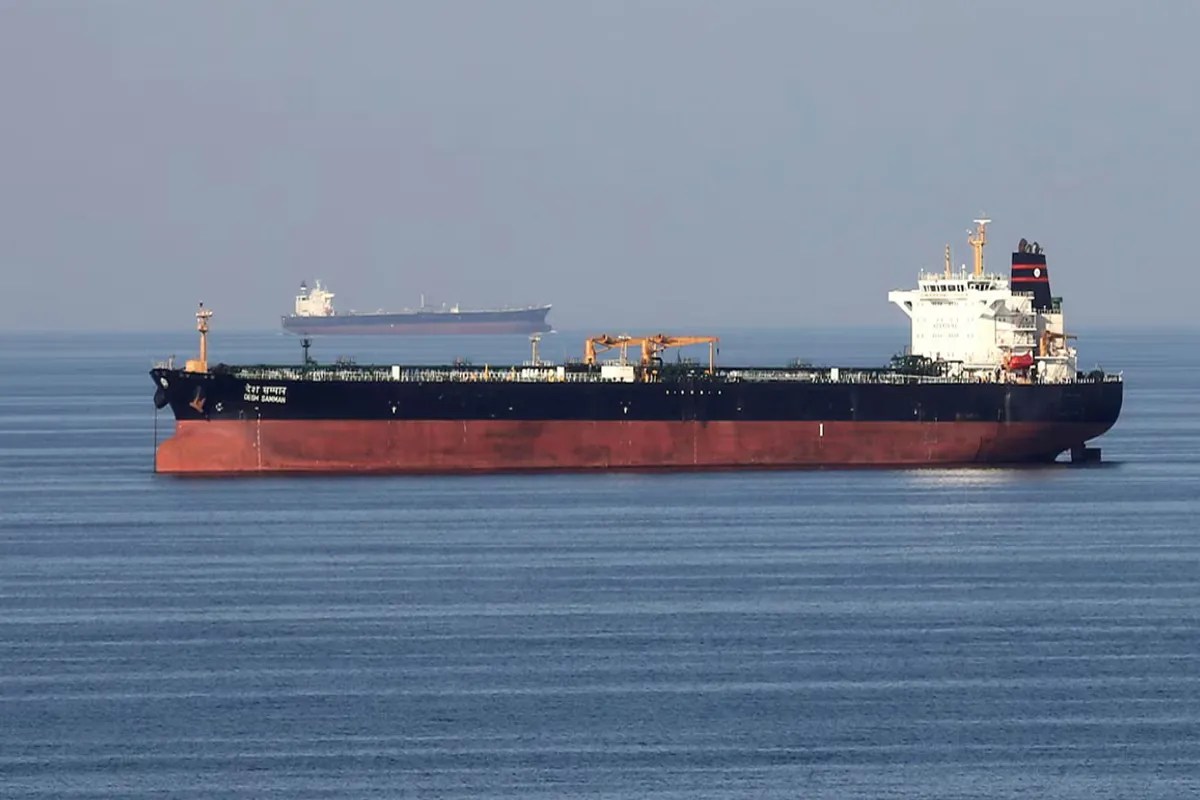
The headlines are screaming about a "direct challenge" to American hegemony. They want you to believe that an Iranian supertanker openly crossing the oceans is a geopolitical earthquake. It is a cinematic narrative. It is also completely wrong.
Most analysts look at a ship’s transponder and see a provocation. I look at the same data and see a scripted performance. The mainstream media is obsessed with the optics of "defiance," but they are missing the underlying mechanics of energy logistics and maritime law. Iran isn't breaking the system. It is exploiting a system that was designed to have backdoors.
The Sanction Theater
Sanctions are not a brick wall. They are a sieve.
The common misconception is that when the US places sanctions on Iranian oil, the flow stops. In reality, the flow just changes its legal structure. We have seen this play out for decades. The "rogue" tanker isn't an outlier; it is a vital component of the global energy equilibrium. If every drop of sanctioned oil actually stayed in the ground, the price of Brent crude would skyrocket to levels that would cripple the Western middle class.
The US knows this. Iran knows this. The buyers know this.
When a supertanker moves "openly," it isn't an act of war. It is a signal that the backroom deal is holding. The "challenge" is a performance for domestic audiences on both sides. Washington gets to talk about enforcement and "monitoring," while Tehran gets to brag about its "bravery." Meanwhile, the oil reaches the refinery, the money moves through shadow banks, and the global economy avoids a supply-side cardiac arrest.
Sovereignty Is a Commodity
People ask, "Why doesn't the US Navy just seize the ship?"
The premise of the question is flawed. It assumes that international law is a set of rigid rules enforced by a global police force. It isn't. International law is a series of cost-benefit analyses.
Seizing a supertanker in international waters without a specific, internationally recognized legal pretext—beyond unilateral US sanctions—is a logistical and legal nightmare. It sets a precedent that China or Russia could use to seize Western assets in the South China Sea or the Baltic.
- The Insurance Loophole: Most of these vessels operate under flags of convenience (Panama, Liberia, Marshall Islands).
- The Ownership Maze: The paper trail for a single tanker often leads to a dozen shell companies in jurisdictions like the Seychelles or the British Virgin Islands.
- The Tactical Reality: To stop a VLCC (Very Large Crude Carrier) physically, you are looking at a military operation that risks an environmental disaster. Imagine the optics of a million barrels of oil spilling because a boarding party hit the wrong valve.
I have watched desks at major trading firms ignore "sanctioned" status because the paperwork was "washed" through ship-to-ship transfers in the Malacca Strait. By the time that oil hits a terminal, its chemical signature might be Iranian, but its legal soul is pure Malaysian or Emirati.
The Logistics of the Shadow Fleet
The competitor's article focuses on one ship. That is like looking at a single raindrop and ignoring the hurricane.
There is a "Shadow Fleet" of hundreds of aging tankers. These ships are the ghosts of the maritime world. They turn off their AIS (Automatic Identification System). They change their names mid-voyage. They are the true backbone of the global energy trade.
The fact that one Iranian ship is moving "openly" is actually a sign of stability, not chaos. It suggests that for this specific cargo, the risks of being "hidden" were higher than the risks of being "public."
The Real Math of Risk
Let’s break down the economics of a "rogue" voyage.
- The Discount: Sanctioned oil typically trades at $10 to $30 below the market price.
- The Insurance Premium: Because Western P&I clubs won't touch these ships, they use sovereign guarantees or "dark" insurance pools.
- The Payoff: A single VLCC carries roughly 2 million barrels. At a $60/barrel "sanctioned" price, that’s a $120 million invoice.
For that kind of money, you can buy a lot of silence. You can pay for the best maritime lawyers to argue that the ship is in "innocent passage."
The "defiance" isn't about military might. It's about a spreadsheet. If the profit exceeds the cost of the potential fine or the increase in insurance, the ship sails. Every single time.
Why the US Wants Iran to "Defy" Them
This is the part that makes the hawks scream. The US treasury and intelligence apparatus are not incompetent. They are calculated.
The US uses these "rogue" shipments as a pressure valve. Total enforcement would mean total war or total economic collapse in specific regions. By allowing a certain percentage of Iranian or Russian oil to hit the market, the US maintains a "Goldilocks" zone for global energy prices.
- Inflation Control: High gas prices lose elections in the West.
- Intelligence Gathering: You learn more by watching a ship move than by blowing it up. You see who provides the tugboats, who handles the port fees, and which bank clears the final transaction.
- Leverage: The threat of seizing a ship is often more powerful than the seizure itself. It is a bargaining chip in the next round of nuclear or regional negotiations.
The Fragility of the "Brave Iran" Narrative
Tehran’s propaganda machine loves these stories. They portray the tanker as a steel-clad warrior crossing the "forbidden" Atlantic or Mediterranean.
But look at the hardware. These are often aging vessels that are one engine failure away from being a floating liability. If Iran were truly a superpower challenging the US, they wouldn't be relying on 20-year-old hulls and shadow-banking intermediaries. They are playing a game of "I’m Not Touching You" with the US Navy.
It’s not a challenge to the order; it’s a desperate attempt to survive within it.
Stop Asking if the Ship is Legal
People keep asking, "Is this legal?" or "How can they get away with it?"
The honest, brutal answer: Ethics and international law are luxuries of the comfortable. When a nation’s economy is strangled, "legality" becomes a semantic debate. When a superpower needs to keep its voters from paying $7 a gallon at the pump, "enforcement" becomes selective.
The next time you see a headline about a "Super-tanker Challenging the US," ignore the flags and the posturing. Look at the oil price. Look at the shipping lanes. Look at the shell companies.
The ship isn't a weapon. It’s a delivery truck. And in the world of global commodities, the delivery always finds a way, because everyone—even the "challengers"—needs the check to clear.
The ocean is big, but the world of high-stakes energy trade is incredibly small. There are no "rogue" ships. There are only ships that haven't been factored into your version of the narrative yet.
Quit looking for a naval battle that isn't coming. Start looking at the ledger where this "defiance" was already priced in.