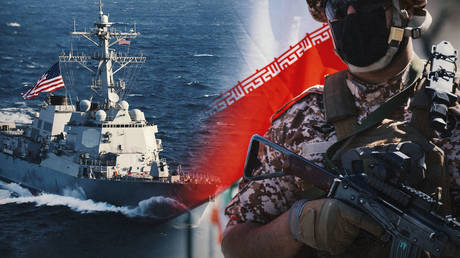
The Islamic Republic of Iran is currently navigating a period of systemic exhaustion that would have dismantled a less resilient state. In the wake of the June 2025 "Twelve-Day War" with Israel and the subsequent activation of United Nations "snapback" sanctions, the country has faced a currency spiral that effectively ended the rial as a functional store of value. By early 2026, the exchange rate on the free market breached 1.4 million rials to a single US dollar. Yet, despite these staggering figures and the January 2026 "Bazaar Protests" that saw merchants in Tehran’s historic trade districts shuttering their doors, the regime has not collapsed. It has instead transitioned into a permanent war footing, utilizing a sophisticated blend of digital repression and shadow finance to maintain a grip on power that remains far more secure than Western observers often assume.
The primary error in most external assessments of Iran is the belief that economic misery leads directly to political rupture. In a modern authoritarian state like Iran, the "social contract" has been replaced by a "coercive contract." The regime no longer promises prosperity; it promises survival against foreign aggression while ensuring its core loyalists—the security apparatus and the military-bonyad industrial complex—remain fed and funded. Recently making waves recently: Finland Is Not Keeping Calm And The West Is Misreading The Silence.
The Mojtaba Succession and the Death of Reformism
On February 28, 2026, the strategic landscape shifted permanently with the assassination of Supreme Leader Ali Khamenei in a high-precision airstrike. For decades, the question of "who comes next" was treated as the ultimate vulnerability of the Iranian system. Analysts predicted a bloody civil war or a military coup by the Islamic Revolutionary Guard Corps (IRGC). Instead, the system moved with cold, bureaucratic efficiency.
The rapid elevation of Mojtaba Khamenei as the new Supreme Leader on March 9, 2026, signaled the end of the era of "republican" pretenses. Unlike his father, who maintained a degree of distance from the day-to-day operations of the IRGC, Mojtaba is a product of the security deep state. His appointment was not a religious selection but a wartime consolidation. Additional details on this are covered by Al Jazeera.
Why the Transition Succeeded
- Institutional Loyalty: The Assembly of Experts prioritized continuity over ideological purity, fearing that any delay would invite further external strikes.
- Security Integration: Mojtaba has spent two decades managing the financial and intelligence networks that link the Office of the Supreme Leader to the IRGC.
- Decapitation Resilience: The regime had already decentralized its command structures following the losses of 2025, allowing the state to function even after its symbolic head was removed.
This transition has effectively killed the "reformist" movement within Iran. Figures who once advocated for engagement with the West are now irrelevant or imprisoned. The leadership is now entirely composed of men who believe that any sign of flexibility is an invitation to destruction.
The Architecture of Shadow Finance
The Iranian economy is often described as "crippled," but this is a misnomer. It is actually two economies: a starving public sector and a thriving, clandestine military-industrial cartel. While the average Iranian struggles to afford eggs—which spiked to 500,000 tomans per tray in early 2026—the regime has perfected the art of "sanction-proof" trade.
Central to this is the mBridge platform, a central bank digital currency (CBDC) settlement system. By February 2026, transaction volumes on mBridge surpassed 55 billion dollars, with the Chinese digital yuan (e-CNY) accounting for the vast majority of these operations. This technology allows Tehran to settle energy trades instantly, bypassing the SWIFT system and the watchful eyes of the US Treasury.
Furthermore, the "ghost fleet" of tankers continues to move crude oil to Chinese refineries through a series of ship-to-ship transfers and shell companies based in the UAE and Malaysia. Even with the US and UK intercepting vessels like the Bella 1 in early 2026, the sheer volume of the shadow trade provides enough hard currency to keep the IRGC operational.
Digital Sovereignty and the New Repression
The 2025-2026 protests were the most violent in the country's history, with human rights organizations estimating fatalities in the thousands. However, the regime's success in quelling the unrest was not just due to live fire. It was the result of a "national intranet" that has finally reached maturity.
The Siege of Information
- Surgical Blackouts: Rather than shutting down the entire internet—which harms the shadow economy—the state now uses AI-driven traffic analysis to throttle specific apps and neighborhoods in real-time.
- Starlink Jamming: Despite the proliferation of satellite internet terminals, the IRGC has deployed sophisticated electronic warfare units in urban centers that have rendered these devices increasingly unreliable.
- The Digital Rial: The push for a digital currency is as much about domestic control as it is about international trade. A digital rial allows the Central Bank to track every transaction of a suspected dissident, freezing assets with a single keystroke.
The IRGC has learned that they do not need to win the hearts of the people. They only need to make the cost of organization higher than the average citizen can pay.
The Proxy Attrition Trap
The "Axis of Resistance"—Tehran's network of regional proxies—is undeniably battered. Israel’s sustained campaign has degraded Hezbollah's leadership and dismantled Hamas's ability to govern Gaza. But the assumption that a weakened proxy network makes Iran more likely to sue for peace is a fundamental misunderstanding of their "Forward Defense" doctrine.
The Iranian leadership views the loss of proxy assets as a reason to accelerate their own internal capabilities, particularly in drone technology and ballistic missiles. The June 2025 war demonstrated that Iran can strike back directly from its own soil, puncturing the myth that it only hides behind others.
In early 2026, military intelligence suggests that Iran still maintains a stockpile of roughly 2,000 heavy ballistic missiles. These are not just weapons of war; they are the regime's ultimate insurance policy. They have watched the fate of leaders who gave up their unconventional programs and have concluded that the only path to survival is to remain a permanent, high-level threat.
The Strategy of Managed Chaos
The West is waiting for a "Berlin Wall moment" in Tehran—a sudden, peaceful collapse brought about by the weight of economic and political contradictions. This is unlikely to happen. The Iranian state has spent forty years preparing for this exact level of isolation.
They are not aiming for a return to the global community. They are aiming to be the primary disruptor within it, betting that the high price of energy and the fatigue of Western electorates will eventually force a de facto acceptance of their regional status.
The internal pressure is real. The hatred for the regime is widespread. But the tools of modern authoritarianism are more robust than the tools of 20th-century revolution. As long as the oil flows through the mBridge and the IRGC remains the only well-fed institution in the country, the Islamic Republic will continue to exist in a state of terminal, yet functional, crisis.
The question for the next decade is not how the regime will fall, but how the world will deal with an Iran that has decided it no longer needs to be a part of it.
Watch the mBridge transaction volumes for the first sign of a shift in the regime's confidence.