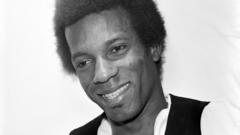
The media wants to feed you a simple morality play. They’ve framed the life sentence of Nathan Chasing Horse as the tragic fall of a cultural icon, a "Dances With Wolves" star who lost his way and became a cult leader. This narrative is lazy. It’s comforting. And it’s fundamentally wrong.
Chasing Horse didn't "fall" from grace. He operated within a vacuum created by a society that values performative representation over actual accountability. To understand why he was able to operate a predatory "The Circle" cult for two decades across the United States and Canada, you have to stop looking at him as a rogue actor and start looking at him as a byproduct of an industry and a culture that treats indigenous identity as a commodity rather than a lived reality.
The Cult of the Professional Indian
The biggest mistake in the coverage of this case is the focus on his filmography. Being an extra or a minor actor in a 1990 Western doesn't give a man power. What gave Chasing Horse power was his ability to weaponize "tradition" against people who were desperate for a connection to their heritage.
I’ve watched the entertainment industry do this for years. They find a face that fits the aesthetic, give it a platform, and then look the other way when that person uses their proximity to fame to build a private fiefdom. Chasing Horse wasn't a spiritual leader who turned bad. He was a savvy manipulator who recognized that the modern world has a massive, unquenchable thirst for "authentic" indigenous spirituality—and he sold a toxic version of it to the highest bidder, often in the form of physical and sexual control.
The "lazy consensus" says he used his fame to lure victims. The reality is more sinister: he used the absence of real institutional support for indigenous victims to ensure his immunity. He didn't hide in the shadows. He hid in plain sight, emboldened by the fact that law enforcement and social services consistently fail to protect Native women and children.
Accountability is Not a Sentencing Hearing
A life sentence feels like justice. It makes for a great headline. But if you think a judge’s gavel solves the problem, you’re part of the issue. Chasing Horse's conviction is a post-mortem on a twenty-year crime spree that should have been stopped in the early 2000s.
Why wasn't it? Because we live in a system that prefers the aesthetic of indigenous culture over the safety of indigenous people.
- The Hollywood Factor: When a person is associated with an Oscar-winning film, they carry a "halo effect" that acts as a shield.
- The Spiritual Loophole: We are socially conditioned to be hands-off when it comes to "traditional practices," even when those practices involve documented abuse.
- Jurisdictional Chaos: Predatory behavior that crosses state and tribal lines often falls into a legal "no-man's-land" where no one wants to take the lead.
The truth is, Chasing Horse was "known" in many circles long before the handcuffs clicked. The rumors were there. The warnings were there. But the status quo prefers a tidy story of a singular monster over an honest conversation about how our institutions are designed to let these monsters thrive.
Dismantling the "Medicine Man" Facade
Let’s be brutally honest about the term "Medicine Man." In the hands of Chasing Horse, it was a marketing tool. He leveraged the ignorance of both the public and his followers to redefine abuse as ritual.
Real traditional leaders don't demand sexual favors. They don't isolate victims. They don't record their crimes for "records." By continuing to use his self-appointed titles in news copy, the media continues to legitimize the very tools he used to destroy lives. We need to stop calling him a fallen leader and start calling him what he is: a human trafficker who wore a costume to avoid suspicion.
I’ve seen this pattern in business, in tech, and in Hollywood. A founder or a figurehead wraps themselves in a noble cause—whether it’s "saving the planet" or "preserving tradition"—and uses that cause as a cloak for narcissistic exploitation. The more "sacred" the cause, the more effective the cloak.
The Cost of the "Dances With Wolves" Legacy
We are still obsessed with a movie from 1990 because it represents a specific, safe way for the mainstream to engage with indigenous history. It’s the "White Savior" trope at its peak. By constantly tethering Chasing Horse to this specific film, the media is inadvertently reinforcing the idea that his primary value—and thus his primary betrayal—is tied to how he served a white audience's perception of his culture.
His victims aren't characters in a movie. They are real people who were failed by every level of society. If we want to prevent the next Nathan Chasing Horse, we have to stop looking for "authentic" heroes to put on pedestals and start building systems where no one is untouchable, regardless of their cultural status or their IMDB page.
Stop Asking "How Could This Happen?"
People keep asking how a man could commit these acts for decades without being caught. It’s a stupid question. He was caught—repeatedly. He was banned from certain tribal lands. He was identified by survivors years ago. He wasn't stopped because the cost of stopping him was an uncomfortable confrontation with the reality of how we ignore indigenous pain.
If you want to fix the system, stop celebrating the sentence and start questioning the silence.
- Demand transparency in how tribal and federal authorities coordinate on abuse cases.
- Challenge the romanticized portrayals of spiritual leaders that lack any form of community oversight.
- Acknowledge that "representation" is worthless if the people being represented are being preyed upon by the "representatives" we choose to spotlight.
The life sentence for Nathan Chasing Horse is not a victory for the system. It is a record of the system's absolute, multi-decade failure. He didn't just break the law; he exploited a world that was too busy looking at his feathers to see his hands.
Justice isn't a prison cell. Justice is the prevention of the next "The Circle." And as long as we keep buying into the myth of the tragic, fallen icon, we’re just waiting for the next predator to put on the mask.