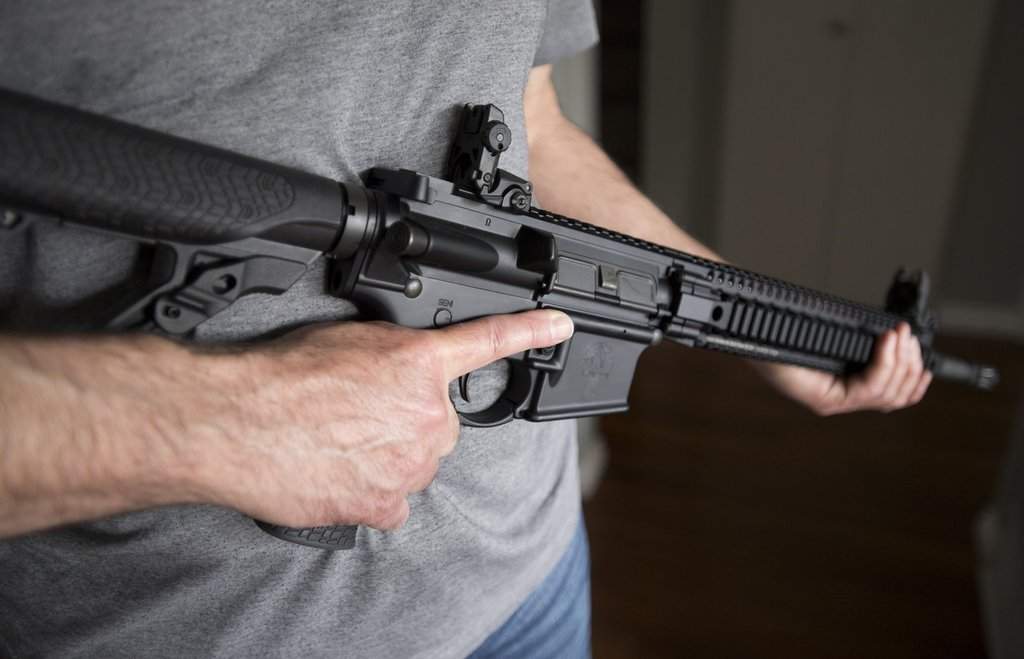
The air in a rural Ontario workshop smells of gun oil, sawdust, and history. For a man we will call Elias—a retired millwright who has spent forty years navigating the precise tolerances of heavy machinery—the workbench is his sanctuary. On it sits a Ruger Mini-14. To the federal government in Ottawa, this object is a "prohibited firearm," a mechanical threat to the public order that must be scrubbed from the map. To Elias, it is the tool he used to protect his livestock from coyotes and the heirloom he intended to pass to a grandson who shares his steady hands.
Elias represents the quiet friction currently grinding against the gears of the Canadian legal system. He isn't a criminal. He hasn't moved the rifle from its locked cabinet in four years. He is waiting. He is waiting for nine people in robes, sitting in a grand neo-classical building in the nation’s capital, to decide if his property is a public menace or a private right.
The Supreme Court of Canada has finally agreed to hear the challenge against the 2020 Order-in-Council that instantly reclassified some 1,500 models of firearms as illegal. This isn't just a debate about ballistics or magazine capacities. It is a fundamental collision between the power of the state to rule by decree and the rights of the individual to be governed by clear, predictable laws.
The Stroke of a Pen
Consider how law usually works. A bill is introduced. It is debated in the House of Commons. It moves to the Senate. Experts testify. The public watches. It is a slow, often frustrating process, but it is visible.
In May 2020, that process was bypassed. Following the heartbreak of the Nova Scotia mass shooting—a tragedy committed by a man using illegally obtained firearms—the federal cabinet bypassed Parliament. They used an "Order-in-Council," a regulatory tool that allows the executive branch to make sweeping changes with a signature. Overnight, hundreds of thousands of Canadians became owners of contraband.
The legal question heading to the Supreme Court isn't about whether guns are "good" or "bad." That is a moral debate for the dinner table. The legal question is about "vires"—whether the government had the legal authority to do what it did.
Critics argue the government overstepped. They claim the power to classify firearms was used arbitrarily, sweeping up hunting rifles and sporting equipment based on how they looked rather than how they functioned. Imagine if the government decided to ban certain cars not because of their top speed or safety ratings, but because they were painted "racing red" and looked too fast. That is the essence of the frustration felt by those now standing before the highest court in the land.
The Ghost in the Cabinet
For four years, these firearms have existed in a state of legal purgatory. An amnesty period has been extended repeatedly. Owners can keep them, but they cannot use them, sell them, or transport them. They are heavy, expensive paperweights.
The government’s logic is rooted in public safety. Their argument is simple: these weapons are "assault-style" and have no place in a civil society. By removing them, they argue, the risk of mass casualties decreases. It is a preventative strike. A collective sacrifice for the greater good.
But the data tells a more tangled story.
Police services across the country have pointed out that the vast majority of gun crime in urban centers like Toronto or Vancouver is committed with handguns smuggled across the southern border. These are "ghost guns" and illegal imports that never saw a Canadian store shelf or a licensed owner's registry.
When Elias looks at his locked cabinet, he sees the disconnect. He followed every rule. He took the courses. He passed the background checks. He renewed his licenses. Now, he feels he is being punished for the sins of the lawless. The Supreme Court must now weigh this perceived unfairness against the "Peace, Order, and Good Government" clause that gives Ottawa its teeth.
A Question of Jurisdictional Boundaries
The challenge isn't just coming from individual hunters or sport shooters. It is backed by a coalition of advocacy groups and provinces that see this as a federal overreach into property rights. In Canada, the division of power is a delicate dance. While the federal government handles criminal law, provinces generally oversee property and civil rights.
By using an Order-in-Council to effectively confiscate property (even with the promise of a yet-to-be-realized buyback program), the provinces argue Ottawa has stepped onto their turf.
Inside the courtroom, the atmosphere will be clinical. There will be talk of Section 7 of the Charter—the right to life, liberty, and security of the person. There will be deep dives into the Criminal Code and the specific wording of the Firearms Act. But outside those stone walls, the stakes are visceral.
The court’s decision will set a precedent that reaches far beyond the barrel of a gun. If the government can reclassify property and criminalize its possession through a cabinet meeting rather than a parliamentary vote, what else can be shifted? Could it be certain types of land? Certain types of vehicles? Certain types of encrypted technology?
The Cost of Certainty
The federal government has already spent tens of millions of dollars on the administrative side of this ban, yet not a single rifle has been collected. The "buyback" program is a logistical mountain that the government has struggled to climb. They need a workforce to collect the items, a secure way to transport them, and a massive budget to compensate owners.
Meanwhile, the psychological toll on the firearms community is significant. There is a sense of being "othered"—of being characterized as a latent threat despite decades of being the most scrutinized demographic in the country.
The Supreme Court is the final stop. There are no more appeals. No more delays. When the justices emerge, they will provide a definitive answer on whether the cabinet's power is a broad brush or a fine scalpel.
The Silent Workbench
Back in the workshop, Elias doesn't care much for the nuances of constitutional law. He cares about the principle of the thing. He remembers a time when the law felt like a solid floor beneath his feet. Now, it feels like a trapdoor that could swing open at any moment based on the political winds in Ottawa.
The gavel will eventually fall. When it does, it will echo in the high-rises of Montreal and the hunting camps of the Yukon. It will either affirm that the state’s pursuit of safety justifies the most direct of methods, or it will remind the leaders in the capital that even in the name of the public good, the path to the law must go through the front door of Parliament.
Until then, the oil on the Ruger Mini-14 continues to dry, and a million Canadians wait to find out if they are still citizens in good standing or criminals in waiting.
The silence in the workshop is heavy. It is the sound of a country holding its breath, waiting for the highest court to decide where the power of the state ends and the rights of the individual begin.
Whatever the verdict, the relationship between the governed and the governors has already been scarred. Trust, once broken, is rarely mended by a legal brief. It requires a sense that the rules apply to everyone—and that the rules don't change while you are sleeping.
Elias turns off the light in the shop. The metal stays in the dark. The gavel remains poised. The story of Canada’s firearms isn't about the mechanics of a trigger, but the fragility of the social contract.