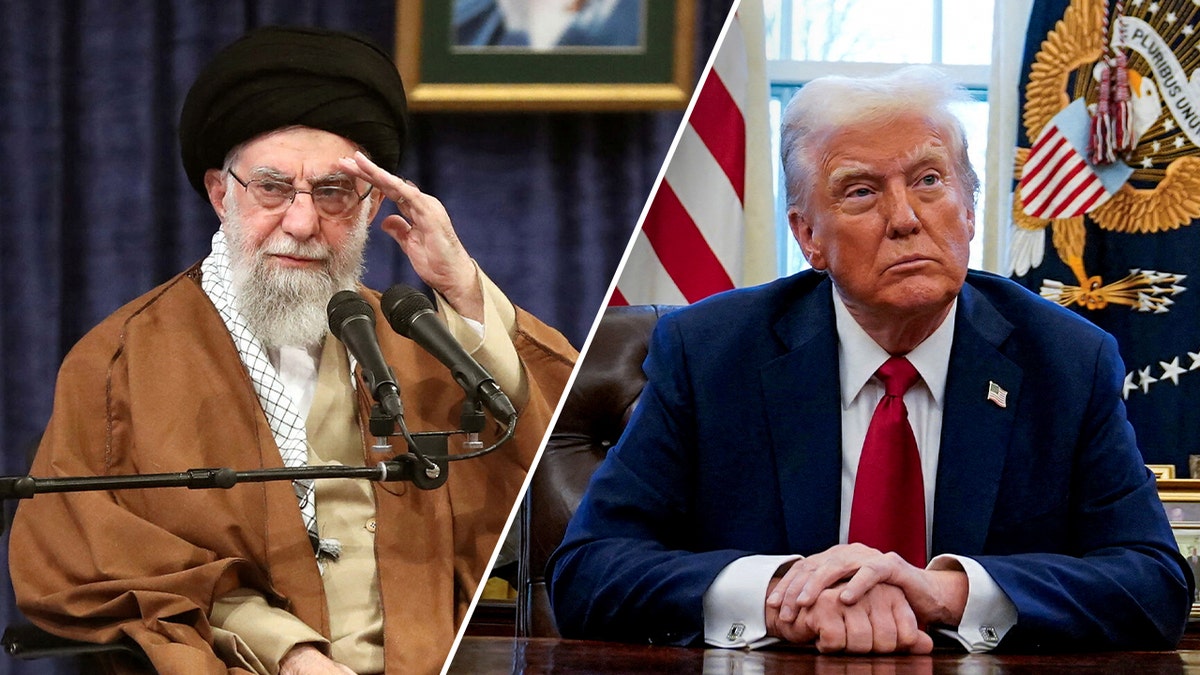
The failure of nuclear diplomacy in the Middle East is not a byproduct of personality clashes or shifting administrations, but a fundamental misalignment of legal definitions regarding the "Right to Enrich." At the core of the impasse detailed by US Special Envoy Steve Witkoff lies a binary conflict between the Western interpretation of the Non-Proliferation Treaty (NPT) as a conditional privilege and the Iranian interpretation of nuclear fuel cycles as an "inalienable right." To understand the current stalemate, one must move beyond the rhetoric of "defiance" and analyze the specific technical and legal pillars that sustain the Iranian position.
The Three Pillars of the Iranian Negotiation Strategy
Iranian negotiators operate under a rigid framework that treats nuclear technology as a component of national sovereignty rather than a tradable commodity. This strategy is built upon three distinct logic centers:
- Legal Literalism (Article IV of the NPT): Iran bases its entire enrichment program on the text of the NPT, which states that nothing in the treaty shall be interpreted as affecting the "inalienable right of all the Parties... to develop research, production and use of nuclear energy for peaceful purposes without discrimination."
- Sovereign Parity: The Iranian leadership views any restriction on enrichment levels (specifically 3.5%, 20%, or 60% $U^{235}$) as a "technological apartheid." They argue that if any NPT signatory can enrich fuel, all signatories must have the same technical ceiling, regardless of perceived intent.
- The Sunk Cost of Infrastructure: Decades of domestic investment in facilities like Natanz and Fordow have created a political and economic reality where "zero enrichment" is no longer a viable domestic outcome. The infrastructure itself has become the primary leverage in any conversation regarding sanctions relief.
The Enrichment Cost Function and Proliferation Risk
The technical gap between civilian energy production and weapons-grade material is often misrepresented as a linear progression. In reality, the "work" required to enrich uranium follows a logarithmic curve. Most of the effort is spent reaching the first 4% to 5% needed for power reactors.
- Natural Uranium: Contains approximately 0.7% $U^{235}$.
- Low-Enriched Uranium (LEU): 3% to 5% $U^{235}$, suitable for commercial power plants.
- Highly Enriched Uranium (HEU): 20% $U^{235}$, used in research reactors and medical isotope production.
- Weapons-Grade Uranium (WGU): Generally defined as 90% $U^{235}$.
The physics of enrichment dictates that once a state reaches 20% enrichment, they have already performed roughly 90% of the physical work required to reach weapons-grade levels. This is the "Separative Work Unit" (SWU) bottleneck. When Special Envoy Witkoff notes that Iran "insists" on the right to enrich, he is describing a situation where Iran has already cleared the most difficult technical hurdles. The insistence on "inalienability" is a demand for the international community to accept Iran as a "threshold state"—a nation that possesses the latent capability to produce a weapon without necessarily making the political decision to assemble one.
Structural Bottlenecks in the "Right to Enrich" Argument
The US position, articulated by Witkoff and previous administrations, operates on a different logic: the "Precedent of Non-Compliance." From a Western regulatory perspective, the NPT is a contract. If a party is found to be in "non-compliance" (as the IAEA board of governors has previously ruled regarding Iran's past undeclared activities), the "inalienable right" is suspended until "confidence" is restored.
This creates a self-reinforcing loop of failure:
- Iran's Logic: Enrichment is an inherent right $\rightarrow$ Sanctions are illegal $\rightarrow$ Resistance via further enrichment is justified.
- US Logic: Enrichment is a conditional right $\rightarrow$ Past secrecy broke the condition $\rightarrow$ Only "zero enrichment" or extreme oversight can restore the right.
The friction point is the Verification Gap. Modern enrichment via centrifuges—specifically the IR-6 and IR-8 models—allows for a much smaller physical footprint than older technology. As enrichment efficiency increases, the ability of international inspectors to guarantee that no material is being diverted decreases. This is not a matter of "trust," but a mathematical reality of "Material Unaccounted For" (MUF) within a large-scale industrial process.
The Economic Utility of the 60% Threshold
Iran’s move to 60% enrichment serves no credible civilian power purpose. Commercial reactors do not use it; even the Tehran Research Reactor, which produces medical isotopes, traditionally uses 20%. Therefore, the 60% stockpile must be categorized as a Strategic Reserve of Negotiating Capital.
By holding a stockpile of 60% HEU, Iran changes the "Price of De-escalation." In 2015, the Joint Comprehensive Plan of Action (JCPOA) was negotiated when Iran was primarily at 3.5%. Today, any new deal must address a much higher starting point. The "right to enrich" is no longer a philosophical debate; it is a demand for the legitimization of an existing high-level technical capability.
The Failure of "Maximum Pressure" as a Behavioral Modifier
Data from the 2018–2024 period suggests that economic sanctions do not move the needle on enrichment ceilings. While sanctions successfully degraded Iran's GDP and currency value, the number of installed centrifuges and the purity of the uranium stockpile increased in inverse proportion to economic health. This indicates that for the Iranian state, the "right to enrich" is a non-negotiable component of their Internal Legitimacy Function.
To the Iranian leadership, surrendering the right to enrich is equated with the surrender of the regime's core identity. This creates a "Zero-Sum Security Dilemma":
- US Goal: Permanent blockage of all "breakout paths."
- Iran Goal: Permanent recognition of "technical sovereignty."
These goals are mathematically incompatible within the current diplomatic framework.
Strategic Realignment: The Threshold State Reality
The international community must eventually transition from a "Prevention" mindset to a "Management" mindset. The "right to enrich" is already a de facto reality on the ground. The persistence of Witkoff and other envoys in reporting Iran's "insistence" on this right highlights that the Iranian side is not looking for a payout to stop; they are looking for a signature that allows them to continue.
The most probable path forward is not a comprehensive "Grand Bargain" but a series of "Transactional Freezes." In this model, Iran does not relinquish its "right" to enrich but agrees to a "Voluntary Limit" on its output in exchange for "Proportional Relief."
The risk remains the Breakout Timing. At current enrichment levels and centrifuge efficiencies, the "breakout time" (the time required to produce enough WGU for one nuclear device) is estimated in weeks, not months. This compressed timeline renders traditional diplomatic response mechanisms—like UN Security Council meetings or snap-back sanctions—obsolete.
Future stability depends on whether a monitoring regime can be established that focuses on the Conversion and Weaponization phase rather than the enrichment phase. If enrichment is "inalienable," then the focus must shift to the physical assembly of a warhead, which remains a distinct, albeit difficult to monitor, technical hurdle. The era of preventing Iranian enrichment has ended; the era of managing an Iranian nuclear threshold has begun.
Establish a "Technical Redline" framework that moves the conversation away from the "Right to Enrich" and toward the "Prohibition of Weaponization Metallurgy." Cease the demand for the total dismantling of enrichment infrastructure—which has proven politically impossible—and focus instead on the permanent presence of real-time, remote monitoring of enrichment tails and the absolute ban on uranium metal production. Success will be measured by the transparency of the feed-and-bleed rates of the centrifuges, not the existence of the centrifuges themselves.