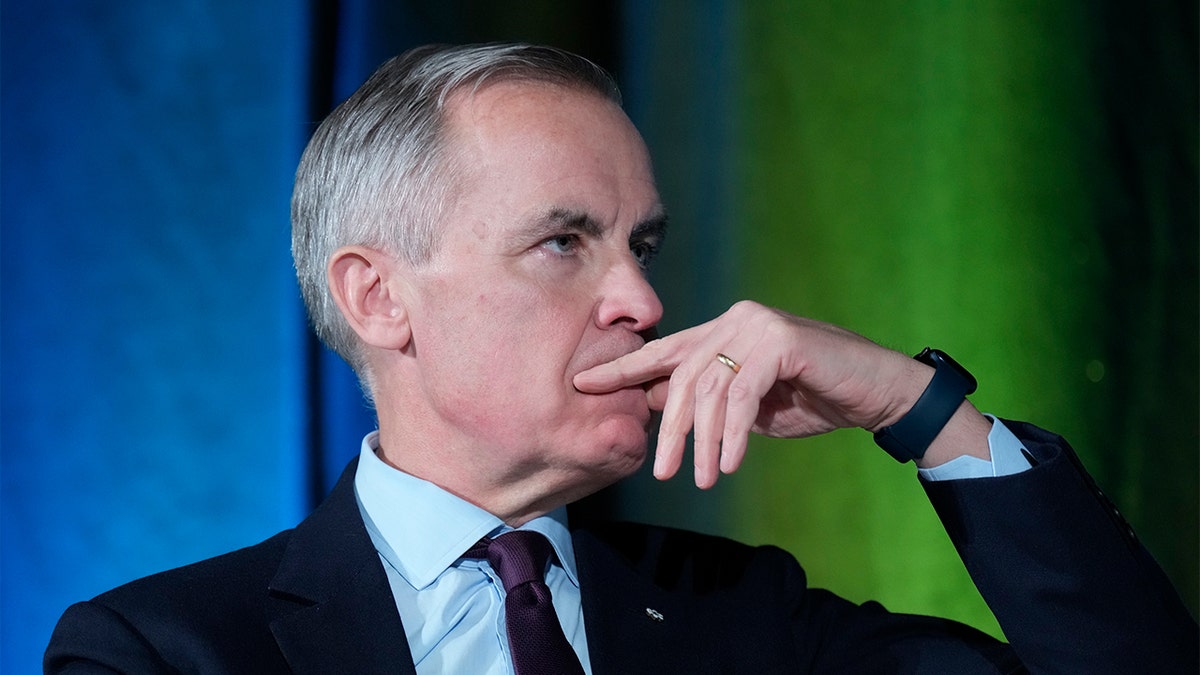
Canadian Prime Minister Mark Carney is attempting a delicate high-wire act that most seasoned diplomats would find suicidal. By seeking to deepen economic ties with Beijing while sidestepping direct condemnation of state-sponsored forced labor in Xinjiang, Carney has sparked a firestorm of criticism from human rights groups and political rivals alike. The central tension lies in Canada’s ambition to become a global leader in the electric vehicle (EV) sector, a goal that currently requires a cozy, or at least functional, relationship with the Chinese supply chains that dominate critical minerals and battery production.
A recent report from Human Rights Watch (HRW) has stripped away the diplomatic veneer, accusing the Carney administration of weakening international pressure on Beijing. The friction reached a boiling point following comments by Michael Ma, a former Conservative MP who defected to Carney’s Liberals. During a parliamentary committee, Ma appeared to cast doubt on the existence of Uyghur forced labor, prompting a national debate about whether the Canadian government is trading its moral compass for market access.
The EV Dilemma and the Shenzhen Shift
Canada's industrial strategy is currently anchored in the green transition. To build a domestic EV powerhouse, Ottawa needs parts, and those parts often flow through Chinese manufacturing hubs. When Ma questioned experts on whether they had "personally witnessed" forced labor in Shenzhen, he was not just defending a colleague; he was signaling a shift in how the government discusses its trading partners. While Xinjiang is the documented epicenter of Uyghur repression, the integration of forced labor into the broader Chinese industrial machine means the "taint" is no longer localized.
Carney’s response to the HRW report was characteristically measured, yet many found it hollow. He stated that Canada takes issues of forced labor "incredibly seriously," but he pointedly refused to confirm the existence of such practices in China when asked directly. This linguistic gymnastics is a sharp departure from the 2021 Canadian government position, which explicitly warned businesses about the risks in Xinjiang. By softening the rhetoric, Carney is attempting to insulate Canada’s nascent EV industry from the trade retaliations that often follow human rights rebukes.
The Enforcement Gap
Critics argue that Canada’s legislative framework for blocking forced labor imports is effectively a paper tiger. While the United States operates under the Uyghur Forced Labor Prevention Act (UFLPA), which assumes any product from Xinjiang is made with forced labor unless proven otherwise, Canada lacks such a "rebuttable presumption."
Without this legal mechanism, the burden of proof sits squarely on the shoulders of the Canada Border Services Agency (CBSA). In practice, this results in a trickle of enforcement against a flood of suspect goods. The Carney government has yet to advance due diligence legislation that would mirror the more aggressive standards seen in the European Union. This policy vacuum creates a "low-rights" economic environment where Canadian manufacturers, trying to play by the rules, are forced to compete with imports produced under coercive conditions.
Diversification or Desperation
The backdrop to this pivot is a deteriorating relationship with the United States. With trade tensions rising under a volatile U.S. administration, Carney has viewed China as a necessary counterweight. This is the "multipolar" reality his office frequently references. However, the HRW report suggests this diversification strategy is fundamentally flawed if it ignores the human cost.
- Supply Chain Contamination: High-risk sectors include cotton, automotive manufacturing, solar energy, and critical minerals.
- Legislative Lag: Canada's current laws do not include a "presumption of forced labor" for Xinjiang goods.
- Diplomatic Erosion: Global Affairs Canada recently removed "forced labor" from its primary departmental goals, according to internal documents.
This isn't just about ethics; it's about long-term economic security. If Canadian supply chains become inextricably linked to state-imposed labor, they become vulnerable to future U.S. sanctions. By trying to avoid a clash with Beijing today, Carney may be setting the stage for a much larger economic decoupling tomorrow.
The High Cost of Silence
The internal politics of this shift are equally messy. The Prime Minister’s Office recently admitted that human rights and foreign interference were not proactively raised during Carney’s high-profile visit to Beijing in January 2026. This admission contradicts the "rigorous engagement" the Prime Minister claims to maintain. For a leader who built a reputation on ESG (Environmental, Social, and Governance) principles during his tenure at the Bank of England and in the private sector, the silence is deafening.
The Uyghur crisis is not an abstract human rights issue; it is a structural component of the modern manufacturing landscape. Beijing’s "poverty alleviation" programs, which facilitate the transfer of Uyghurs to factories across the country, are well-documented by the United Nations and numerous independent researchers. When Canadian officials demand "first-hand" accounts as a prerequisite for condemnation, they are adopting a standard of proof that is impossible to meet in a surveillance state, effectively granting Beijing a pass.
Canada now stands at a crossroads. It can continue to prioritize a quiet, trade-first relationship with China, hoping to secure its place in the EV revolution. Or, it can align its trade policy with its stated values, implementing the rigorous import controls and transparency laws that its allies have already adopted. The current middle ground is increasingly uninhabitable.
Finance Minister François-Philippe Champagne’s upcoming trip to China will be the next litmus test. If the administration continues to use vague language about "supply chain integrity" while refusing to name the problem, the HRW report will likely be remembered as the moment the Carney government officially traded its human rights leadership for a seat at the table in Beijing.