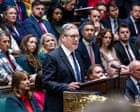
Keir Starmer is currently fighting for his political life, and honestly, it’s a mess of his own making. The Prime Minister spent Monday in the House of Commons trying to explain how a man who failed high-level security vetting—Lord Peter Mandelson—ended up as Britain’s top diplomat in Washington. Starmer’s defense? He didn't know. He claims he was kept in the dark by the very people paid to protect the integrity of the government.
The fallout has already claimed a massive scalp. Sir Olly Robbins, the Foreign Office's permanent secretary and one of the most powerful figures in Whitehall, was sacked last week. Starmer is pinning the whole "obstruction of truth" on Robbins, but the optics are terrible. It looks less like a principled stand for transparency and more like a desperate attempt to find a fall guy for a catastrophic lapse in judgment.
A vetting failure that should have been a red flag
Security vetting isn't just a box-ticking exercise. When someone undergoes Developed Vetting (DV), investigators look into every dark corner of their life—finances, foreign connections, and personal associations. For Mandelson, the red flags were everywhere. We're talking about his well-documented ties to the late sex offender Jeffrey Epstein and business links to Russia and China.
The United Kingdom Security Vetting (UKSV) agency did its job. They looked at the evidence and recommended that Mandelson be denied clearance. That should have been the end of it. Instead, the Foreign Office used a rare, almost never-used power to overrule that recommendation. They pushed Mandelson through anyway.
Starmer told MPs that he only found out about this override last Tuesday. He described the decision to withhold that information as "staggering." If you believe him, he was essentially a passenger in his own government, unaware that his hand-picked ambassador had been flagged as a national security risk.
The Robbins defense and the civil service chill
While Starmer is busy blaming "deliberate obstruction," Olly Robbins isn't going down without a fight. Sources close to the former civil service chief suggest he was simply following established protocols. In the world of high-level vetting, the final decision often rests with the department head, not the vetting agency itself.
There's a massive clash of narratives here:
- Starmer's Take: Robbins and other top officials intentionally hid the vetting failure to protect a political appointment.
- The Civil Service Take: Officials were protecting sensitive, personal data and believed they had the authority to manage the risk.
The problem for Starmer is that he's the one who appointed Mandelson in the first place. He did so before the vetting was even finished. By the time the "fail" grade came back in January 2025, the appointment was already public. This created an impossible situation for civil servants: tell the PM his star recruit is a security risk and force a humiliating U-turn, or find a way to make it work. They chose the latter, and now everyone is paying the price.
Why this isn't just about one bad appointment
This scandal hits Starmer where it hurts because it undermines his entire brand. He campaigned on being the "adult in the room"—a man of rules, process, and integrity. Yet, here we are, with his government accused of bypassing those very rules to install a political titan with a history of controversy.
It’s not just about Mandelson anymore. It’s about who really runs Downing Street. If the Prime Minister truly didn't know that his ambassador to the US failed a security check, it suggests a level of dysfunction that is hard to ignore. If he did know, or even just suspected and didn't ask, it's a breach of trust with the public.
Kemi Badenoch and the opposition are already smelling blood, calling it a matter of national security. They aren't wrong. The US is our closest intelligence ally. Sending someone to Washington who couldn't pass our own internal checks is, at best, a diplomatic insult and, at worst, a genuine vulnerability.
What happens next in the Mandelson saga
The pressure isn't letting up. Olly Robbins is set to testify before the Foreign Affairs Committee, and that’s going to be "box office" television for anyone following British politics. If Robbins produces evidence that Downing Street pressured the Foreign Office to "make the vetting work," Starmer’s "I was misled" defense will crumble instantly.
In the meantime, the Intelligence and Security Committee (ISC) is reviewing the summary of why Mandelson failed in the first place. When that document eventually becomes public, the details of those Epstein links and foreign business dealings will be back in the headlines.
If you're following this, watch the Robbins testimony closely. It’s the pivot point. If he stays quiet, Starmer might limp through. If he talks, the Prime Minister’s "fundamental mistake" might turn into a terminal one. You should also keep an eye on the internal mood of the Labour party; backbenchers are already twitchy about the government's tanking poll numbers, and a security scandal is the last thing they need.


:strip_icc()/pic2513216.jpg)