The desert at night is not silent. If you stand still enough in the Empty Quarter, the shifting sands hiss like a long, drawn-out breath. For centuries, the people of this land looked at the stars not as distant physics, but as a map. They were navigators of the void long before they had engines. But tonight, the maps are changing. The light reflecting off the dunes isn't just coming from the ancient moon; it is being met halfway by a new light, rising from the earth to claim a seat at the table of the cosmos.
Saudi Arabia has just launched the Shams satellite. To a casual observer, it is a piece of high-grade machinery, a metallic bird launched into the black. To the global scientific community, it is the moment the Kingdom officially joined NASA’s Artemis Programme. But the mechanical facts—the thrust, the orbit, the telemetry—are the least interesting parts of this story.
The real story is about a fundamental shift in the human hierarchy of the heavens.
The Weight of Oxygen
Space is a vacuum, but the politics of space are incredibly dense. For decades, the moon was a private club. You had two, maybe three chairs at the table. If you weren't the United States or the Soviet Union, you were a spectator. We watched grainy footage on television screens and accepted that the lunar dust belonged to someone else’s history.
That is over.
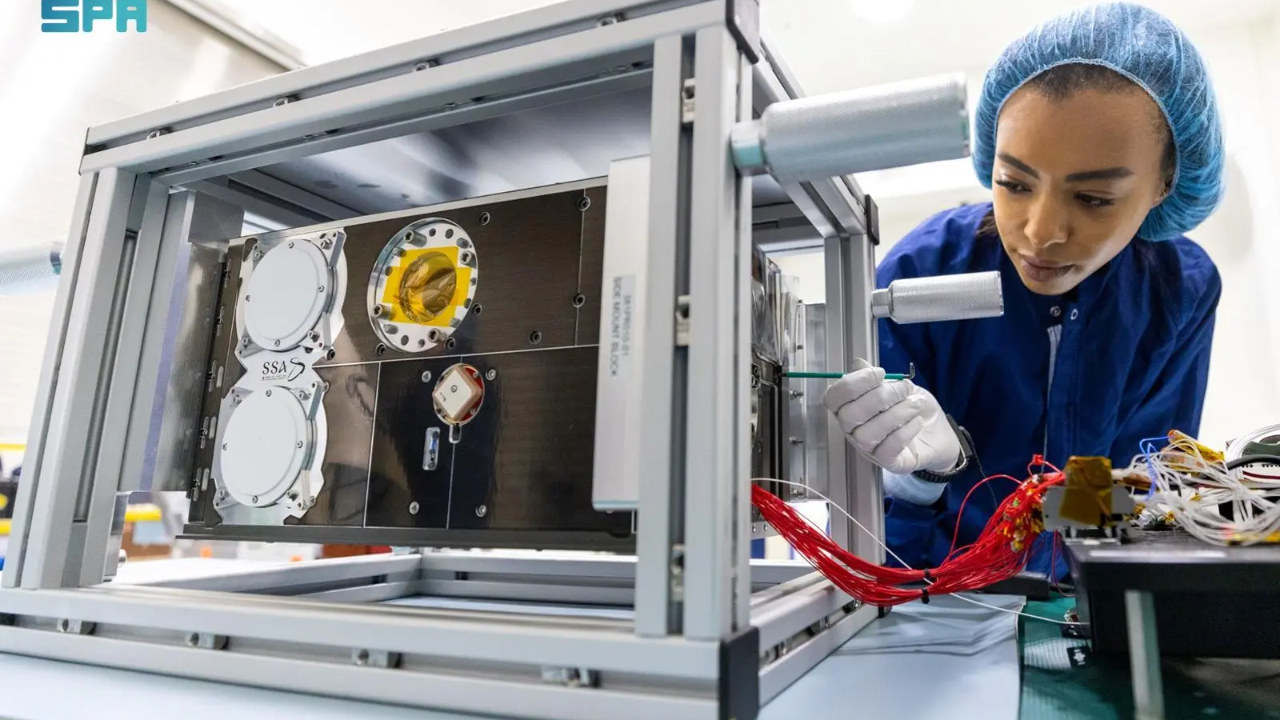
Imagine a young engineer in Riyadh. Let’s call her Sarah. She grew up hearing stories of her grandfather guiding camels by the position of the Pleiades. Now, she sits in a clean room, her hands steady as she calibrates sensors that will eventually help humans build a permanent home on the lunar surface. Sarah represents a generation that is no longer content with being the consumer of technology. They are the architects.
The Artemis Accords are more than a legal framework for space exploration. They are a pact about how we behave when we leave our atmosphere. By joining, Saudi Arabia isn't just buying a ticket; they are contributing the Shams satellite to a collective effort to sustain life where life shouldn't exist.
Shams—meaning "Sun"—is a poetic irony for a mission headed toward the shadows of the moon. Its purpose is to gather data, to provide the eyes and ears for the Artemis missions. It is the scout sent ahead of the caravan.
Beyond the Oil Well
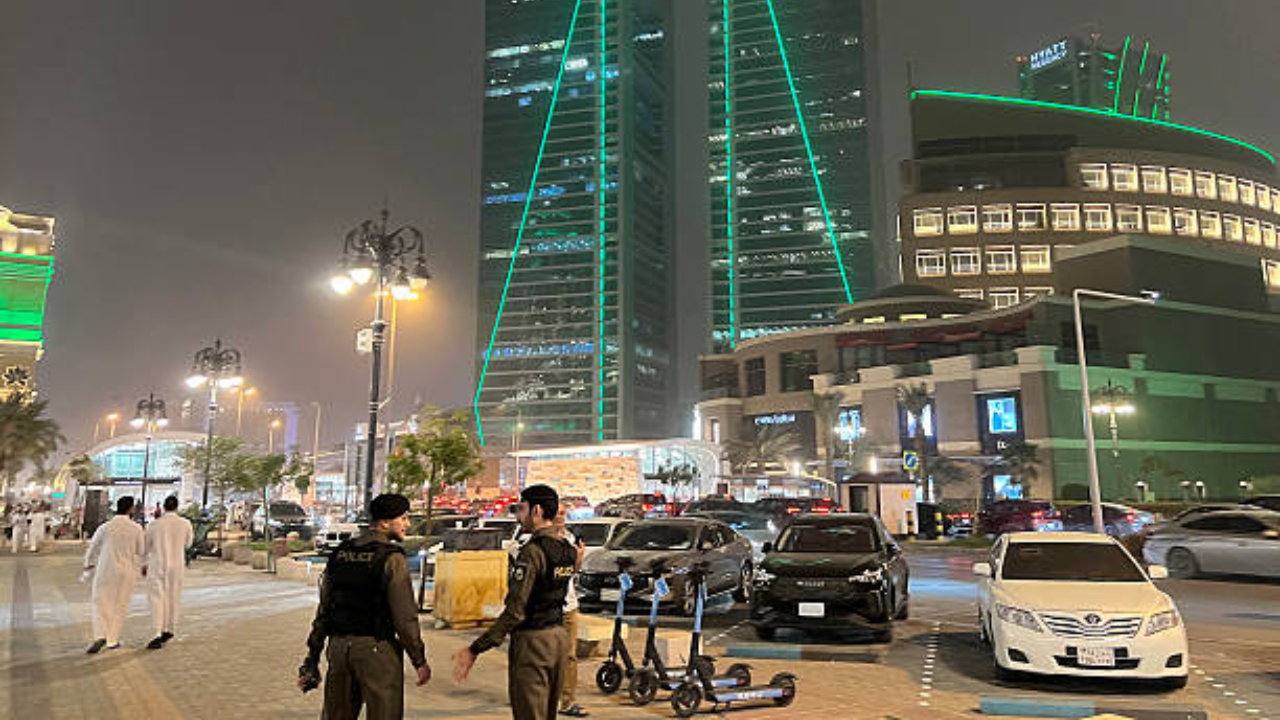
We have a habit of looking at the Gulf through a single, narrow lens. We see oil. We see glass skyscrapers rising from the dust. We see wealth. But wealth is a static thing. Ambition is kinetic.
The launch of Shams is the kinetic energy of a nation trying to outrun its own history. The transition from a resource-based economy to a knowledge-based one is often described in dry economic papers as a "diversification strategy." That phrase is a hollow shell. In reality, it is an existential scramble. It is the realization that the ground beneath our feet is finite, but the space above our heads is not.
When a country invests billions into a satellite program, they aren't just looking for weather patterns or communication signals. They are building a workforce. They are telling every child in every schoolroom from Jeddah to Dammam that the ceiling of their career is no longer the stratosphere.
Consider the logistical nightmare of the moon. It is 384,400 kilometers away. There is no air. The temperature swings are violent enough to shatter steel. To solve these problems, you need more than money. You need a specific type of collective brilliance. By joining Artemis, the Kingdom is plugging its brain trust into the most sophisticated problem-solving machine in human history.
The New Silk Road is Vertical
The Artemis Programme is often called the "successor to Apollo," but that’s a misnomer. Apollo was a sprint. We went there, hit a golf ball, planted a flag, and left. It was a trophy hunt. Artemis is different. It is about staying. It is about the "Gateway"—a small space station that will orbit the moon, acting as a communication hub, a science lab, and a short-term habitation module.
This is where the Shams satellite earns its keep.
Space exploration requires a staggering amount of data. You need to know the topography of the lunar south pole. You need to understand the radiation environment. You need to know where the ice is, because ice is water, and water is oxygen, and oxygen is life. Shams is part of the sensory network that will make the moon habitable.
There is a certain vulnerability in this. To join a program like Artemis is to admit that no nation, no matter how wealthy, can conquer the stars alone. It is an admission of interdependence. The Kingdom is bringing its unique geographical advantages and its massive capital to the table, but it is also bringing its risks. If a mission fails, it is a collective failure. If it succeeds, the "Shams" name will be etched into the ledger of the first permanent lunar colony.
The Invisible Stakes
Why should you care? If you are sitting in a coffee shop in London or a suburb in Ohio, why does a Saudi satellite matter to you?
Because space is the ultimate mirror. Everything we develop to survive there—water purification, high-efficiency solar cells, compact medical devices, closed-loop waste systems—comes back to Earth. The technology being honed for the Shams mission and the broader Artemis goals is the same technology that will determine if we can survive our own changing climate here.
We are practicing on the moon so we can save the Earth.
The stakes aren't just about who gets to say they were there. They are about the democratization of the frontier. When more voices and more cultures enter the space race, the outcome changes. The "human" in human spaceflight becomes more representative of the actual humans living on this planet.
The Caravan Moves Forward
There is a specific feeling in the air when a rocket ignites. It’s a low-frequency rumble that you feel in your marrow before you hear it with your ears. It is the sound of thousands of years of human gravity being overcome by sheer will.
When Shams cleared the tower, it carried more than just sensors and solar panels. It carried the weight of a nation’s transformation. It signaled that the era of the spectator is over.
The moon is no longer a distant lantern in the sky. It is a destination. It is a laboratory. It is a home. And for the first time, the maps being used to get there will have been drawn, in part, by those who have spent their history mastering the art of the desert.
The hiss of the shifting sands in the Empty Quarter hasn't changed. But now, if you look up at the right moment, you might see a tiny, moving star, a glint of Saudi steel, tracing a path toward the white disc of the moon.
The caravan is no longer tethered to the dunes. It has finally found the upward path.