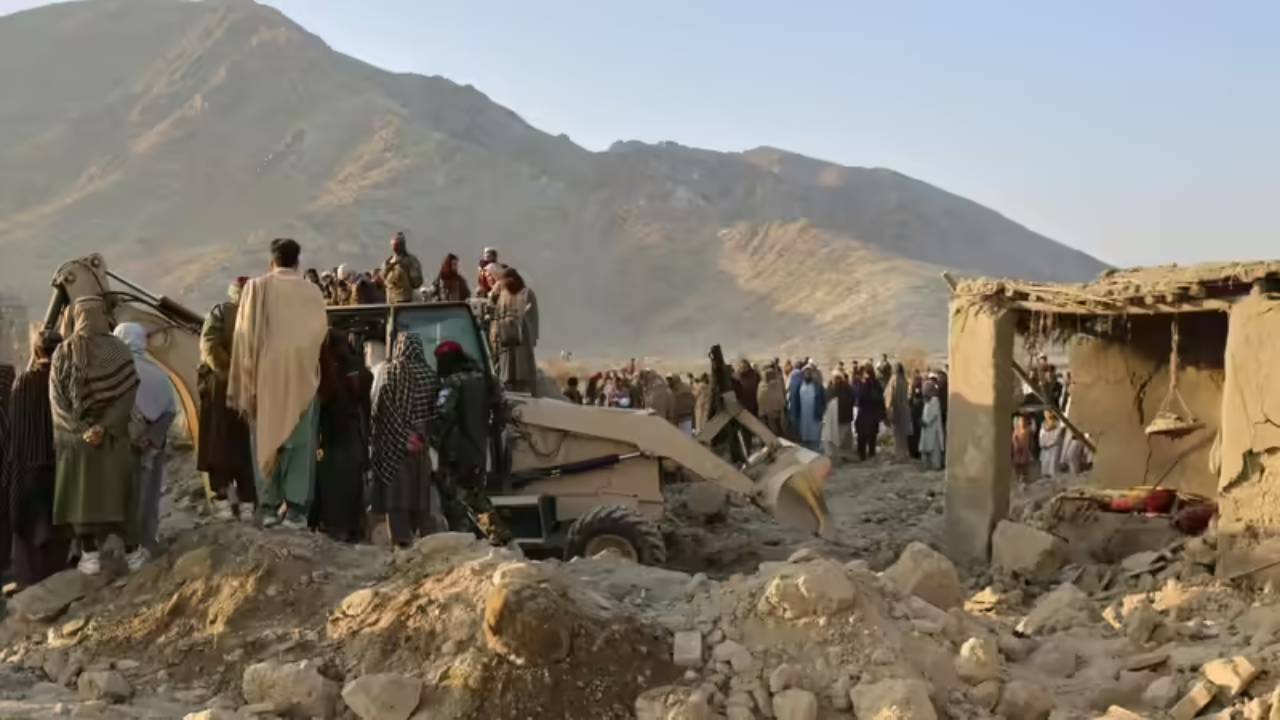
Pakistan’s recent precision strikes against military facilities and tunnel networks in Kandahar, Afghanistan, represent a shift from passive border management to a doctrine of kinetic diplomacy. This strategy assumes that the sovereignty of a neighboring state is secondary to the immediate neutralization of non-state actors that utilize that state’s geography as a sanctuary. By targeting specific infrastructure—specifically hardened tunnel systems—Islamabad is signaling a transition from skirmish-level responses to a systematic degradation of the Tehrik-i-Taliban Pakistan (TTP) logistical backbone.
The efficacy of these strikes depends on three variables: the precision of intelligence, the structural resilience of the targets, and the political elasticity of the Taliban government in Kabul. When a state utilizes air assets to strike across a recognized international border, it is calculating that the tactical gains of destroying a high-value target outweigh the strategic risks of a breakdown in bilateral relations.
The Mechanics of Tunnel Warfare and Structural Neutralization
The decision to target tunnels rather than surface camps indicates a sophisticated understanding of insurgent preservation tactics. Tunnels serve as more than mere hiding spots; they are multi-functional assets that provide:
- Signature Reduction: Subterranean movement prevents thermal and visual detection by overhead surveillance assets, rendering traditional "find-fix-finish" cycles obsolete.
- Logistical Persistence: Deep-earth storage allows for the stockpiling of munitions and medical supplies in environments that are naturally hardened against standard high-explosive fragmentation (HE-FRAG) munitions.
- Tactical Mobility: Tunnels enable fighters to reposition during an engagement, appearing behind or flanking conventional forces who are restricted to surface geography.
Neutralizing these targets requires specialized ordnance, typically earth-penetrating weapons or thermobaric charges. A standard missile strike on a tunnel entrance often results in "shallow closure," where the entrance is collapsed but the internal network remains intact. To achieve permanent functional denial, the strike must cause a sympathetic collapse of the internal chambers or utilize overpressure to clear the oxygen from the system, rendering it uninhabitable.
The Geopolitical Cost Function
Pakistan’s military actions operate within a cost-benefit framework where the primary "cost" is the erosion of regional stability. This calculation is driven by the Security Dilemma of Non-State Sanctuaries. When Country A (Pakistan) perceives that Country B (Afghanistan) is unable or unwilling to restrain a third-party group (TTP), Country A must internalize the enforcement costs.
This internalization creates a friction point in international law. The "Unwilling or Unable" doctrine suggests that a state may use force in self-defense against non-state actors in another state’s territory if the host state cannot mitigate the threat. However, the application of this doctrine is rarely clean. In the Kandahar strikes, the Taliban’s reaction—condemning the violation of sovereignty—serves as a diplomatic counter-weight designed to raise the "reputational cost" for Islamabad.
The failure of the "strategic depth" policy, which once sought a friendly government in Kabul to secure Pakistan’s western flank, is now laid bare. Instead of a buffer, the border has become a sieve. The current strategy is a pivot toward Active Border Denial, which utilizes technology—fencing, biometric checkpoints, and drone surveillance—to replace the failed reliance on political goodwill.
Intelligence Cycles and the Risk of Kinetic Error
A strike is only as effective as the data driving the fire solution. In high-stakes environments like Kandahar, intelligence typically flows through a four-stage refinement process:
- Signals Intelligence (SIGINT): Intercepting communications to identify the general proximity of high-value targets.
- Geospatial Intelligence (GEOINT): Utilizing satellite imagery to detect ground disturbances, such as fresh spoil piles, which indicate new tunnel construction.
- Human Intelligence (HUMINT): Ground-level verification from informants to confirm that the facility is actively being used for military purposes rather than civilian habitation.
- Targeting Analysis: Finalizing the "kill box" coordinates to minimize collateral damage, which would otherwise fuel insurgent recruitment.
The bottleneck in this cycle is the time-decay of information. If an insurgent cell moves every 48 hours, but the intelligence verification takes 72 hours, the strike hits an empty shell. This "intelligence lag" often leads to strikes on infrastructure rather than personnel, which serves a symbolic purpose but fails to reduce the enemy's total force strength.
The Economic Impact of Border Instability
Beyond the kinetic exchange, the strikes in Kandahar disrupt the fragile economic corridors between Central and South Asia. The Chaman-Boldak crossing, a vital artery for trade, often closes during periods of heightened military activity. This creates a secondary "economic casualty" list:
- Supply Chain Volatility: Perishable goods from Afghanistan are delayed, leading to total loss of capital for local traders.
- Informal Economy Disruption: Thousands of families depend on cross-border movement for daily labor; closures act as a regressive tax on the poorest demographics.
- Customs Revenue Collapse: Both governments lose essential tax revenue during border shutdowns, further weakening their ability to fund civil services.
By striking inside Afghanistan, Pakistan is effectively betting that the security dividends—reduced domestic terrorism—will eventually compensate for the lost trade volume and the increased cost of border militarization. This is a high-risk gamble, as economic desperation in border regions often correlates with increased recruitment for insurgent groups.
Analyzing the Taliban’s Strategic Constraint
The Taliban government finds itself in a structural trap. If they actively suppress the TTP to appease Pakistan, they risk internal fracturing and the defection of hardline fighters to more radical groups like ISIS-K. If they continue to provide sanctuary, they face continued air strikes and economic isolation from their most important neighbor.
The Taliban’s current posture is one of Plausible Deniability and Defensive Retaliation. They claim no knowledge of TTP operations while occasionally returning fire at border posts to maintain domestic credibility. This creates a state of "managed escalation," where both sides engage in low-level combat to satisfy internal political demands without triggering a full-scale conventional war.
Tactical Implementation for Regional Stability
For any counter-insurgency effort to move beyond the "mowing the grass" phase of occasional strikes, the following shifts are required:
- Integrated Border Management: Transitioning from kinetic strikes to a joint-monitoring mechanism. While politically difficult, a shared data-link regarding movement in the Durand Line region would remove the "unwilling or unable" justification for unilateral strikes.
- Deep-Penetration Precision: If strikes are to continue, the use of low-yield, high-accuracy munitions is mandatory to prevent civilian casualties that serve as insurgent catalysts.
- Economic De-risking: Decoupling trade routes from security incidents. Establishing "Green Zones" for commerce that remain open regardless of military friction would preserve the regional economy while the security apparatus deals with non-state actors.
The reliance on air power to solve a deeply rooted sociopolitical and territorial dispute is a temporary fix. The destruction of a tunnel in Kandahar may disrupt a single operation, but it does not address the underlying geography of the insurgency. Military planners must recognize that while kinetic force can buy time, it cannot manufacture peace. The immediate tactical objective should be the establishment of a "No-Man's Land" electronic sensor grid that provides 24/7 visibility without the need for cross-border incursions. This shift moves the conflict from the realm of volatile human decision-making to a predictable, tech-monitored boundary.
Islamabad must now pivot toward a "Fortress Border" model—investing heavily in autonomous surveillance and hardened physical barriers—while simultaneously offering Kabul a clear economic roadmap for cooperation. The alternative is a permanent state of low-intensity conflict that drains the treasuries of both nations and leaves the civilian population in a perpetual state of emergency. Establishing a bilateral technical commission to verify the status of "military facilities" targeted in these strikes would be the first step toward lowering the kinetic temperature and moving toward a functional, if cold, peace.