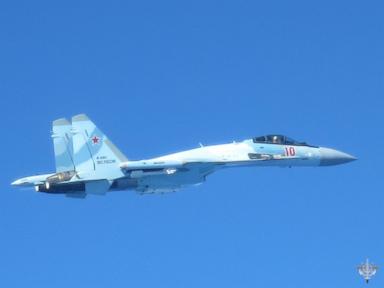
Airspace violations and tactical intercepts in the Baltic region function as a high-stakes communication protocol rather than a series of random provocations. When NATO Quick Reaction Alert (QRA) aircraft scramble to identify Russian military assets—often Il-20 COOT-A electronic intelligence planes or Su-27 Flanker-class fighters—they are participating in a multi-layered verification cycle. This cycle validates the integrity of the Baltic Air Policing (BAP) mission, tests the response latency of regional Integrated Air Defense Systems (IADS), and enforces the sovereign boundaries of the Suwalki Gap’s aerial flanks. Understanding these encounters requires moving past sensationalist headlines and analyzing the underlying operational mechanics: transponder discipline, flight plan transparency, and the physics of the intercept maneuver itself.
The Triple-Fail Trigger for Scramble Operations
NATO’s decision to launch a QRA mission is rarely based on a single variable. Instead, the tactical command center at Uedem, Germany, monitors for a specific "Triple-Fail" profile. A Russian aircraft becomes a target for intercept when it simultaneously exhibits three behaviors:
- Transponder Deactivation: The aircraft operates "dark," failing to emit a Mode S or ADS-B signal. This removes the aircraft from civilian Air Traffic Control (ATC) visibility, creating a flight safety hazard in the crowded corridors between Scandinavia and Central Europe.
- Flight Plan Omission: No prior notification of the sortie is filed with regional aviation authorities. In the absence of a flight plan, the intent of the aircraft cannot be determined through bureaucratic channels, necessitating visual identification.
- Radio Silence: The flight crew ignores attempts by civilian ATC or military monitoring stations to establish communication on the international emergency frequency (243.0 MHz) or "Guard."
When these three conditions are met, the aircraft is classified as a "Zombie" or an unidentified track. The intercept is not merely a show of force; it is a technical necessity to maintain a "Recognized Air Picture" (RAP). Without a physical intercept, NATO commanders cannot determine if a track represents a reconnaissance platform, a combat-loaded strike fighter, or a malfunction in a civilian airframe.
The Mechanics of the Visual Identification (VID) Maneuver
Once the QRA aircraft—typically Eurofighter Typhoons, F-16s, or Gripens—reach the target, the engagement enters the Visual Identification phase. This is a governed, multi-step process designed to minimize the risk of accidental kinetic escalation while maximizing intelligence gathering.
The Approach Vector
Intercepting pilots do not approach from the rear in a pursuit curve, which could be interpreted as a weapons-lock profile. Instead, they execute a "joined-on" maneuver. The NATO pilot approaches from the flank or slightly below, moving into the Russian pilot’s peripheral vision. This positioning serves two purposes: it allows the interceptor to read the tail number (bort number) and inspect the underwing hardpoints for live ordnance.
The Data Harvest
The intercept is an intelligence-gathering event. Wingmen often orbit at a distance to provide top cover while the lead aircraft uses electro-optical sensors and high-resolution cameras to document the target's configuration. Analysts later use this imagery to:
- Identify new electronic warfare (EW) pods or antennas.
- Assess the maintenance state of the Russian airframes (corrosion, engine soot, tire wear).
- Catalog "kill markings" or mission tallies that indicate the airframe's history in other theaters, such as Syria or Ukraine.
Strategic Signaling and the Latency Test
Beyond the immediate tactical identification, these intercepts serve as a live-fire test of NATO’s IADS latency. The Russian Aerospace Forces (VKS) utilize these sorties to map the "Sensor-to-Shooter" timeline of the Baltic defense architecture.
Probing the OODA Loop
By varying the location and altitude of their flight paths, the VKS forces NATO to reveal its radar coverage gaps and the readiness levels of specific airbases (e.g., Šiauliai in Lithuania or Ämari in Estonia). Every scramble provides the VKS with a data point on how long it takes for NATO’s Observe-Orient-Decide-Act (OODA) loop to complete. If NATO responds in five minutes versus ten, that delta represents a significant shift in the perceived "hardness" of the airspace.
Normalizing Deviation
The frequency of these events leads to a "Normalization of Deviance." By flying near-constant sorties that trigger scrambles, the VKS seeks to desensitize NATO command structures. The strategic risk is that a high volume of "routine" intercepts will mask an actual inbound strike or a massive electronic intelligence (ELINT) vacuuming operation.
The Physics of Risk: Air-to-Air Professionalism
The primary danger in the Baltic is not a premeditated strike, but a mid-air collision caused by aggressive maneuvering. The "Standard for Interception of Civil/Military Aircraft" is governed by ICAO Annex 2. However, these guidelines are often ignored during high-tension periods.
- Head-on Passes: A high-speed closing velocity leaves zero margin for pilot error or mechanical failure.
- "Thumping" or Jet Wash: An interceptor crosses directly in front of the intercepted aircraft, causing it to fly through the wake turbulence. This can cause engine flameouts or loss of control in smaller airframes.
- Flare Deployment: Releasing infrared countermeasures (flares) during an intercept is a highly escalatory signal, often used to disrupt the sensors of the opposing aircraft or simply as an act of intimidation.
The cost of these maneuvers is measured in airframe fatigue. Every high-G scramble shortens the operational lifespan of the intercepting aircraft. This creates a hidden economic cost for NATO member states, as the "cost per flight hour" for a Typhoon or F-35 is significantly higher than that of the older Russian Su-27s or Il-20s often used in these provocations.
Redefining the Baltic Air Defense Posture
The current model of "Air Policing" is transitioning toward "Air Defense." This is a critical distinction in military doctrine. Policing is reactive and focused on identification; Defense is proactive and focused on denial.
The integration of the F-35 Lightning II into the Baltic mission alters the math of the intercept. As a stealth-optimized platform, the F-35 can monitor Russian assets without being detected by their onboard radar systems. This creates an information asymmetry where NATO can "shadow" a Russian flight for its entire duration without ever triggering the Russian pilot’s RWR (Radar Warning Receiver). This "silent intercept" denies the VKS the satisfaction of a public scramble while maintaining total situational awareness.
The tactical necessity now shifts to the deployment of persistent unmanned aerial systems (UAS) and long-range ground-based sensors. By offloading the "identification" burden from manned fighters to high-endurance drones and over-the-horizon radar, NATO can break the Russian strategy of airframe attrition. The objective is to make the Baltic airspace an "Area Access/Area Denial" (A2/AD) zone where the VKS realizes that every move is tracked, cataloged, and countered before they even leave the Kaliningrad or St. Petersburg flight information regions.
The strategic play is to move from a reactive scramble model to a persistent, multi-domain surveillance net that renders the "dark flight" obsolete. NATO must prioritize the deployment of autonomous sensor nodes that can maintain a 24/7 track on all non-transponding targets, thereby forcing the VKS to either fly transparently or accept that their "stealthy" probes are being monitored by an invisible, omnipresent defense layer.