Kenya is grieving again. The latest police reports confirm that 62 people have died since the skies opened up last week, but these aren't just numbers on a spreadsheet. They’re eight children who didn’t make it home, 33 neighbors in Nairobi swept away by rivers that used to be roads, and thousands of families currently sleeping on damp floors in makeshift shelters.
The National Police Service just updated the grim tally on Saturday, March 14, 2026. While the capital city took the hardest hit, the destruction stretches across the Eastern Province and the Rift Valley. We’ve seen this script before, yet it feels more violent every time. It’s not just "heavy rain" anymore. It’s a systemic collapse that happens the moment the 20mm-per-day threshold is crossed.
If you’re looking for someone to blame, don’t just look at the clouds. Look at the concrete.
The Brutal Reality of the March 2026 Floods
This wasn't a slow build-up. The flash floods that started on March 6 were a blitz. Within 24 hours, Nairobi received a month’s worth of rain. When that much water hits a city built on clogged drains and paved-over wetlands, it has nowhere to go but through your living room.
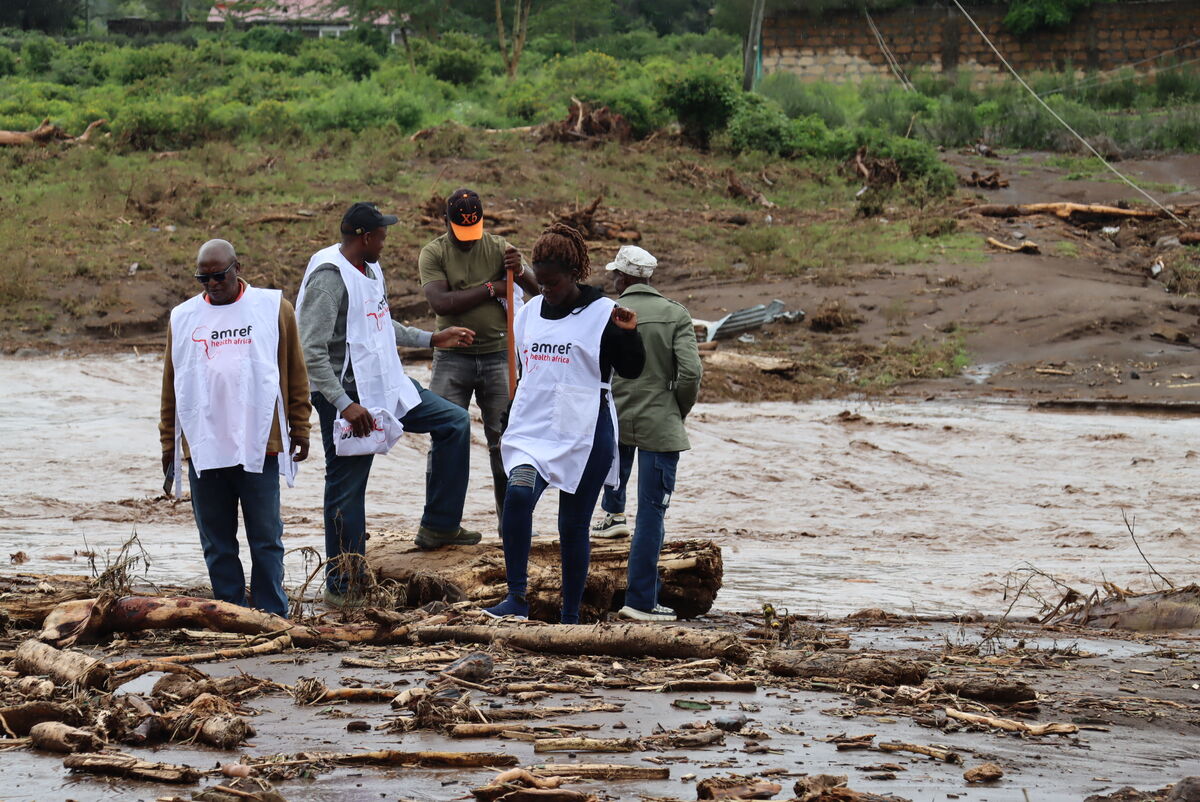
Police spokesperson Michael Muchiri noted that 16 police stations were submerged. Think about that for a second. The very places meant to coordinate emergency help were fighting to keep their own desks above water. Search and rescue teams, including the Kenya Defence Forces (KDF), have been pulling bodies from submerged cars in the Grogan area and informal settlements like Mathare and Mukuru.
The victims didn't just drown. Some were electrocuted by fallen power lines as they tried to wade to safety. Others were trapped in vehicles on the Uhuru Highway and Mombasa Road as the Nairobi River burst its banks, turning major arteries into death traps.
Why Nairobi Can’t Shake the Water
You’ll hear officials talk about "unprecedented climate events," but let’s be real. We knew this was coming. The Kenya Meteorological Department issued warnings as early as February 25. The problem isn't the forecast; it's the infrastructure.
Nairobi has been growing at a breakneck pace, but it’s growing "hard." We’ve replaced trees and soil—nature's sponges—with asphalt and cement. When 160mm of rain falls in a day, that’s 160 liters of water on every single square meter. Without permeable ground, that volume creates a literal wall of water.
- Riparian Encroachment: People are building on floodplains. Some are desperate; others are well-connected developers. Either way, the river always remembers its path.
- Clogged Arteries: Our drainage systems are often filled with plastic waste. When the storm hits, those drains might as well not exist.
- Climate Whiplash: We just came out of a brutal drought. When the ground is bone-dry and baked hard, it doesn't absorb water—it sheds it. This "whiplash" makes the flooding twice as likely and twice as dangerous.
A Crisis Beyond the Capital
While Nairobi dominates the headlines, the rural areas are suffering in silence. In the Eastern Province, 17 people have died. In the Rift Valley, the count stands at seven. Over 12,000 households across the country have seen their livelihoods washed away.
President William Ruto has ordered the release of relief food and promised to cover medical bills for the injured. It’s a necessary gesture, but it’s a bandage on a gunshot wound. The Ministry of Health is already flagging the next threat: cholera and malaria. Stagnant water in places like Kisumu and the Tana River basin is a ticking time bomb for disease outbreaks.
What Needs to Change Right Now
We can't keep mourning 60 people every March and October. If you live in a high-risk area, "waiting and seeing" is a gamble you’ll eventually lose.
Don't ignore the Met Department's 24-hour advisories. If you're driving and the water reaches the middle of your tires, abandon the car. It’s metal and rubber; you aren't. We also need to stop treating our "green lungs" like Karura Forest as optional scenery. They are the only thing standing between us and a total deluge.
The government's Long Rains Flood Contingency Plan 2026 talks a big game about "resilience." But until we see massive investment in "spongy" urban design—like the wetland restorations we’ve seen in Kigali—we’re just waiting for the next rain to wash the promises away.
Check your local drainage. Clear the trash near your gate. If you're in a low-lying zone, map out your exit route before the sun goes down. The rains aren't done yet.