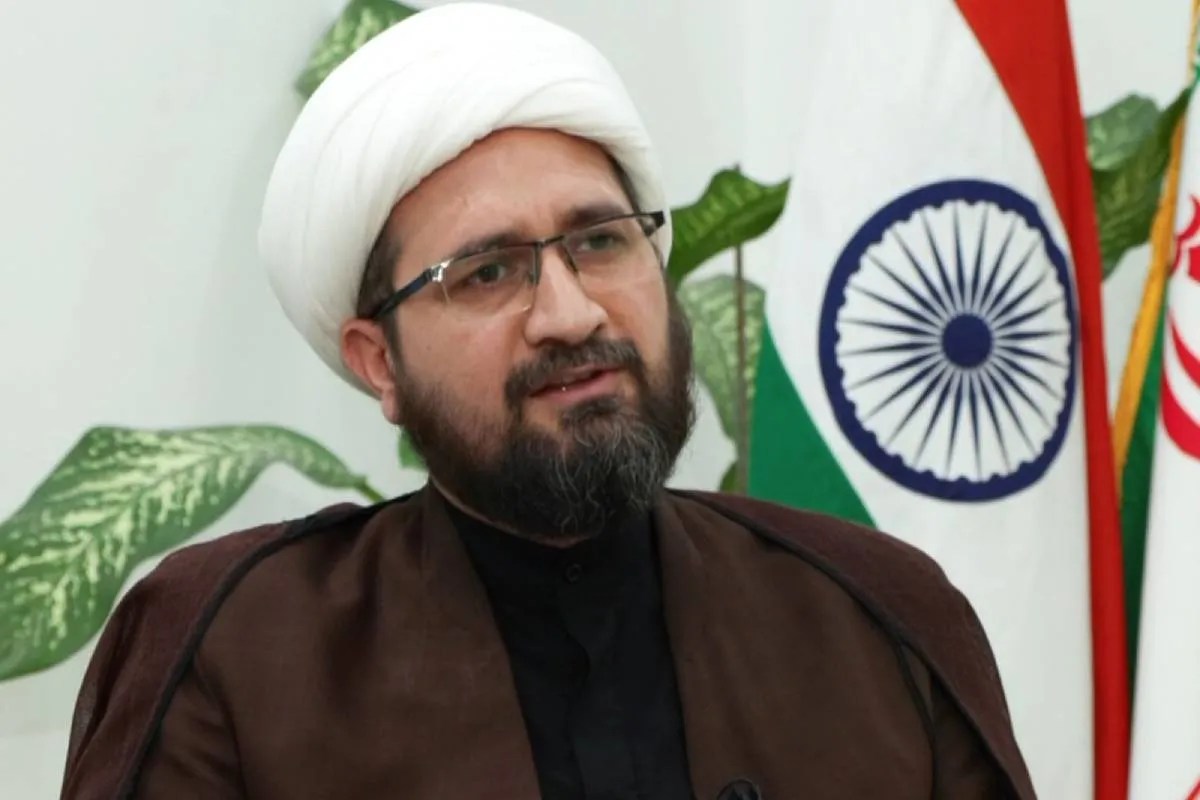
The Middle East has entered a cycle where the line between "defense" and "escalation" has effectively vanished. When Tehran issues statements claiming they do not seek war but maintain an inherent right to strike military targets in self-defense, they are not just repeating diplomatic boilerplate. They are signaling a fundamental shift in their doctrine of "strategic patience." For years, the Iranian leadership absorbed shadow-war hits—assassinations, cyberattacks on infrastructure, and industrial sabotage—with measured, often proxy-led responses. That era is over. The new reality is a direct, state-to-state confrontation where the threshold for pulling the trigger has dropped to a historic low.
Tehran’s recent rhetoric centers on the legalistic framing of Article 51 of the UN Charter. By labeling their retaliatory strikes as "military target only" operations, they attempt to maintain a moral and legal high ground that complicates the diplomatic response from the West. However, the technical reality of modern missile warfare makes the distinction between "defensive" and "offensive" strikes largely academic. When hundreds of ballistic missiles cross international borders, the intent matters less than the kinetic result.
The End of Strategic Patience
The shift from proxy warfare to direct engagement represents a massive gamble for the Iranian Revolutionary Guard Corps (IRGC). Historically, groups like Hezbollah or various militias in Iraq served as a buffer, providing Tehran with plausible deniability. By moving the fight into the open, Iran is betting that its missile inventory is a sufficient deterrent to prevent a full-scale invasion or a sustained air campaign against its nuclear and energy infrastructure.
This isn't about pride alone. It is about a calculated assessment of regional power dynamics. Tehran has observed the limits of Western intervention in other global conflicts and concluded that a high-intensity, short-duration strike is a manageable risk. They believe that by hitting specific military nodes—airbases, intelligence centers, and radar installations—they can satisfy internal pressure for a response without triggering a total collapse of regional stability. It is a razor-thin tightrope walk.
Miscalculation and the Escalation Ladder
Every intelligence agency in the world worries about the same thing: the "escalation ladder." You climb one rung, your opponent climbs two. Iran’s insistence that it is a non-aggressor is designed to put the burden of the next move on its adversaries. If Tehran strikes a military base and calls the matter "concluded," any further response from the other side is then framed as a fresh act of aggression.
This psychological game is as important as the hardware itself. By vocalizing their right to self-defense before a strike even occurs, they are setting the stage for a narrative of victimhood. They want the global south and non-aligned nations to see them as a sovereign state merely protecting its borders, rather than a revolutionary power seeking to upset the status quo.
The Hardware of Deterrence
Iran’s military strategy is built around three pillars: missiles, drones, and geography. They have spent decades developing the largest and most diverse missile arsenal in the region. These aren't just the unguided "Scuds" of the 1980s. The current inventory includes precision-guided munitions capable of hitting specific hangars or command bunkers from a thousand miles away.
- Ballistic Missiles: High speed, difficult to intercept during the terminal phase, and capable of carrying significant payloads.
- Kamikaze Drones: Low cost, difficult to track on radar, and capable of swarming defenses to create openings for larger strikes.
- Cruise Missiles: Capable of low-altitude flight to bypass traditional air defense screens.
The integration of these systems allows Iran to conduct "complex attacks" that overwhelm modern defense systems like the Iron Dome or Arrow. Even the most sophisticated defense has a saturation point. If you fire 200 projectiles and only five get through, but those five hit a primary radar array or a fuel depot, the mission is a tactical success.
The Economic Undercurrent
While the headlines focus on explosions and troop movements, the underlying driver is often economic. Iran is a nation under heavy sanctions, yet it has managed to maintain a robust domestic arms industry. Their ability to manufacture these weapons locally means they aren't dependent on foreign supply chains that can be easily cut off during a hot war.
Conversely, the cost of defense is astronomical. An interceptor missile used by a defensive battery can cost ten to twenty times more than the drone or rocket it is shooting down. This creates an economic war of attrition. Tehran knows that while they might lose the technical battle, they can win the long-term economic struggle by forcing their enemies to spend billions of dollars to stop thousands of dollars' worth of hardware.
The Role of Internal Pressure
No analysis of Iranian military posture is complete without looking at the internal politics of the Islamic Republic. The leadership faces a complex balancing act. On one hand, they must project strength to a domestic audience and to their regional partners in the "Axis of Resistance." If they fail to respond to attacks on their sovereignty, they risk looking weak, which could embolden domestic dissent or lead to a fragmentation of their proxy network.
On the other hand, the Iranian public has little appetite for a full-scale war that would devastate an already struggling economy. The "military targets only" rhetoric serves as a middle ground. It allows the government to claim a "crushing blow" was delivered through state media while signaling to the international community that they aren't looking to hit civilian centers or oil markets—which would almost certainly trigger a massive, regime-threatening response from the United States.
The Intelligence Failure Loop
The danger in this current standoff is the reliance on "signaling." When Country A moves a battery and Country B issues a statement, both are trying to communicate boundaries without speaking directly. This is where intelligence failures happen. If one side interprets a "defensive" maneuver as a "pre-emptive" preparation, the war starts by accident.
We saw this in the lead-up to previous conflicts where neither side truly wanted a total war, but neither side could afford to be the one that didn't swing back. The current rhetoric from Tehran suggests they are confident they can control the height of the flames. History suggests that once the fire starts, the wind usually takes over.
The Red Lines of the Future
What constitutes a "military target" is becoming increasingly blurred. In the modern age, a server farm used for military communications is just as vital as a tank division. If Iran targets a dual-use facility—something that serves both civilian and military purposes—the definition of "self-defense" will be tested to its breaking point.
The international community is currently focused on preventing a regional conflagration, but the mechanisms for de-escalation are fraying. Communication channels are indirect, often filtered through third parties like Qatar or Switzerland. This lag in communication increases the window for error. When seconds count between a missile launch and impact, waiting hours for a diplomatic clarification is a luxury no one has.
The Reality of Proportionality
International law requires that a response be proportional to the harm suffered. Iran’s leaders are obsessed with this concept, at least in their public messaging. Every time a commander is killed or a facility is bombed, they use the word "reciprocal."
But "proportional" is in the eye of the beholder. If one side loses a high-ranking general and responds by firing 300 missiles, they might see that as proportional because of the seniority of the individual lost. The other side, seeing 300 missiles over their airspace, sees an existential threat. This disconnect is the primary engine of the current crisis.
The situation remains a stalemate of high-tension maneuvering. Tehran’s declaration of their "right to respond" is more than a warning; it is the establishment of a new status quo where the shadow war has been dragged into the light. The strategy is clear: establish a credible threat that makes the cost of attacking Iran higher than any potential gain. Whether that deterrent holds or crumbles depends entirely on the next 48 hours of tactical decisions, not the months of diplomatic posturing that preceded them.
The era of back-channel warnings and "deniable" operations is fading. We are now in an age of overt military signaling where every missile launch is a paragraph in a much longer, more dangerous story. The only certainty is that the "right to self-defense" is being used as a foundation for a much larger architectural shift in Middle Eastern security. Relying on the restraint of an adversary is a poor substitute for a functional security framework, yet that is exactly where the regional players find themselves today.



