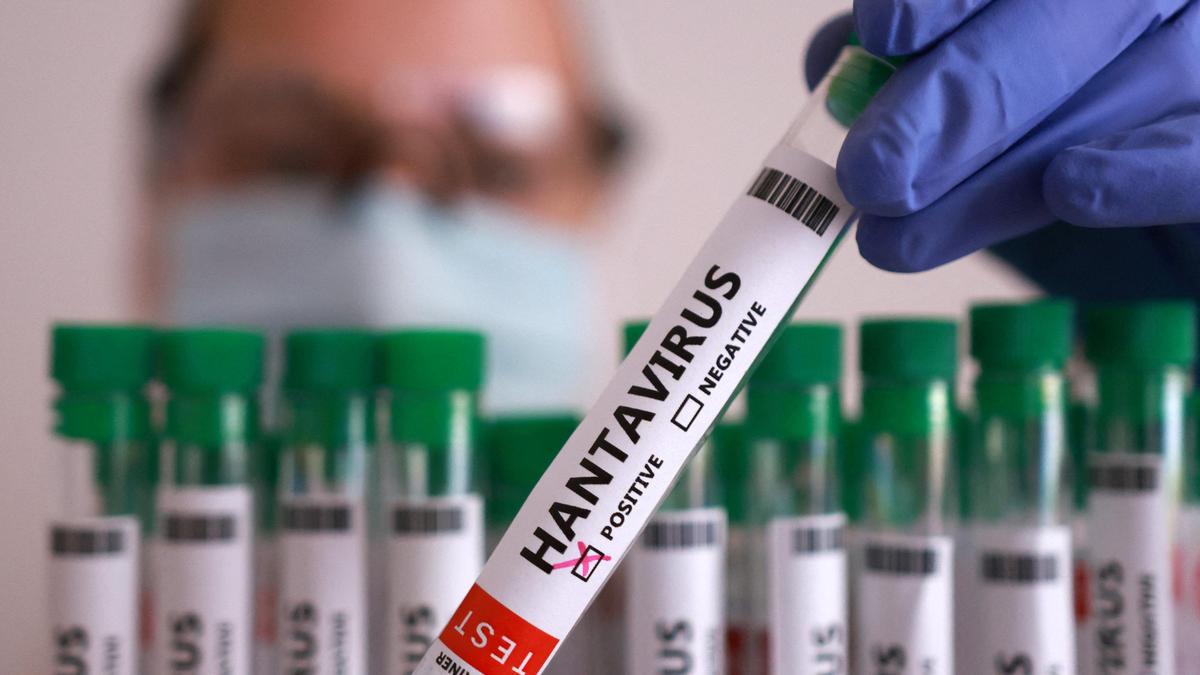
Public health officials in at least three U.S. states are currently scrambling to track individuals exposed to hantavirus, a rare but lethal respiratory disease. Unlike the airborne pathogens that fueled recent global anxieties, hantavirus remains a quiet, localized killer that strikes with surgical precision. The current monitoring efforts center on a specific chain of exposure linked to rodent infestations, highlighting a persistent failure in rural and suburban infrastructure to manage the vectors of this 35% mortality-rate virus. This is not a broad-market pandemic; it is a recurring biological ambush that thrives on human proximity to deer mice.
The Biology of a Hidden Killer
Hantavirus Pulmonary Syndrome (HPS) does not behave like the flu. It is a zoonotic disease, meaning it jumps from animals to humans, specifically through the aerosolization of waste from infected rodents. When a homeowner sweeps out a dusty garage or a hiker enters an abandoned cabin, they may inhale microscopic particles of dried urine or droppings. Once inside the lungs, the virus begins a rapid assault on the capillaries.
The mechanism is brutal. The virus causes the tiny blood vessels in the lungs to leak fluid directly into the air sacs. Patients essentially drown from the inside out. Because the early symptoms—fever, muscle aches, and fatigue—mimic a dozen common illnesses, many victims do not seek help until their oxygen levels crater. By that point, medical intervention is often a desperate race against total respiratory failure.
The Geography of Risk
While the current alerts span three states, the risk is not uniform. The Southwest remains the historical epicenter, particularly the "Four Corners" region, but the Sin Nombre strain of the virus is carried by deer mice found across most of North America. This geographic breadth means that "monitoring" is often a reactive measure rather than a proactive one. Health departments are currently looking for people who stayed at specific lodgings or worked in specific environments where rodent activity was confirmed.
The difficulty lies in the incubation period. Symptoms can take anywhere from one to eight weeks to manifest. This window creates a massive lag between exposure and diagnosis, leaving investigators to reconstruct movements and contacts from nearly two months prior. It is a forensic challenge as much as a medical one.
The Myth of Urban Safety
There is a dangerous misconception that hantavirus is a problem reserved for survivalists or those living off the grid. The reality is far more suburban. As housing developments push further into previously wild areas, the interface between humans and deer mice expands. A pristine-looking backyard shed or a crawlspace in a high-end development can be just as lethal as a shack in the desert if the local rodent population carries the pathogen.
We are seeing a shift in how these outbreaks occur. It is no longer just the isolated rancher. We are seeing cases linked to recreational activities, seasonal cabin openings, and even car engines where mice have nested over the winter. When a driver turns on their heater after a long season of storage, they might be blowing a concentrated dose of viral particles directly into their face.
The Limits of Modern Medicine
We have no cure for hantavirus. There is no vaccine, and there is no specific antiviral treatment that has proven effective in human trials. The only tool in the medical arsenal is supportive care—typically intubation and mechanical ventilation in an Intensive Care Unit.
If a patient is lucky enough to be in a hospital with an Extracorporeal Membrane Oxygenation (ECMO) machine, their chances of survival increase. This technology pumps the patient’s blood outside the body, oxygenates it, and returns it, bypasses the failing lungs entirely. However, ECMO is a resource-intensive, expensive, and relatively rare technology. It is rarely available in the rural hospitals closest to where exposures typically happen. This creates a lethal "distance gap" where the time taken to transport a patient to a major medical center can be the difference between life and death.
The Cost of Poor Vector Control
State health departments are often underfunded and overextended. When a hantavirus alert is issued, it reflects a breakdown in basic rodent exclusion practices. The "monitoring" of citizens is a desperate attempt to catch a case before it reaches the point of no return, but it ignores the underlying issue of how these exposures happen in the first place.
Building codes rarely account for the specific sealing requirements needed to keep deer mice out of residential structures. A hole the size of a dime is enough for a mouse to enter. Most people use standard traps or poisons, which can actually increase risk by leaving infected carcasses in hard-to-reach places or causing mice to defecate more frequently as they die. Professional remediation—the kind that involves respirators, bleach solutions, and specialized disposal—is a luxury many cannot afford.
Breaking the Cycle of Panic and Neglect
Public health messaging regarding hantavirus is often cyclical. There is a flurry of activity when a cluster of cases emerges, followed by months of silence. This silence is where the danger grows. During the "quiet" periods, rodent populations can explode due to mild winters or increased rainfall, which leads to more seeds and more food.
When the rodent population peaks, the spillover into human habitats is inevitable. We need a fundamental shift in how we view rural and peri-urban hygiene. It is not just about keeping a clean house; it is about recognizing that we live in a shared ecosystem with a species that carries a biological weapon.
Immediate Action for the At Risk
If you are in one of the states currently under a monitoring alert, or if you reside in a region known for deer mouse activity, the time for "watching and waiting" is over. The priority must be a cold, hard assessment of your environment.
- Seal the entry points. Use steel wool and caulking to plug every gap in the foundation, around pipes, and under doors.
- Wet-clean, never dry-sweep. If you find rodent droppings, do not pick up a broom. You will kick the virus into the air. Soak the area in a mixture of bleach and water for at least five minutes before picking anything up with gloves.
- Monitor the symptoms. If you have spent time in a suspect area and develop a sudden, high fever with severe muscle aches, do not wait for the cough. Inform your doctor specifically about the possibility of rodent exposure.
The current race to find patients is a symptom of a larger, systemic vulnerability. We are reactive because we refuse to be proactive about the basic realities of zoonotic disease. Hantavirus doesn't care about state lines or property values. It only cares about the next breath you take in a dusty room.
The mortality rate will not drop until the awareness stays as high as the risk. Stop treating rodent control as a chore and start treating it as a primary health defense. Your life depends on the seal around your dryer vent.