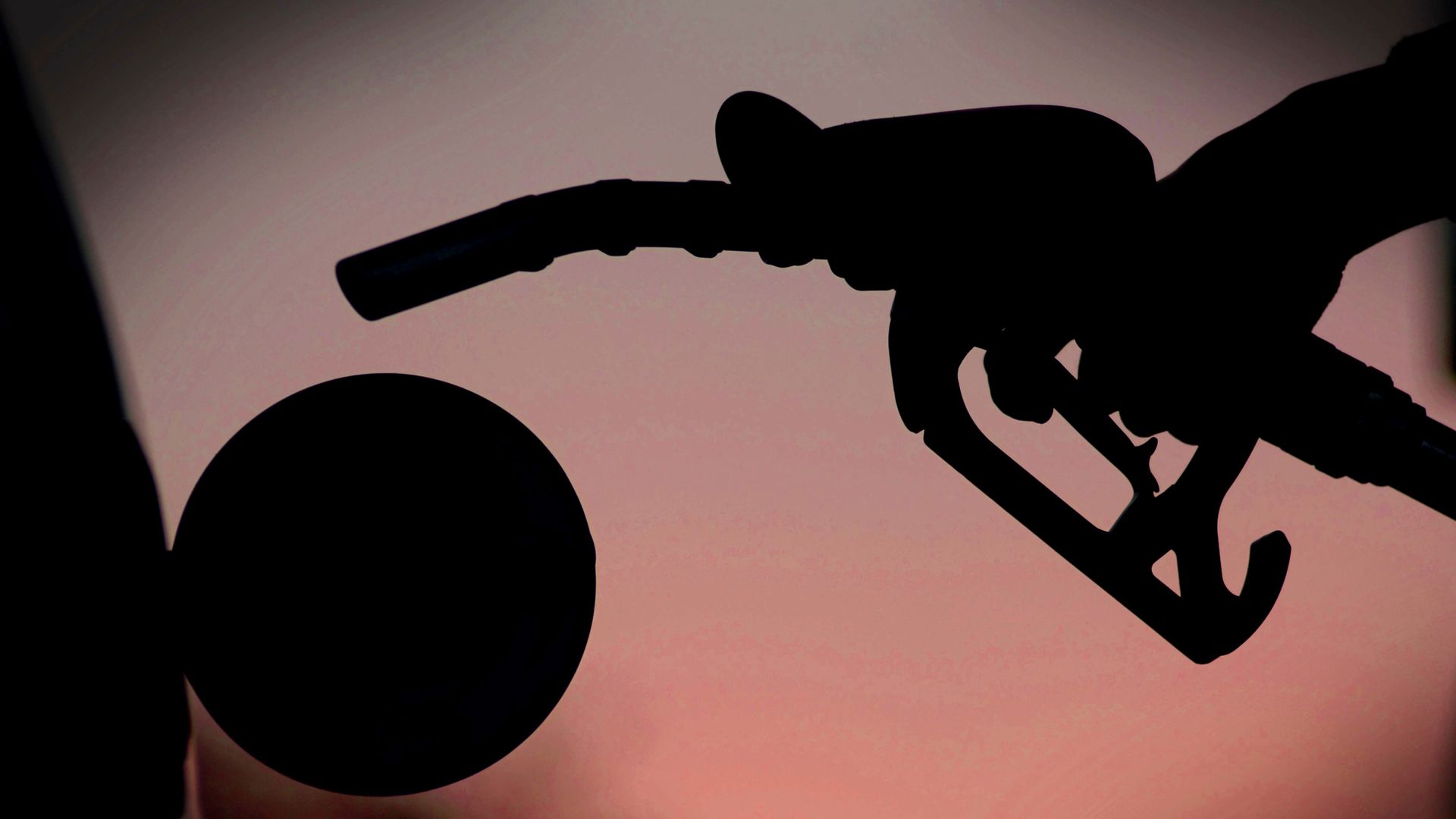
The metal nozzle is cold, slick with a fine mist of English rain, and heavier than it looks. For Elias, a multi-drop delivery driver in the Midlands, this piece of hardware is the most significant interface in his life. Every Tuesday morning, he watches the digital digits on the pump flicker with a hypnotic, rhythmic speed. They aren't just numbers. They are the difference between a steak dinner on Saturday and another night of beans on toast.
Today, those numbers hit a sixteen-month high.
The news cycle calls it a geopolitical adjustment. The analysts on the radio talk about "market volatility" and "Brent Crude benchmarks." But for the millions of people like Elias, the reality isn't found in a boardroom in the City. It’s found in the sharp, chemical smell of diesel and the sound of a bank card clicking into a reader that increasingly feels like a slot machine.
Britain is waking up to a reality where the price of moving is becoming a luxury.
The Long Shadow of a Distant Storm
There is a psychological distance between the red-hot sands of the Middle East and the grey, damp asphalt of the M1. We often treat these two worlds as if they exist on different planets. However, the escalating conflict involving Iran has effectively collapsed that distance. When a drone strikes a tanker or a refinery thousands of miles away, the ripples don't just move through the water. They move through the supply chains that bring milk to the supermarket and Amazon packages to your doorstep.
Consider the physics of a modern economy. We like to think of it as digital—bits and bytes moving through fiber-optic cables—but it remains, at its core, a mechanical beast. It breathes diesel. Everything you see in your room right now, from the chair you sit on to the device you’re reading this on, spent time on the back of a truck.
When the price of diesel hits a sixteen-month high, the cost of existence rises.
The "war premium" is the term traders use to describe the extra cost added to a barrel of oil because of the risk of conflict. It’s an insurance policy the world pays, but the premiums are charged to the consumer. For the UK, which relies heavily on imports and a finely tuned logistics network, this premium isn't a theoretical exercise. It’s an immediate, aggressive tax on every single citizen.
The Math of the Micro-Economy
Let’s look at a hypothetical scenario to understand why this matters more than a simple "fuel hike" headline suggests. Imagine a small haulage firm in Yorkshire, let's call it Green & Sons. They operate ten trucks. Each truck covers 80,000 miles a year.
When diesel goes up by just five pence a liter, it doesn't sound like much. It’s less than the price of a chocolate bar. But a modern heavy goods vehicle (HGV) might only get eight miles to the gallon. Over a fleet of ten trucks, that five-pence increase translates to a five-figure sum added to the annual overhead.
The owner of Green & Sons has three choices. He can absorb the cost and watch his family’s savings evaporate. He can cut staff, meaning a driver loses their livelihood. Or, he can pass that cost onto the supermarkets he delivers for.
The supermarket, in turn, passes it onto you.
That is why the sixteen-month high in diesel is a health issue, a lifestyle issue, and a social issue. It’s the reason the artisan loaf of bread is now fifty pence more expensive. It’s the reason the plumber has to charge a "call-out fee" that makes your eyes water. We are witnessing the slow-motion inflation of every physical object in the British Isles.
The Emotional Weight of the Tank
There is a specific kind of anxiety that comes with watching the fuel light glow amber on the dashboard. It’s a quiet, nagging stress. It starts at the back of the neck and works its way down. For many families in the UK, the car isn't a status symbol; it's a lifeline. It’s the only way to get to the shift that pays the rent. It’s the only way to get the kids to school when the bus routes have been slashed.
When diesel prices spike, people don't just stop driving. They stop spending elsewhere. They cancel the cinema trip. They delay the new shoes. They turn the heating down another two degrees.
The irony of our current situation is that while the world moves toward "Green Energy" and electric vehicles, the heavy lifting of the transition is still being done by the very fuel that is becoming a financial burden. We are in the "in-between" years. We aren't fully electric yet, and we are no longer in an era of cheap fossil fuels.
This transition period is where the friction is most painful. We are being squeezed by a past we are trying to leave and a future we can’t quite reach yet.
The Fragility of the Flow
What the Iran-driven price hike reveals is just how fragile our "just-in-time" society really is. We live in a world of flow. We expect the shelves to be full, the light switches to work, and the fuel to be at the pump. We don't see the thousands of miles of pipes, the massive tankers navigated through narrow straits, or the geopolitical chess games required to keep the flow moving.
We only notice it when the flow slows down.
The UK’s dependence on global oil prices is a vulnerability that feels particularly acute right now. While we debate domestic policies and local elections, the price of our commute is being decided by a handful of people in bunkers and palaces halfway across the globe. It is a sobering reminder that "sovereignty" is a complex word when your economy relies on a liquid that you don't control.
The current sixteen-month high isn't just a peak on a graph. It’s a signal. It’s telling us that the era of predictable, low-cost logistics is over. We are entering a period of "High-Frequency History," where events on the other side of the world will dictate the price of our morning coffee within forty-eight hours.
The Human Toll of the Decimal Point
Back at the petrol station, Elias finally stops the pump. The total is £114.62. He remembers when this same volume cost £85. He does the mental math, subtracting the difference from his weekly profit. He thinks about the summer holiday he promised his daughter—a trip to a caravan park in Wales. He’s not sure if the math works anymore.
The tragedy of these "business" headlines is that they ignore the human faces behind the data. A "16-month high" is a cold, clinical phrase. It doesn't capture the sigh of a father looking at his bank balance. It doesn't capture the frustration of a small business owner who has worked eighty hours this week just to break even.
We have become experts at measuring the price of everything and the value of nothing. We measure the barrel, but we don't measure the stress. We measure the inflation rate, but we don't measure the loss of opportunity for a family that can no longer afford to travel to see their relatives.
The price of diesel is the pulse of the nation. Right now, that pulse is racing.
It isn't just about oil. It’s about the invisible threads that connect a soldier’s decision in the Middle East to a kitchen table in Birmingham. We are all part of this vast, interconnected machine, and currently, the machine is grinding.
Elias hangs the nozzle back on the rack. He drives away, his engine humming a low, expensive growl. He’s heading back onto the motorway, joining the thousands of other silver and white vans that form the circulatory system of Britain. They keep moving because they have to, because the alternative is to stop, and stopping isn't an option.
But every mile he drives feels a little heavier than the last. The road ahead is the same as it was yesterday, but the cost of traveling it has changed. And in that change lies the story of a nation trying to find its way through a world that is becoming increasingly expensive to inhabit.
The rain continues to fall on the M1, washing away the oil stains on the shoulder, while the prices on the signs keep glowing in the dark, reminding us all that peace is cheap, but conflict is something we will be paying for at the pump for a long time to come.