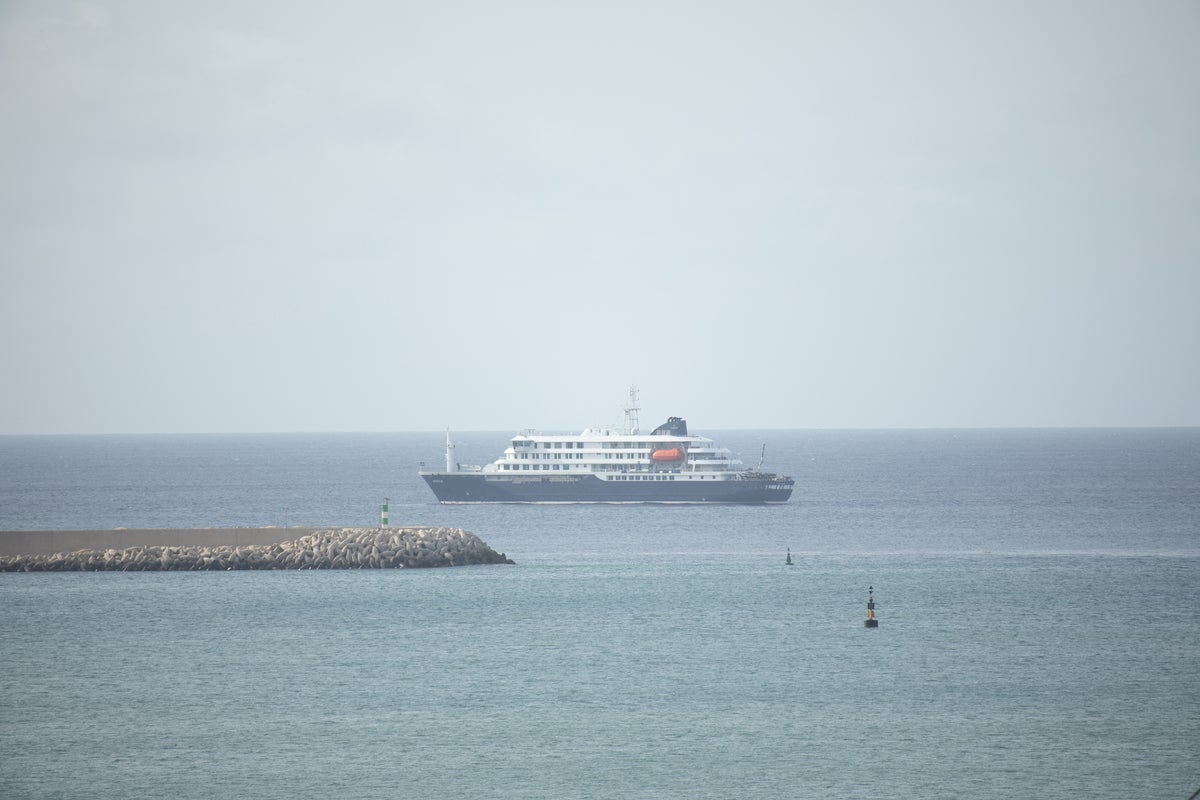
The steel hull of a cruise ship is designed to keep the world out. It is a floating fortress of luxury, a sanctuary of high-thread-count sheets and curated buffets where the only variables are the shore excursions and the dinner seating. But when the Silver Shadow began its transit across the Atlantic, something small, silent, and ancient had already slipped past the white-gloved security.
It wasn't a person. It was a virus.
Deep in the belly of the ship, far below the teak decks where passengers toasted to the sunset, a young British crew member began to feel the first tremors of a betrayal by his own body. It started as a dull ache in the lower back, the kind of fatigue one might dismiss after a long shift in the galley or the engine room. Then came the fever. It wasn't just a warmth; it was a sudden, violent incineration that blurred the edges of the room.
The diagnosis whispered through the corridors of the medical bay was enough to chill the warmest Caribbean breeze: Hantavirus.
To most, the name sounds like something out of a Cold War thriller or a forgotten corner of a medical textbook. But for those who understand the mechanics of zoonotic spillover, it is a reminder that we are never as insulated from the wild as we believe. Hantavirus is typically the domain of the rural and the rugged. It is found in the dust of old barns and the shadows of mountain cabins, carried by rodents and transmitted through the simple, domestic act of breathing.
How does a virus born in the dirt of the earth find its way onto a luxury vessel in the middle of the ocean? That is the question currently haunting the maritime industry. The ship becomes a closed system. A microcosm. When a pathogen enters a space like that, the stakes cease to be abstract. They become a race against the clock and the geography of the sea.
The Logistics of a Mid-Ocean Rescue
Imagine the sheer scale of the isolation. You are hundreds of miles from the nearest trauma center, surrounded by a thousand miles of salt water in every direction. The infirmary on a ship is sophisticated, but it is not a specialized infectious disease ward. The crew member’s lungs began to fill with fluid—the signature, terrifying calling card of the Hantavirus Pulmonary Syndrome.
The ship’s doctors knew the math. They were losing.
The call went out for an extraction. This is not the graceful, cinematic helicopter landing you see in movies. It is a high-stakes mechanical dance. The French maritime authorities dispatched a Caiman helicopter, a beast of a machine capable of battling the unpredictable winds of the Atlantic.
Consider the sensory overload of that moment. The roar of the rotors drowning out the sound of the waves. The stinging spray of the sea whipped into a frenzy by the downdraft. The crew member, strapped into a litter, swaying between the deck of a ship that was supposed to be a workplace and a sky that offered the only hope of survival.
They flew him to Brest, France. From the isolation of the sea to the isolation of a high-pressure hospital ward.
The Ghost in the Machine
While the individual fight for life unfolded in a French ICU, a different kind of tension took hold back on the Silver Shadow. For the passengers, the "all-inclusive" experience suddenly included the terrifying realization of their own fragility.
Hantavirus doesn't jump from person to person like a common cold or the dreaded norovirus that occasionally sweeps through cruise cabins. It isn't a shadow that moves from a sneeze to a handrail. It requires a specific, original source—usually the presence of an infected rodent or its waste. This fact, while scientifically comforting, is psychologically jarring. It suggests a breach in the ship’s pristine facade.
It forces us to look at the invisible infrastructure of our travels. We assume that the places we go are sterilized, scrubbed clean of the natural world’s more predatory elements. We trust the filters in the air vents and the soap in the dispensers. But the world is porous.
A Biological Mirror
The hantavirus is a stubborn survivor. It can linger in dust for days, waiting for a pair of lungs to provide it a home. In the wild, it is a natural check and balance. In the context of a British sailor on a luxury cruise, it is a glitch in the modern world’s operating system.
We often treat health as a personal metric—my fitness, my diet, my immunity. But on a ship, health is a collective responsibility. It is a shared ecosystem. When one person falls, the entire vessel feels the weight of the gravity. The crew, often the invisible backbone of the travel industry, are the ones most exposed to these front-line risks. They are the ones who move through the depths of the ship where the "real" world occasionally leaks in.
The Silver Shadow continued its journey, but the atmosphere had shifted. The clinking of glasses in the lounge couldn't quite mask the silent questions being asked by every person on board. Was there a nest in the dry stores? Did a single mouse board the ship in a crate of exotic fruit in a distant port?
The search for the "index case"—the original source—is a piece of forensic detective work that involves testing every nook and cranny of a massive vessel. It is a hunt for a ghost.
The Weight of the Horizon
As of this moment, the crew member remains the focal point of a quiet, international prayer. His struggle is a testament to the suddenness with which a life can be upended. One day you are navigating the Atlantic, planning your next leave in the UK; the next, you are the subject of an emergency airlift, fighting for breath while the world watches from a distance.
This incident is a hairline fracture in our sense of security. It reminds us that luxury is a thin veil. We build these magnificent machines to traverse the globe, and we fill them with every comfort imaginable to forget that we are crossing a wild, untamed planet.
The sea doesn't care about the brand of the ship. The virus doesn't care about the itinerary.
We are left with the image of that helicopter disappearing into the grey horizon, carrying a single soul away from the safety of the group toward the uncertain sanctuary of the shore. It is a reminder that no matter how far we sail or how high we build our walls, we are still part of a biological narrative that we do not fully control.
The ship sails on. The decks are scrubbed. The passengers return to their meals. But somewhere in the quiet, dark spaces beneath the floorboards, the mystery of how the wild found its way to the water remains unsolved.
The ocean is vast, but the world is very, very small.