The air in the cabin of a luxury cruise ship is usually a climate-controlled blend of sea salt and high-end filtration. It is meant to be the smell of relaxation. But for the health officials now scouring passenger manifests across three continents, that air represents a terrifying medium of transmission. Somewhere between the midnight buffets and the sunrise yoga sessions, an uninvited guest boarded the vessel.
It didn't have a ticket. It didn't have a passport. It traveled in the lungs of a rodent, or perhaps in the dust kicked up in a storage locker, before finding its way into the respiratory system of a traveler.
Hantavirus is not like the seasonal flu. It does not possess the common courtesy of a slow build-up or a predictable path. It is a biological ambush. When news broke that a passenger on a high-profile international cruise had succumbed to the virus, the vacation fantasy evaporated, replaced by a cold, clinical reality: hundreds of people from dozens of countries were now scattered across the globe, blissfully unaware that they might be carrying a ticking clock inside their chests.
The Ghost in the Machine
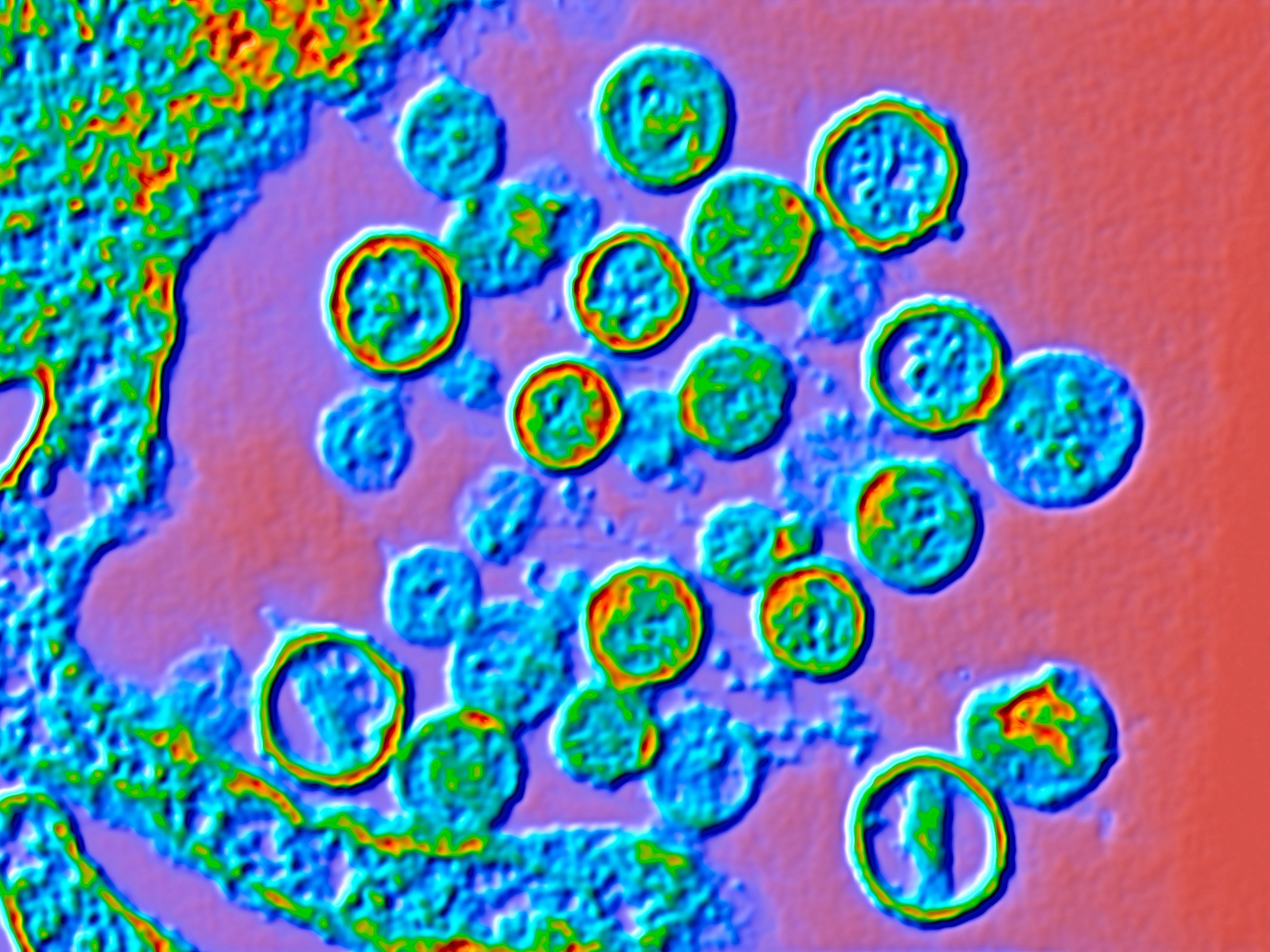
To understand the panic, you have to understand the pathogen. Most people associate viruses with crowded cities or sneezing coworkers. Hantavirus is different. It belongs to the wilderness. It lives in the waste of deer mice and long-tailed pygmy rice rats. It is a rural threat that has somehow found its way into the most modern of environments—a floating city of steel and glass.
Imagine a retired couple from London. Let's call them Arthur and June. They spent their life savings on this trip. They shared elevators with the infected individual. They sat three tables away in the dining hall. Now, they are back in their semi-detached home in the suburbs, feeling a bit "under the weather." They chalk it up to jet lag or the "post-vacation blues."
This is the danger zone.
Hantavirus Pulmonary Syndrome (HPS) begins with fatigue, fever, and muscle aches. It looks like everything and nothing. It mimics the exhaustion of travel. But while Arthur sits in his armchair sipping tea, the virus is quietly working to leak fluid into his lungs. The transition from "feeling tired" to "unable to breathe" happens with a violence that leaves doctors reeling.
A Global Net with Massive Holes
The logistics of a modern health manhunt are staggering. When a cruise ship docks, it doesn't just release passengers; it releases a centrifugal force of humanity. Within forty-eight hours of disembarkation, that single group of people has dispersed into thousands of taxis, hundreds of flights, and countless local communities.
Health agencies in the United States, Europe, and South America are currently engaged in a frantic game of digital archaeology. They are pulling credit card records, flight manifests, and mobile roaming data. They are trying to find the "Arthurs and Junes" of the world before the fluid in their lungs reaches a critical mass.
The challenge is that international borders are remarkably porous when it comes to biology. A passenger might fly from a port in Chile to a hub in Atlanta, then catch a connecting flight to Frankfurt. By the time the Chilean health authorities confirm the diagnosis, that passenger is already three countries away.
Communication lags.
A database in one country doesn't speak to the database in another. This isn't a "seamless" operation; it is a gritty, manual, desperate scramble. It involves thousands of phone calls that go to voicemail and emails that sit in spam folders while the incubation period—which can last up to eight weeks—slowly burns down.
The Anatomy of an Outbreak
Why is this so much harder than tracking something like COVID-19?
The answer lies in the rarity. Because Hantavirus isn't common, most general practitioners have never seen a case in their entire careers. If Arthur walks into a clinic in a London suburb and says he has a fever after a cruise, the doctor will likely test for COVID, or perhaps malaria if they traveled far. They won't look for a rare rodent-borne virus typical of the Americas.
This lack of "clinical suspicion" is the virus’s greatest ally.
Statistics tell a grim story. While the infection rate is low, the mortality rate is hauntingly high. We are looking at a pathogen where roughly one in three confirmed cases ends in death. It is a high-stakes lottery that no one signed up for.
Consider the mechanics of the ship itself. Cruise ships are masterpieces of engineering, but they are also closed loops. The ventilation systems, the shared surfaces, the communal dining—these are the very things we pay for to feel a sense of community. In the eyes of an epidemiologist, they are simply "efficient delivery mechanisms."
The "race" mentioned in the headlines isn't just about speed; it's about education. The goal isn't just to find the passengers, but to tell them: If you feel sick, tell your doctor exactly where you were. Do not let them give you an aspirin and send you home.
The Weight of the Unknown
There is a psychological toll to this kind of global pursuit. For the families of those being tracked, the phone call from a health department is a lightning bolt. It transforms a cherished memory—that sunset in the fjords—into a potential death sentence.
We often talk about "global health" as an abstract concept, something discussed in boardrooms in Geneva. But global health is actually the story of a single, microscopic strand of RNA traveling in the shadow of a human being. It is the story of how a rodent in a rural port can suddenly become a problem for a grandmother in Berlin or a businessman in Tokyo.
The stakes are invisible because the enemy is invisible. We aren't fighting an invading army; we are fighting a biological mishap. A mouse nested in a pallet of supplies. A worker swept a floor without a mask. A passenger breathed in at the wrong moment.
That is all it takes to trigger a worldwide mobilization.
As the search continues, the window of opportunity is closing. The incubation periods are ending. For some, the danger has already passed, and they will never even know they were at risk. For others, the first cough is just beginning.
The real tragedy of the global race isn't just the difficulty of the search. It’s the realization of how fragile our barriers truly are. We spend billions on security, on hull integrity, and on navigation systems to keep these ships safe from the ocean. Yet, the greatest threat to everyone on board was small enough to hide in a handful of dust.
Somewhere, a phone is ringing in a quiet house. A traveler is looking at an unknown number, wondering whether to pick up. On the other end of the line is a person whose job is to tell them that their vacation never really ended, and that the most dangerous part of their journey is happening right now, inside their own body.
The silence after the phone stops ringing is the loudest part of the story.