The wind in the Persian Gulf carries a specific scent. It is a thick, saline humidity that clings to the skin, smelling of ancient trade routes and sun-baked salt. But for those living in the shadow of the Bushehr nuclear plant, the wind has recently begun to carry something else. Not a smell. Not a sound. A weight.
A father in Bushehr wakes up and checks his phone. He isn't looking for sports scores or weather reports. He is looking for the news from Tehran, from Tel Aviv, and from Washington. He looks at his sleeping daughter and wonders if the concrete dome a few miles away is a monument to national pride or a target painted on their front door. This is the reality of living at the intersection of three nations' pride and a world's collective anxiety. The headlines speak of "strategic depth" and "red lines," but in the quiet streets of southern Iran, the vocabulary is much simpler. It is the language of survival. Meanwhile, you can find related events here: The Calculated Silence Behind the June Strikes on Iran.
The Geometry of a Storm
To understand the current tension, one must look past the fiery rhetoric of press briefings. The conflict between the United States, Israel, and Iran is often described as a game of chess, but chess has rules. This is more like a house of cards built on a vibrating table.
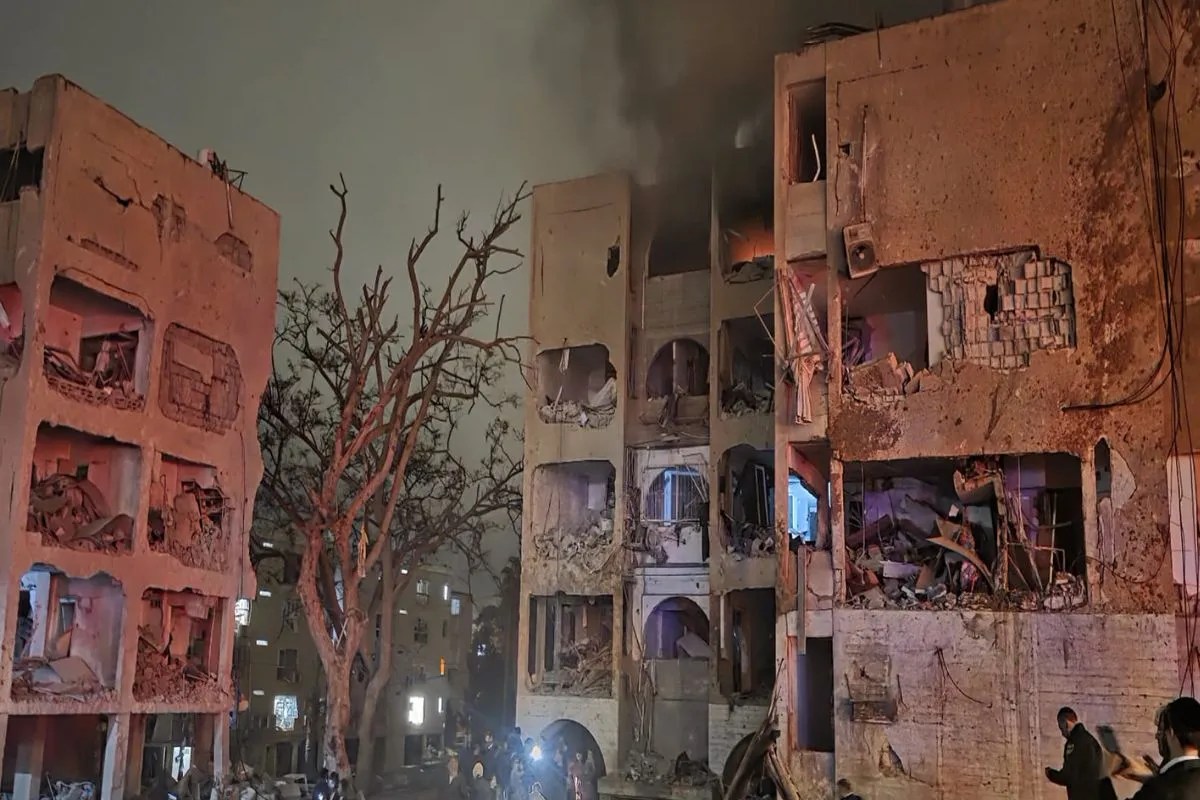
Israel views an Iranian nuclear capability as an existential threat. Iran views its nuclear program as a sovereign right and a shield against regime change. The United States finds itself trying to hold the walls up while the floor shakes. When reports surfaced that the "sparks" of conflict had reached the vicinity of nuclear sites, the world held its breath. It wasn't just about a potential explosion. It was about the breach of a psychological barrier that has stood for decades. To understand the full picture, we recommend the excellent analysis by Al Jazeera.
Nuclear facilities are supposed to be the "off-limits" zones of modern warfare. They are the high-stakes vaults of the 21st century. When missiles fly near these locations, the math of war changes instantly. We move from the tragic but contained reality of conventional strikes to the unpredictable, generational horror of radioactive fallout.
The Ghost of Chernobyl in the Desert
Radiation is a unique kind of terror because it is sensory-deprivation horror. You cannot see it. You cannot taste it. You cannot outrun it once it is in the soil and the water. This is the "invisible stake" that the dry news reports often gloss over.
If a containment structure were to be breached—whether by a direct hit or a catastrophic failure of cooling systems during a blockade—the local impact would be immediate. But the regional impact would be a cartographic nightmare. The Persian Gulf is one of the most vital waterways on the planet. A radiation leak in this region wouldn't just be a local health crisis; it would be an economic cardiac arrest for the global energy market.
Consider the cooling process. A nuclear reactor is essentially a massive, high-pressure tea kettle. It requires a constant, unwavering flow of water to keep the core from turning into a molten mass of slag.
$$Q = mc\Delta T$$
This simple thermodynamic equation governs the life and death of a reactor. $Q$ is the heat removed, $m$ is the mass of the coolant, $c$ is the specific heat, and $\Delta T$ is the temperature change. If the pumps stop because the power grid is sabotaged, or if the pipes are severed by a kinetic strike, the heat ($Q$) begins to build. Without the mass of water ($m$) to carry it away, the temperature rises until the metal itself screams.
This isn't just physics. It is the difference between a quiet Tuesday and a century of poisoned earth.
The Human Shield of Uncertainty
We often speak of "intelligence reports" as if they are crystal balls. In reality, they are mosaics made of broken glass. The uncertainty of what is happening inside Iran’s hardened facilities like Fordow or Natanz fuels the paranoia in Tel Aviv. Conversely, the uncertainty of when an Israeli F-35 might appear on the radar fuels the trigger-finger mentality in Tehran.
Caught in the middle are the scientists, the engineers, and the families. Imagine being a technician at one of these plants. You are a patriot, perhaps, or maybe just a man with a PhD trying to provide for his family. You go to work knowing that your workplace is the primary objective of a foreign military's "Plan B." You listen for the hum of drones. You wonder if the USB drive you just plugged into your workstation contains a virus designed to make your turbines spin until they shatter.
The digital warfare—the "Stuxnet" era—has evolved. We are now in an age of "Poly-War," where cyberattacks, assassinations, and conventional strikes happen simultaneously. It creates a state of permanent hyper-vigilance.
The Fallacy of the Surgical Strike
There is a dangerous myth often sold in the halls of power: the "surgical strike." It suggests that you can remove a nuclear program with the precision of a scalpel, leaving the surrounding body healthy.
History suggests otherwise.
When you strike a nuclear-adjacent facility, you aren't just hitting concrete. You are hitting the diplomatic floor. You are forcing a response. If Iran feels its "crown jewels" are at risk, the temptation to move from a civilian energy program to a weaponized one becomes almost irresistible. It becomes a self-fulfilling prophecy.
The fear of radiation reported in recent weeks isn't just about a leak. It’s about the radiation of conflict—the way the heat from this specific "hot spot" spreads to Lebanon, to Yemen, to the shipping lanes of the Red Sea. The world is interconnected in a way that makes "surgical" intervention an impossibility. Every incision bleeds across a dozen borders.
The Silence of the Monitors
The International Atomic Energy Agency (IAEA) acts as the world’s eyes. Their inspectors are the unsung protagonists of this story. They fly into tense airports, undergo rigorous security checks, and spend their days looking at seals and cameras.
When tensions spike, these eyes are often the first to be hooded.
The moment a nation feels cornered, it begins to turn off the cameras. It begins to restrict the inspectors. This is when the danger reaches its peak. Darkness breeds monsters. Without the stabilizing force of objective verification, rumors take over. And in the Middle East, a rumor can be as deadly as a missile.
We are currently in one of those periods of deepening shadows. The reports of smoke near sensitive sites and the movement of air defense batteries aren't just military maneuvers. They are signals. They are a high-stakes poker game where the chips are the lives of millions and the health of the environment for the next thousand years.
The Cost of the Long Game
The United States finds itself in a grueling position. It must reassure its closest ally, Israel, that it will not allow a nuclear-armed Iran to destabilize the region. Simultaneously, it must prevent a regional war that would drag thousands of American service members back into the sands they so recently left.
It is a policy of "controlled friction." But friction generates heat.
The people in the region—the shopkeepers in Isfahan, the tech workers in Tel Aviv, the sailors in the Fifth Fleet—they all feel this heat. It manifests as inflation, as "precautionary" drills in schools, and as a haunting, persistent "what if?"
What if the calculation is wrong? What if a mid-level commander misinterprets a blip on a screen? What if the "red line" is crossed by accident?
The technology of destruction has become so advanced that the human window for decision-making has shrunk to seconds. We have built systems that can end civilizations at the speed of light, yet we still rely on the ancient, flawed, emotional brains of leaders to keep the peace.
The sun sets over the Gulf, turning the water into a sheet of hammered gold. For a moment, it looks peaceful. The cooling towers of Bushehr are silhouetted against the purple sky, looking more like ancient monuments than the focal point of a potential global catastrophe.
A mother in the city pulls the curtains shut. She doesn't do it to keep out the light. She does it because, in the modern age, the most terrifying threats are the ones you can't see coming, and the only thing left to do is hold your breath and hope the wind doesn't change direction.
The world watches the dials, waiting to see if the needle stays in the green or flickers into the red. We are all living in the shadow of that needle now.