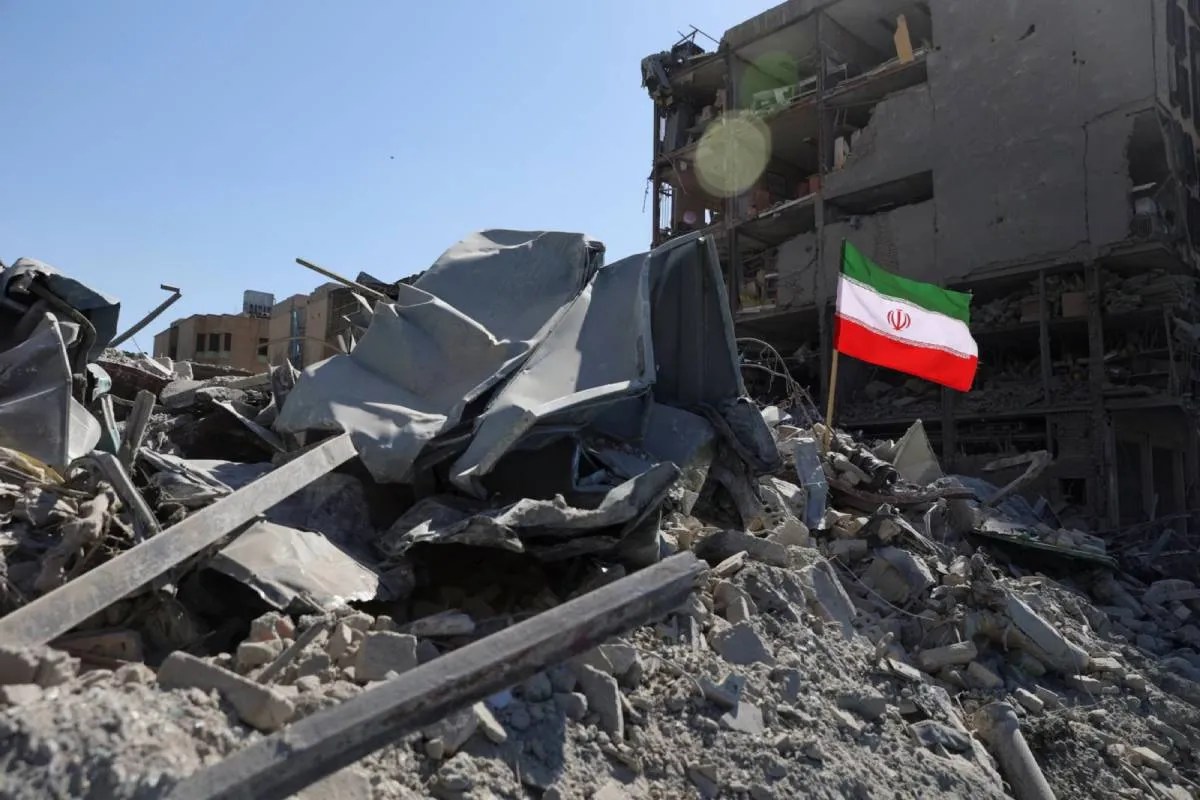
The quiet extension of the ceasefire between the United States and Iranian-backed elements isn't a diplomatic breakthrough. It is a calculated delay. For two weeks, the region has operated under a fragile understanding that prevents a localized skirmish from spiraling into a total regional collapse. This fourteen-day grace period, while framed by some as a step toward peace, is actually a tactical pause dictated by domestic political pressures in Washington and a desperate need for economic stabilization in Tehran. The gears of this agreement didn't turn because of goodwill. They turned because neither side can currently afford the alternative.
The Mechanics of the Fourteen Day Buffer
Security analysts on the ground know that a two-week extension in the Middle East is an eternity and a heartbeat all at once. This specific timeframe wasn't pulled from thin air. It aligns with critical logistical windows for humanitarian aid corridors and, more importantly, the rotation of naval assets in the Eastern Mediterranean and the Persian Gulf.
By pushing the deadline out by fourteen days, both regimes have bought themselves room to breathe without making permanent concessions. The United States avoids a spike in oil prices that would inevitably follow a direct kinetic exchange, and Iran shields its internal infrastructure from the looming threat of targeted strikes.
This isn't a peace treaty. It is a maintenance schedule for a cold war.
Why the Status Quo is Profitable for Both Sides
To understand why this deal stuck, you have to look at the ledgers, not the speeches. Iran is currently grappling with an inflation rate that has hollowed out its middle class. Every day the "shadow war" remains in a low-intensity state is a day the Iranian central bank can attempt to prevent a total currency collapse.
On the other side, the Biden administration is navigating an election year where every cent at the gas pump is a potential vote lost. A full-scale escalation would necessitate a massive shift in military spending and a surge in global energy costs.
- Tehran's Perspective: The regime needs to project strength to its proxies—Hezbollah, the Houthis, and various militias in Iraq—without inviting a strike that could decapitate its command structure.
- Washington's Perspective: The Pentagon is focused on "over-the-horizon" containment. They want to keep the conflict contained within specific geographic boxes to avoid being pulled into another decade-long ground commitment.
The Backchannel Architecture
The most sophisticated part of this ceasefire isn't what happened in public view. It is the role of third-party intermediaries, specifically Qatar and Oman. These nations don't just host meetings; they act as the clearinghouses for the "red lines" that neither side is allowed to cross.
During the negotiations for this two-week extension, the primary friction point wasn't the duration. It was the definition of "provocation." Iran sought guarantees that its maritime trade wouldn't be further harassed, while the U.S. demanded a total freeze on drone launches from southern Lebanon and western Yemen.
The compromise? A temporary "non-interference" pact.
The U.S. agreed to overlook certain gray-market oil shipments in exchange for a documented reduction in militia activity against American bases. It’s a cynical trade. Blood for oil, or more accurately, the absence of spilled blood for the continued flow of revenue.
The Proxy Dilemma
One of the biggest threats to this extension is the lack of total control. Tehran does not have a "stop" button for every local commander in Iraq or Syria. These groups have their own local agendas, often driven by tribal loyalties or religious fervor that doesn't always align with the strategic patience of the Iranian Revolutionary Guard Corps (IRGC).
If a rogue militia unit decides to launch a mortar at a U.S. outpost tomorrow, the fourteen-day window vanishes instantly. The United States has made it clear through diplomatic cables that it will not distinguish between an "unauthorized" strike and a state-sponsored one. For Washington, the responsibility of the proxy lies solely with the patron.
The Economic Ghost in the Room
We often talk about missiles and drones, but the real weapon in this ceasefire is the US Dollar. Iran’s access to frozen assets remains the ultimate carrot. Part of the agreement for this extension reportedly involves the release of specific tranches of funds intended for "humanitarian" use.
Critics argue that money is fungible. When you give a regime $500 million for medicine, it frees up $500 million of their own money for ballistic missile research. This is the gamble the State Department is taking. They are betting that the immediate need for social stability within Iran will outweigh the long-term desire for regional dominance.
It is a high-stakes poker game where the chips are civilian lives.
The Role of Intelligence Sharing
Surprisingly, this ceasefire has seen a rare uptick in "de-confliction" communication. This doesn't mean the CIA and the IRGC are friends. It means they are talking enough to ensure that accidental overlaps don't lead to unintended catastrophes.
For instance, when a US carrier strike group moves through the Strait of Hormuz, there is now a predictable pattern of notification that prevents Iranian fast-boats from getting too close and sparking a "defensive" reaction. These protocols are the only thing preventing a nervous nineteen-year-old on a deck gun from starting a global conflict.
The Fragility of the Two Week Window
What happens on day fifteen?
The history of Middle Eastern ceasefires suggests that they are rarely followed by a second, longer extension. Instead, they usually end in a "reset" where both sides test the boundaries again. They want to see if the other side’s resolve has weakened during the quiet period.
The United States is currently monitoring satellite imagery for any signs of Iranian missile movement toward the coast. Simultaneously, Iranian intelligence is tracking US heavy bomber deployments in Diego Garcia and Qatar. Both sides are using this "peace" to prepare for the next phase of the war.
Domestic Pressure Points
In Tehran, the hardliners are screaming betrayal. They view any pause in the "resistance" as a sign of weakness that invites further Western aggression. To appease them, the Iranian leadership often pairs these ceasefire extensions with aggressive rhetoric or domestic crackdowns to prove they haven't "gone soft."
In Washington, the hawks in Congress are equally skeptical. They see the two-week extension as a gift to Iran, allowing the regime to refuel, rearm, and reorganize its proxies. The political cost of this deal is high for both administrations, which is why it is kept so short. A two-week deal is easier to defend as a "temporary humanitarian pause" than a six-month armistice.
The Strategic Calculation of Silence
There is a specific kind of tension that exists when the guns go silent but the eyes stay open. This ceasefire isn't about solving the underlying issues of the Iranian nuclear program, the recognition of Israel, or the sovereignty of Lebanon. Those are generational problems. This deal is about the next fourteen days.
It is about ensuring that the global economy doesn't take a 15% hit tomorrow morning. It is about making sure that the current administration doesn't have to explain why American soldiers are returning home in flag-draped coffins during an election cycle.
The "agreement" mentioned in the headlines is less of a handshake and more of two exhausted fighters leaning against each other in the corner of the ring, waiting for the bell to ring for the next round. They aren't done fighting; they are just catching their breath.
The reality of modern diplomacy is that we no longer seek "wins." We seek the absence of total loss. This ceasefire extension is the embodiment of that philosophy. It is a paper-thin barrier against chaos, held together by mutual exhaustion and the terrifying realization that neither side is ready for what comes after the truce fails.
The fourteen-day clock is ticking.