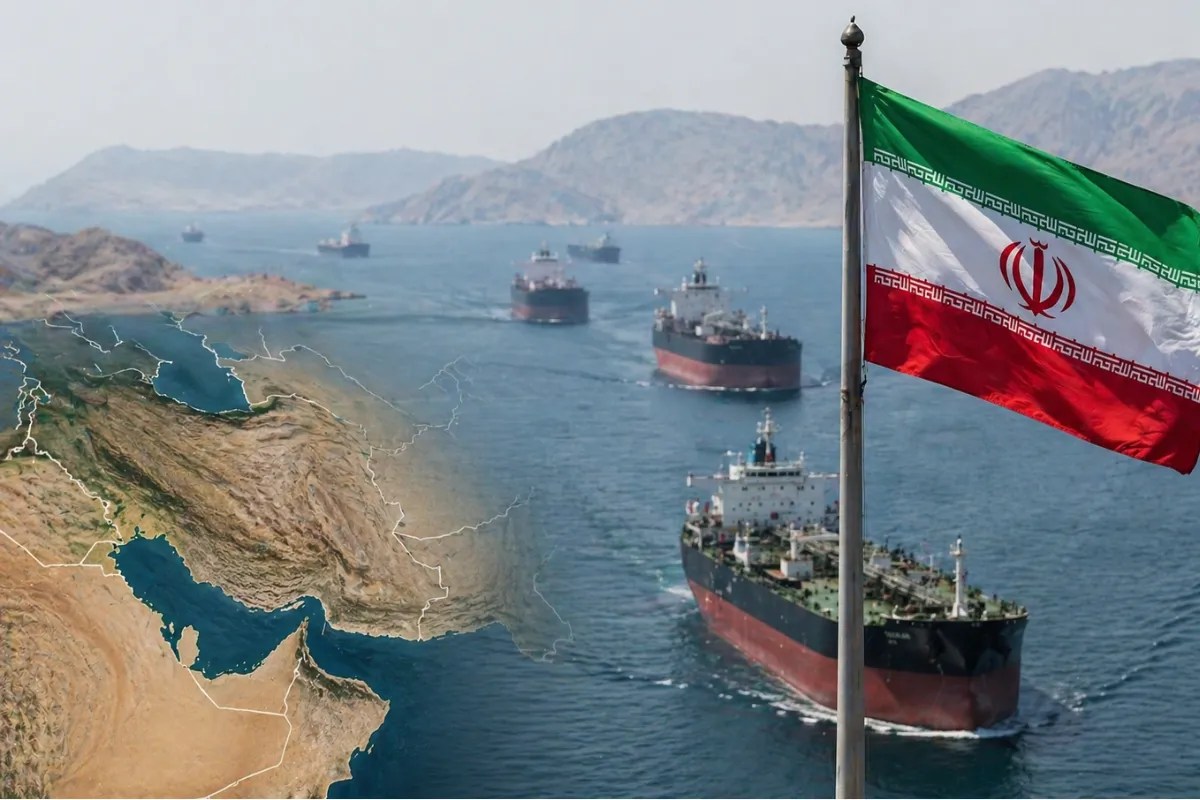
A captain stands on the bridge of a massive oil tanker, squinting against the glare of the Persian Gulf. Beneath his boots, millions of barrels of crude oil—the lifeblood of global industry—thrum with the vibration of the engines. He is entering the Strait of Hormuz. At its narrowest point, the shipping lane is only two miles wide. To his left and right, the horizon isn't just water; it is a geopolitical tripwire.
If this narrow ribbon of blue closes, the lights go out in cities thousands of miles away. Factories in Guangzhou go silent. Gas prices in Berlin skyrocket. The sailor doesn't see maps or treaties. He sees the gray hulls of patrol boats and the heavy silence of a region that knows it holds the world by the throat.
The Law of the Sea vs. The Law of the Land
For decades, the world has operated on a gentleman’s agreement known as the United Nations Convention on the Law of the Sea (UNCLOS). It’s a thick manual of rules designed to keep the oceans a shared highway. It dictates that even in the territorial waters of a nation, foreign ships have the right of "innocent passage." They can move through as long as they aren't shooting guns or launching planes.
But Iran has recently sent a shockwave through the maritime community by reminding the world of a simple, uncomfortable truth. They never fully bought into that manual.
Tehran’s stance is clear and jarring. They argue that because they haven't ratified certain international maritime treaties, they aren't bound by the global rules of the road. To them, the Strait of Hormuz isn't a global commons. It is their front porch. And on their front porch, they decide who gets to walk by. This isn't just a legal disagreement. It is a fundamental challenge to how every nation on Earth powers its economy.
A Ghost in the Machine of Global Trade
Imagine the global economy as a complex, high-speed engine. Most of us focus on the pistons and the fuel, but we forget the pipes. The Strait of Hormuz is the most critical pipe in the entire system. Roughly a fifth of the world’s total oil consumption passes through this tiny gap every single day.
When Iran asserts its "legitimate right" to secure these waters under its own terms, it isn't just talking about police work. It is signaling that it can turn the valve.
The tension lies in a paradox. Iran claims it is the primary guardian of the Strait, the local sheriff keeping the peace against foreign "intruders"—mostly the United States and its allies. Yet, the very act of "securing" the water often involves seizing tankers, deploying mines, or conducting high-stakes naval drills that make the rest of the world hold its breath.
The human cost of this friction isn't found in the speeches of diplomats. It's found in the insurance premiums paid by shipping companies, which eventually trickle down to the price of a gallon of milk or a plastic toy. It’s found in the anxiety of the crew members on those tankers, who know they are sailing through a corridor where the rules can change at the whim of a coastal battery.
The Weight of History and Water
The Iranian perspective is fueled by a deep-seated sense of regional ownership. From their vantage point, the presence of Western aircraft carriers in the Gulf is an anomaly, a lingering ghost of colonial-era power projection. They see their defiance not as aggression, but as a restoration of the natural order.
"We are the masters of these waters," the rhetoric suggests.
But the "natural order" in 2026 is a web of total interdependence. No nation is an island, even if it controls the most important strip of water on the planet. By stepping outside the framework of international maritime law, Iran is essentially trying to rewrite the physics of global trade. They are betting that the world’s need for oil will outweigh the world’s commitment to established law.
Consider the ripple effect of a single day’s closure. It isn't just about delayed shipments. It’s about the sudden, violent realization that the "freedom of the seas" is a fragile illusion. For a logistics manager in Chicago or a power plant operator in Tokyo, the Strait of Hormuz feels like a distant abstraction—until it isn't.
The Fragility of the Open Highway
The legal gray zone Iran is occupying is a masterclass in leverage. By refusing to acknowledge the universal application of UNCLOS, they create a "strategic ambiguity." This ambiguity is a weapon. It allows them to escalate or de-escalate tension without ever technically breaking a law they don't recognize in the first place.
This puts the international community in a bind. How do you police a highway when one of the main stakeholders says the speed limits and stop signs don't apply to them?
Military escorting of tankers has become the band-aid solution, but it is an expensive and volatile one. It turns a commercial shipping lane into a militarized zone. Every time a destroyer pulls up alongside a merchant vessel, the stakes get higher. One nervous radar operator or one misunderstood maneuver could ignite a conflagration that no one truly wants but everyone is prepared for.
Beyond the Barrels
We often talk about this in terms of oil, but the stakes are actually human trust. The global system relies on the predictable movement of goods. When that predictability vanishes, replaced by the "sovereign rights" of a single nation to intercept and dictate passage, the foundation of modern life begins to crack.
The sailor on the bridge looks at the radar screen. He sees the blips of other tankers, the jagged coastline of the Musandam Peninsula, and the fast-moving shadows of patrol craft. He isn't thinking about the 1982 Convention or the nuances of territorial sea limits. He is thinking about the thin line between a routine transit and a global crisis.
The water remains calm, a deep, deceptive blue. But beneath the surface, the currents of power are shifting. The world has long assumed that the oceans belong to everyone. Iran is betting that, in the end, the ocean belongs to whoever is willing to guard the gate with the most conviction.
The valves are open for now. The oil flows. The lights stay on. But the quiet tension in the Strait remains—a reminder that our modern world hangs by a very thin, very salty thread.



