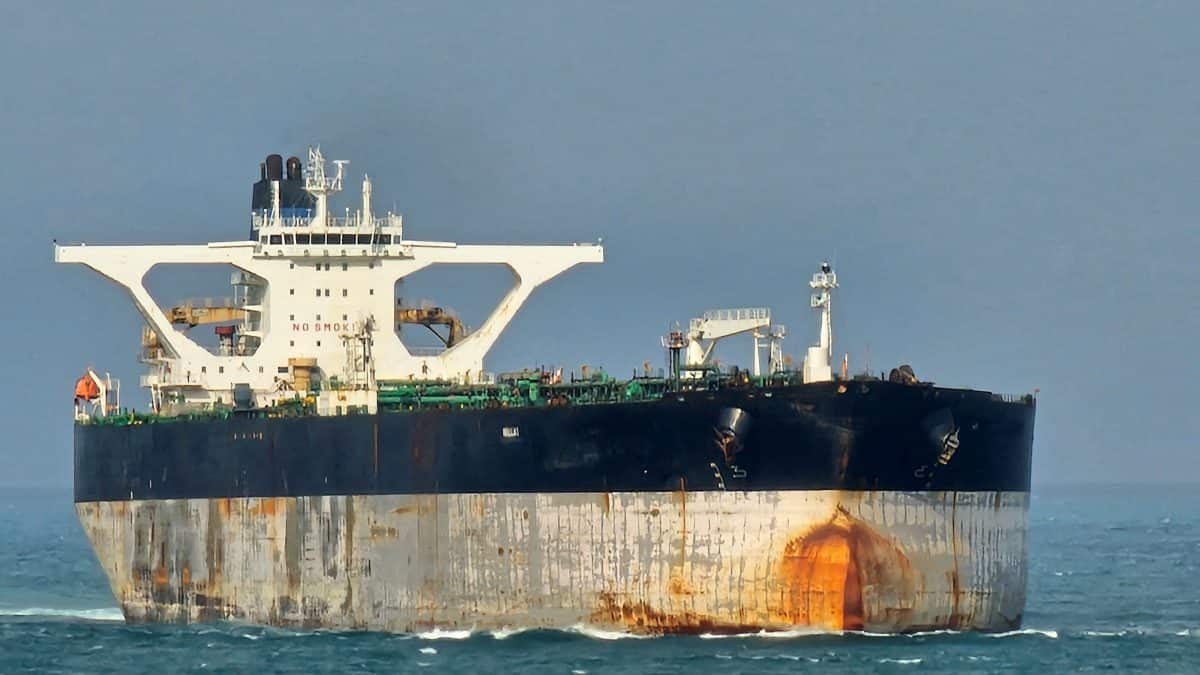
The Persian Gulf is currently the site of a high-stakes game of maritime chicken that threatens to upend the global economy. Recent strikes on cargo vessels and oil tankers in these narrow shipping lanes are not random acts of piracy or isolated accidents. They are calculated geopolitical maneuvers designed to test the limits of international naval protection and the resilience of the global supply chain. When a missile hits a hull in the Strait of Hormuz, the impact is felt instantly in the boardroom of every major energy company and at every gas pump on the planet.
This is the reality of modern energy security. The "blue economy" is under siege, and the old playbooks for protecting it are becoming obsolete. While headlines often focus on the immediate damage to the ships, the true story lies in the surging insurance premiums, the rerouting of massive fleets, and the quiet scramble by nations to secure alternative energy routes that simply do not exist at the scale required.
The Geography of Vulnerability
The Strait of Hormuz is a geographic bottleneck that handles roughly one-fifth of the world's total oil consumption. It is 21 miles wide at its narrowest point, but the actual shipping lanes—divided into inbound and outbound tracks—are only two miles wide each. There is no margin for error.
For decades, the presence of the U.S. Fifth Fleet served as a psychological and physical deterrent. That deterrent is fraying. Regional actors have realized that they do not need to sink a ship to win a confrontation; they only need to make the route "uninsurable." Once Lloyd’s of London or other major maritime insurers designate a zone as high-risk, the daily cost of operating a Suezmax or VLCC (Very Large Crude Carrier) skyrockets.
We are seeing a shift from traditional naval warfare to "gray zone" tactics. This involves the use of drones, limpet mines, and fast-attack craft that provide just enough deniability to avoid a full-scale declaration of war while causing maximum economic friction. It is a low-cost, high-reward strategy for disrupting the flow of 21 million barrels of oil per day.
The Insurance Death Spiral
Behind every captain on the bridge is a risk assessor in a climate-controlled office in London or Singapore. Their math is what actually keeps the propellers turning. When ships are targeted, the "war risk" premium is triggered.
In a typical market, these premiums are a negligible fraction of the total hull value. During periods of heightened tension in the Gulf, these rates can jump by 500% or even 1000% in a single week. For a tanker carrying $100 million worth of crude, an additional 1% premium translates to a $1 million surcharge just for the privilege of passing through the Strait.
Who Pays the Price
- Refineries: They face higher landed costs for crude, which they pass on to consumers.
- Shipping Firms: Companies like Maersk or Frontline must decide whether to risk their assets or take the long way around the Cape of Good Hope.
- National Economies: Countries heavily dependent on Gulf oil, particularly in Asia, see their trade balances tip into the red overnight.
If a major insurer decides to pull coverage entirely for certain flags or ship types, the lane effectively closes. No rational shipowner will move a vessel without protection. This creates a "shadow fleet" of older, poorly maintained ships that operate without standard insurance, often using "dark" transponders to hide their location. This increases the risk of environmental disasters that would make a simple missile strike look minor by comparison.
The Drone Revolution and the Cost of Defense
The math of maritime defense has become dangerously lopsided. A commercial drone or a basic cruise missile costs a fraction of the sophisticated interceptors used by naval destroyers to shoot them down. A single RIM-162 Evolved SeaSparrow Missile (ESSM) can cost over $2 million. The drone it targets might cost $20,000.
This asymmetry is unsustainable. Navies are being forced to use high-end, limited-inventory munitions to protect commercial interests that were once considered safe under the umbrella of international law. The "freedom of navigation" that has underpinned global trade since 1945 is being challenged by tech that can be assembled in a warehouse.
The naval convoys of the past are no longer enough. The sheer volume of traffic through the Gulf—hundreds of ships per month—means that no navy can provide a dedicated escort for every single hull. Instead, the burden is being shifted onto the private sector. Armed guards, hardened decks, and "safe rooms" are now standard equipment for tankers that once relied solely on their size and speed for safety.
The Crude Reality of Energy Security
There is no "Plan B" for the Persian Gulf. Pipelines across Saudi Arabia or around the Emirates are not yet large enough to handle the total volume required to keep global energy prices stable. If the Gulf closes for any extended period, the SPR (Strategic Petroleum Reserve) in the United States and similar stocks in Europe and China would only provide a temporary cushion.
The real threat is the "creeping blockage." This is not a sudden, total shutdown, but a gradual, expensive, and increasingly dangerous environment where shipping becomes a high-risk gamble. For a world already struggling with inflation and energy transition pressures, the Persian Gulf remains the most sensitive pressure point in the global body politic.
Beyond the Horizon
The focus must shift from reactive defense to proactive deterrence. This means more than just patrolling with more ships; it means international legal frameworks that hold actors accountable for disrupting maritime commerce through digital or "gray" means. We are entering an era where the ship’s manifest is just as vulnerable to a cyberattack as its hull is to a missile.
The next time a tanker is struck in the Gulf, don't just look at the smoke. Look at the insurance ticker and the price of Brent crude. The real battle is for the freedom to trade without fear in the world's most critical energy artery. For the crews on those ships, the "risk" is not just a line item on a balance sheet; it is the daily reality of navigating a zone where the rules of the sea are being rewritten in real-time.