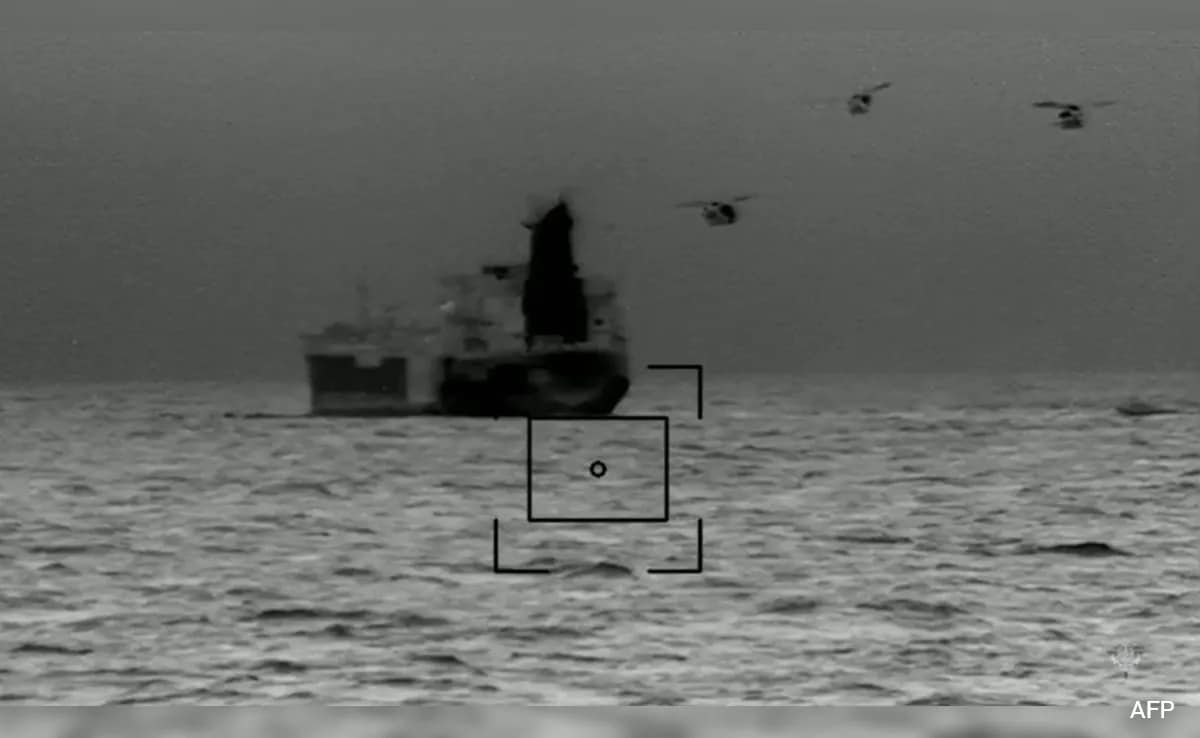
The global oil market operates on a fiction. While official ledgers suggest that Iranian crude is effectively boxed in by international sanctions, the reality on the water tells a different story. A massive, aging fleet of tankers—often referred to as the shadow fleet or the "ghost armada"—now serves as the primary artery for sanctioned oil moving through the Strait of Hormuz. These vessels do not just bypass trade restrictions; they are the essential infrastructure for a parallel economy that links Tehran’s oil fields to independent refineries in China.
This is not a small-scale smuggling operation involving speedboats and night-time transfers. It is a sophisticated, multi-layered logistical machine. By using complex corporate shells, constant re-flagging, and advanced technical deception, these ship owners have turned the Strait of Hormuz into a sieve. For the global economy, this means that despite the rhetoric of "maximum pressure" or trade barriers, millions of barrels of oil continue to reach the market, stabilizing supply while undermining the very concept of international enforcement.
The Architecture of Deception
The shadow fleet relies on the systematic breakdown of maritime transparency. In a standard shipping transaction, a vessel has a clear owner, a consistent flag, and a trackable history. The shadow fleet discards these norms entirely. Many of these ships are decades old, approaching the end of their operational lives, which makes them cheap to acquire and theoretically disposable if seized or disabled.
Ownership is hidden behind a labyrinth of "brass plate" companies. A tanker might be owned by a firm in the Marshall Islands, managed by a company in Dubai, and operated by an entity in Hong Kong, with the ultimate beneficial owner tucked away behind several more layers of legal shielding. This fragmentation ensures that when a vessel is caught violating sanctions, the trail goes cold before it reaches the person actually profiting from the trade.
The Strait of Hormuz acts as the ultimate pressure point in this journey. Because it is one of the world's most congested maritime chokepoints, shadow tankers can blend into the noise of legitimate traffic. They use the sheer volume of trade as a camouflage, slipping through the narrows before disappearing into the vastness of the Indian Ocean or the South China Sea.
Spoofing and the Blackout Maneuver
Technical manipulation is the most potent weapon in the shadow fleet's arsenal. Every commercial vessel is required to carry an Automatic Identification System (AIS), which broadcasts its position, speed, and heading. For a shadow tanker, the AIS is a tool for misdirection rather than safety.
"Dark periods" are the most common tactic. As a ship approaches Iranian waters, it simply switches off its transponder. For several days, the vessel ceases to exist on digital tracking maps. During this window, it docks at an Iranian terminal, loads its cargo, and departs. When the AIS is switched back on, the ship appears to be in a different location, often claiming to have performed a ship-to-ship transfer in international waters.
More advanced crews engage in AIS spoofing. By using sophisticated software, they can broadcast a false signal that places the ship hundreds of miles away from its actual coordinates. A tanker might appear to be circling aimlessly in the Gulf of Oman while it is actually tied up at a pier in Kharg Island. This digital sleight of hand makes it nearly impossible for satellite-based monitoring services to provide an accurate count of how much oil is actually leaving the region.
The China Connection and the Rise of the Teapots
The destination for the vast majority of this sanctioned crude is China. However, the buyers are rarely the state-owned giants like Sinopec or PetroChina, which have global reputations and US-linked assets to protect. Instead, the oil flows to the "teapots"—small, independent refineries concentrated primarily in the Shandong province.
These refineries operate on the margins of the Chinese energy sector. They provide the perfect landing spot for shadow fleet oil because they often deal in Yuan, avoiding the US dollar-denominated financial system (SWIFT) entirely. This creates a closed-loop economy. Iran gets a buyer for its primary export, the teapots get crude at a significant discount compared to Brent or WTI benchmarks, and China secures its energy needs without officially defying sanctions on a state level.
The "passkey" to the Strait of Hormuz is essentially a Chinese purchase order. As long as there is an appetite for cheap, off-the-books energy in the East, the shadow fleet will have a reason to navigate the risks of the Middle East's most dangerous waters.
The Environmental Time Bomb
While the geopolitical implications of the shadow fleet are well-documented, the physical risks are often ignored. These ships are frequently "sub-standard." Because they operate outside the traditional insurance markets—such as the International Group of P&I Clubs—they lack the rigorous safety inspections and maintenance schedules required for mainstream tankers.
If a shadow tanker were to suffer a mechanical failure or a collision in the narrow Strait of Hormuz, the results would be catastrophic. There is no clear insurance trail to pay for a cleanup, and the opaque ownership structure means there is no "responsible party" to hold accountable. The environmental health of the Persian Gulf is effectively being held hostage by a fleet of rust-buckets that shouldn't be in service.
Furthermore, the practice of ship-to-ship (STS) transfers increases the risk of a spill. These transfers often happen in the open ocean, sometimes in poor weather, to avoid the oversight of port authorities. Moving millions of gallons of volatile crude from one aging hull to another without the safety protocols of a regulated terminal is an invitation for disaster.
Why Enforcement is Failing
The persistence of the shadow fleet reveals a fundamental flaw in the way global trade is regulated. Sanctions are only as strong as the ability to monitor the physical movement of goods. Currently, the maritime industry relies on a patchwork of private data providers and underfunded government agencies to keep tabs on tens of thousands of vessels.
The shadow fleet has turned "non-compliance" into a profitable business model. For many ship owners, the risk of a fine or a blacklisting is simply a cost of doing business—one that is easily offset by the high premiums charged for moving sanctioned cargo. When one vessel is blacklisted, the owner simply changes its name, paints a new ID number on the hull, and registers it under a different "flag of convenience" like Gabon or the Cook Islands.
This cycle of re-flagging and re-naming happens at a speed that bureaucratic regulators cannot match. By the time a specific ship is identified and sanctioned, it has often already completed several voyages and transitioned to a new identity.
The Financial Loophole
The shift away from the US dollar is the final piece of the puzzle. Historically, the dominance of the dollar allowed the US Treasury to act as a global policeman. If you traded in oil, you traded in dollars, and that meant you had to touch a US-controlled clearinghouse.
The shadow fleet's trade with China has largely bypassed this. By using local banks and non-dollar currencies, the financial transactions associated with these oil shipments never enter the jurisdiction of Western regulators. This financial "dark matter" makes it impossible to freeze the assets or disrupt the payments that keep the fleet operational.
The New Reality of Maritime Trade
The existence of a permanent, massive shadow fleet suggests that the era of a unified, transparent global shipping market is over. We are seeing the emergence of a two-tier system. On one side is the "white" fleet: insured, regulated, and compliant. On the other is the shadow fleet: a deregulated, high-risk, and high-reward network that answers only to the demand for sanctioned commodities.
As long as the price difference between "clean" oil and "shadow" oil remains high, the incentive to maintain this invisible armada will persist. The Strait of Hormuz is no longer just a geographical chokepoint; it is the primary theater for a new kind of economic warfare where the winner is whoever can hide their tracks most effectively.
Ship owners who once operated in the shadows are now becoming major players in the logistics world. They are expanding their reach, moving beyond Iranian oil into other sanctioned markets, creating a global network of "ghost" logistics that functions entirely outside the reach of international law. This isn't a temporary workaround; it is the new infrastructure of the 21st-century energy trade.
Pressure on the Strait of Hormuz will only increase as the technical capabilities of the shadow fleet evolve. Expect to see more sophisticated spoofing, more complex corporate layering, and a continued migration toward "un-trackable" financial settlements. The ghost armada is here to stay, and its presence ensures that no matter what happens in the diplomatic halls of Washington or Brussels, the oil will keep moving through the narrows.
Track the aging VLCCs (Very Large Crude Carriers) lingering off the coast of Singapore and Malaysia. These floating storage units are the transit hubs for the next wave of shadow shipments heading north.