The tactical demolition of southern Lebanon has entered a phase of permanent transformation. While news tickers focus on the immediate tally of air strikes, the ground reality reveals a far more calculated military engineering project. Israel is not merely bombing homes to degrade Hezbollah’s immediate firing capabilities; it is systematically erasing the social and physical geography of everything south of the Litani River. The objective is the creation of a "dead zone" intended to prevent the return of over 600,000 displaced residents, effectively redrawing the map of the Levant through what the Israeli defense ministry calls the "Gaza model."
This shift from targeted counter-insurgency to total structural erasure marks a point of no return for the border regions. Since the escalation resumed on March 2, 2026, the Israel Defense Forces (IDF) have leveled entire blocks in Bint Jbeil, Taybeh, and surrounding villages. These are not collateral casualties of urban warfare. They are the result of a stated policy to treat every residential structure as a potential command center, ensuring that even if a ceasefire is signed tomorrow, there will be no homes for the Lebanese population to return to.
The Architecture of Erasure
The sheer velocity of the destruction is unprecedented. On April 8, following a brief and discarded truce, the IAF conducted over 100 strikes in a ten-minute window. This was not about hitting moving targets. It was a demonstration of structural liquidation. When the dust settled, the 10-story residential buildings that defined the skyline of Sour and the densely packed neighborhoods of the south had been reduced to gray mounds of rebar and concrete.
Israeli Defense Minister Israel Katz has been blunt about the strategy. The goal is to control the area up to the Litani River, approximately 19 miles from the border. By destroying bridges—including the critical Qasmiyeh and Dallafa crossings—the IDF has effectively severed the south from the rest of the country. This creates a geographic island where ground forces can operate with total autonomy, unhindered by the logistical needs of a civilian population that no longer has the infrastructure to survive there.
The "Gaza model" being applied here is visible in the treatment of public utilities. Water treatment stations, power grids, and medical facilities like the Tibnin governmental hospital have been hit with precision. These strikes go beyond the "why" of military necessity and enter the "how" of long-term displacement. Without water and power, a village is just a collection of empty shells. Without a hospital, a community cannot sustain itself.
The Myth of the Surgical Strike
The narrative of surgical precision often used by military spokespeople is collapsing under the weight of the casualty data. As of mid-April 2026, over 2,000 people have been killed in Lebanon, and 1.2 million have been displaced. The human cost is concentrated in the mass influxes seen at facilities like the Rafik Hariri University hospital in Beirut, where the injuries are consistent with heavy ordnance used in residential zones: glass fragmentation, metal debris, and crush injuries from collapsing multi-story buildings.
Hezbollah’s role in this cycle cannot be ignored. The group has launched up to 2,000 rockets and drones into Israel since March, frequently operating from within or near civilian areas. However, the IDF's response has moved past the principle of proportionality. By declaring every Shiite home a potential command post, the military has green-lit the destruction of private property on a scale that suggests a permanent ethnic and demographic shift rather than a temporary security buffer.
The Lebanese government, caught in a vice between a militant group it cannot control and an invading force it cannot stop, has moved to ban Hezbollah's military activities. It is a symbolic gesture. On the ground, the Lebanese army has been forced to withdraw from Christian-majority towns like Rmeish and Ain Ebl to avoid being crushed in the gears of the advancing Israeli armor.
Strategic Entrenchment and the Buffer Zone
The establishment of a security zone is a ghost of 1982, but with 2026 technology. Unlike the previous occupation that lasted until 2000, the current incursion is backed by a scorched-earth policy designed to make the territory uninhabitable for anyone other than a standing army.
The military logic is straightforward. If there are no buildings, there are no spots for anti-tank teams to hide. If there are no roads or bridges, there is no way for Hezbollah to move heavy weaponry quickly. But this logic ignores the long-term political fallout. By creating a 19-mile wide scar across the face of southern Lebanon, Israel is fostering a generation of displacement that will likely fuel the very insurgency it seeks to extinguish.
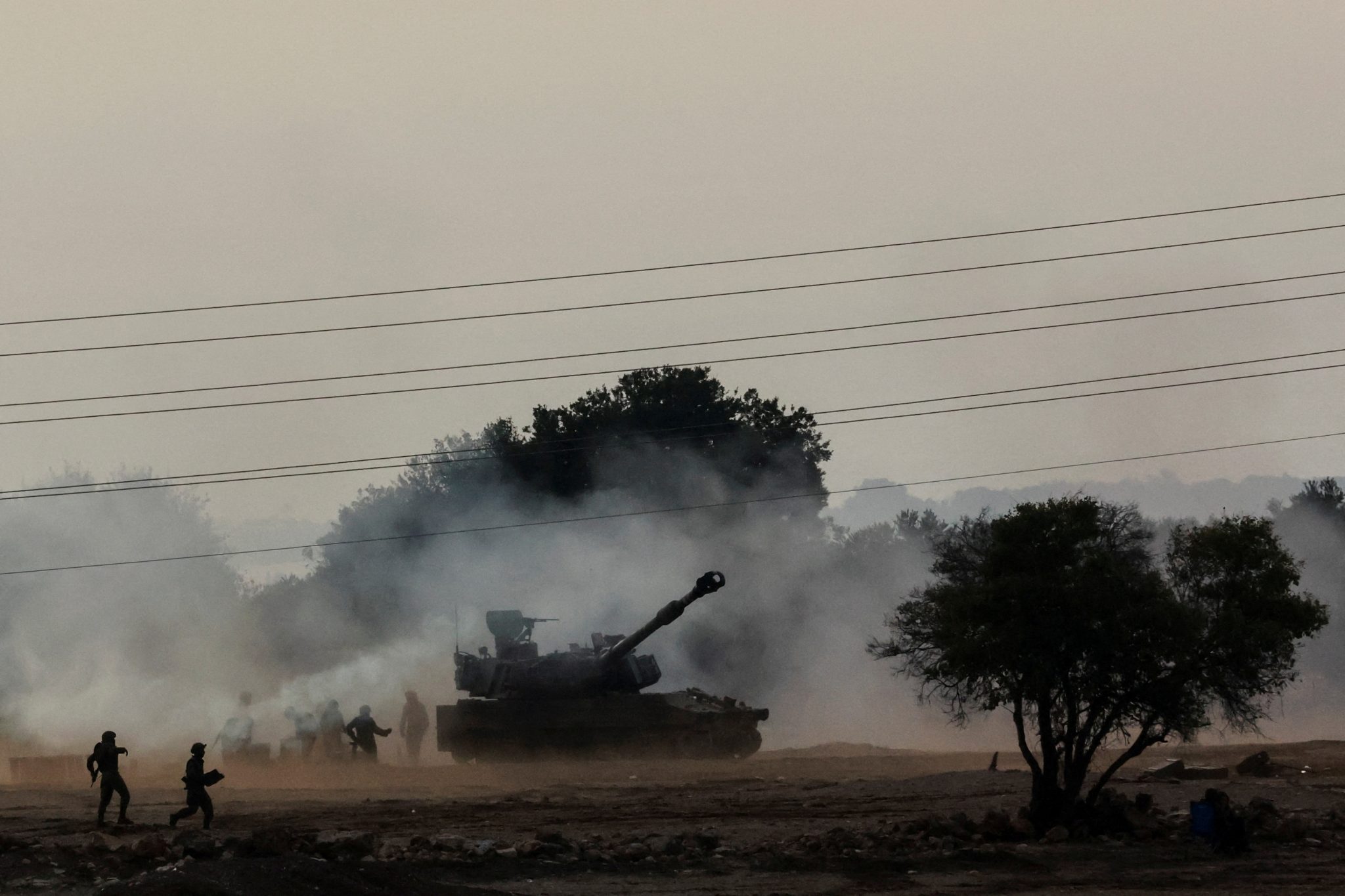
The international community's response remains paralyzed by the wider conflict involving Iran. While diplomats meet in Washington, the reality on the ground is being dictated by D9 bulldozers and 2,000-pound bombs. The "buffer zone" is no longer a theoretical line on a map; it is a physical reality carved out of the rubble of Lebanese border towns.
The displacement of 20% of Lebanon's population is not a side effect of this war. It is the primary outcome. As the IDF consolidates its positions and prepares for a long-term presence up to the Litani, the question is no longer when the residents will return, but if they will have anything to return to. The structural integrity of the border has been replaced by a vacuum of power and a wasteland of concrete.