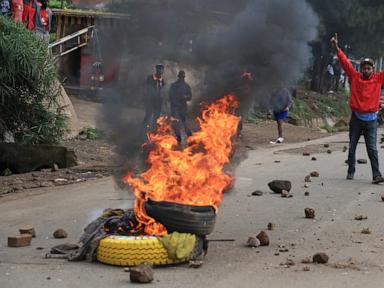
Nairobi is quiet. The usual, ear-splitting symphony of overlapping car horns, revving engines, and the booming bass lines of privately owned matatu minibuses has vanished. In its place, columns of thick, black smoke rise from makeshift barricades. The burning rubber of heavy truck tires marks the boundaries of a nationwide public transport strike that has effectively frozen East Africa’s economic hub.
The immediate trigger for the chaos is clear. On Friday, the Energy and Petroleum Regulatory Authority (EPRA) announced a staggering 23.5% spike in diesel prices and an 8% increase in gasoline. But looking only at the barricades means missing the underlying reality. This is not just a localized flare-up over expensive fuel. It is an economic reckoning driven by heavy taxation, questionable regulatory formulas, and a government trapped between the demands of external lenders and a populace that can no longer afford to live.
The Breaking Point of a Fragile System
For decades, the matatu industry has functioned as the circulatory system of urban Kenya. Millions of people rely on these colorful, privately operated minibuses to reach jobs, markets, and schools. When fuel prices go up, the cost of everything else follows immediately.
By Monday morning, major arteries leading into Nairobi, such as the Thika Superhighway and roads through Githurai, Kiambu, and Meru, were blocked by stones, logs, and roaring bonfires. Motorcycle taxi drivers, known locally as boda boda riders, joined forces with minibus operators and commercial truckers. They did not just stop working. They actively prevented other vehicles from moving.
The immediate fallout was severe:
- Stranded Populations: Hundreds of thousands of workers were forced to walk for hours or simply return home.
- School Closures: The Kenya Association of Private Schools quickly realized that transporting children safely was impossible, forcing a sudden pivot to online learning.
- Economic Stagnation: Central business districts across Nairobi, Mombasa, and Kisumu were reported as largely deserted.
The math behind the strike is simple and unforgiving. Public transport operators are warning that running their routes has become a loss-making venture. Many of these vehicles were purchased through bank loans. If an operator cannot cover the daily cost of fuel and still have enough left over to pay the driver, the tout, and the bank, the vehicle is repossessed. To survive, some transport associations announced an immediate 50% hike in fares, but a population already squeezed by inflation cannot absorb that cost. When passengers cannot afford to ride and owners cannot afford to drive, the wheels stop turning.
The Disconnect Between Global Markets and Local Pumps
The official government explanation for the price hike relies heavily on forces beyond domestic control. Treasury and Economic Planning Minister John Mbadi quickly went on television to defend the state's position, pointing to external pressures. "This is a war that we have not caused," Mbadi argued, referencing geopolitical tensions in the Middle East that have disrupted global supply chains and pushed up crude oil benchmarks.
Global factors are undeniably real, but they do not tell the whole story.
The Kenya National Chamber of Commerce and Industry pointed out an alarming mathematical discrepancy. While global crude oil prices increased by roughly 10.7% over the April-May review period, the price of diesel at Kenyan pumps jumped by more than double that rate: 23.5%.
Where is that extra 13% coming from? The answer lies in the domestic cost buildup.
+-------------------------------------------------------------+
|  April-May Fuel Price Divergence                            |
+-------------------------------------------------------------+
| Global Crude Price Increase: [|||||||||| 10.7% ]            |
| Kenya Diesel Price Increase: [|||||||||||||||||||||| 23.5% ] |
+-------------------------------------------------------------+
A significant portion of what Kenyans pay at the pump is made up of domestic taxes, levies, and distribution margins, rather than the actual value of the oil. The landed cost of fuel is layered with the Road Maintenance Levy, the Petroleum Development Levy, regulatory fees, and value-added tax. When global prices rise slightly, the compounding effect of these domestic taxes amplifies the shock for the end consumer.
A Legal Battle for Transparency
This discrepancy has moved beyond the streets and into the courtrooms. A formal legal challenge filed in the High Court by petitioner Francis Awino is taking direct aim at the opacity of the country's energy pricing mechanisms.
The lawsuit seeks to freeze the new pump prices on the grounds that the regulatory authority implemented the changes without genuine public participation or transparency. More importantly, the petition demands that the National Treasury and EPRA pull back the curtain on their calculations.
The court filing demands full disclosure on:
- The exact exchange-rate assumptions used to calculate import costs.
- The specific profit margins guaranteed to oil marketing companies.
- The exact status of the National Energy Security and Resilience Plan.
A major point of contention is the fate of the Petroleum Development Levy Fund. This fund was explicitly designed to act as a financial buffer, collecting money during periods of cheaper oil to stabilize prices and cushion consumers when global markets spike. In previous months, the state used these funds to suppress sharp increases. Now, transport operators and legal petitioners are demanding to know why those stabilization reserves were not deployed to prevent this week's economic shock, amidst allegations that billions of shillings may have been diverted to cover general budget deficits.
The Politics of Empty Pockets
The timing of the crisis has created a significant political problem for the current administration. President William Ruto was out of the country when the new tariffs dropped, leaving a communication vacuum that his political rivals were eager to fill.
Former Deputy President Rigathi Gachagua, who moved to the opposition following his impeachment, has used the crisis to attack the government's economic record. Gachagua and other opposition figures point to neighboring landlocked nations like Uganda. These countries must transport their fuel hundreds of miles via Kenyan infrastructure, yet their retail pump prices have occasionally been lower than those in Nairobi.
The administration finds itself in a difficult position. It is trying to manage a mountain of public debt, much of it denominated in foreign currency, while adhering to strict fiscal consolidation guidelines set by international lenders like the International Monetary Fund. To narrow the budget deficit and avoid default, the state has consistently rolled back subsidies and increased revenue collection through aggressive taxation.
But as the burning tires on the Nairobi-Namanga highway demonstrate, fiscal targets on a spreadsheet do not easily translate to peace on the ground. The state has reached the limit of what its citizens can endure. When a government finances its debt obligations by taxing the basic fuel required to move workers to their jobs, it risks shutting down the very economic engine that generates tax revenue in the first place.
The transport sector has made it clear that a simple appeal to patriotism or global solidarity will not clear the roads. The barricades will remain until the government offers concrete structural concessions, whether through a direct reduction in fuel levies or a transparent restoration of the price stabilization fund. Until then, the embers of the bonfires on Nairobi's outer rings will continue to burn, serving as a reminder of an unresolved conflict between high-finance debt management and the daily reality of survival.