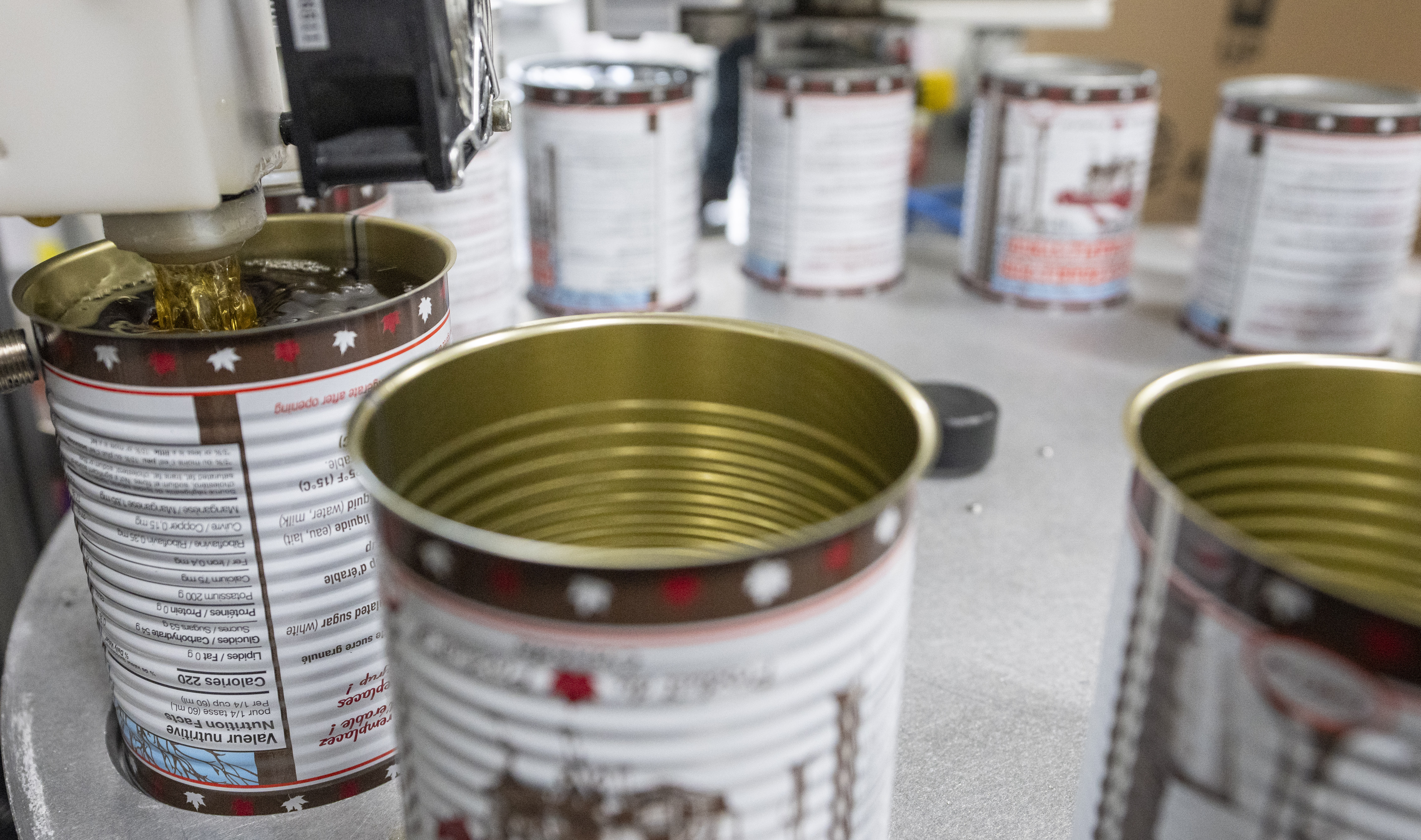
Quebec produces 72% of the world's maple syrup, but the quaint image of a tin bucket hanging from a snow-dusted tree is officially dead. The industry is currently undergoing a brutal, high-stakes transformation as producers pour millions into automation and massive territory expansions to satisfy a global craving that shows no signs of slowing down. This shift is not about tradition. It is about survival in a market where the Producteurs et productrices acéricoles du Québec (PPAQ)—the provincial cartel—has greenlit the release of millions of new taps to prevent a supply vacuum.
The math is simple and cold. Global demand for maple products has surged, partly driven by a post-pandemic shift toward natural sweeteners and a massive marketing push in European and Asian markets. To meet this, the PPAQ authorized the tapping of 7 million new trees in 2021, followed by another 7 million in 2023. We are witnessing the birth of "Big Maple," an era defined by vacuum sensors, reverse osmosis, and autonomous monitoring systems that look more like a Silicon Valley server farm than a family farm in the Beauce.
The End of the Bucket Era
The transition from gravity to vacuum was the first step, but the current technological leap is far more aggressive. Traditional sap collection relied on the freeze-thaw cycle to create natural pressure. Today, modern operations use high-power vacuum pumps to literally pull the sap out of the tree. This increases yield by roughly 5% to 15% without harming the long-term health of the timber.
However, vacuum lines are prone to leaks. A single squirrel bite or a fallen branch can drop the pressure across miles of tubing, effectively killing production for that section. In the past, a producer had to walk through hip-deep snow for hours to find a pin-sized hole. Now, they use smart sensors and GPS-linked pressure gauges that send an alert to a smartphone the moment a leak is detected.
Efficiency is the only way to offset the soaring cost of labor. Finding workers willing to trek through the Canadian wilderness in sub-zero temperatures is becoming an impossibility. By automating the monitoring process, a single operator can now manage 50,000 taps, a feat that would have required a small army thirty years ago.
Reverse Osmosis and the Energy War
The most significant change in the sugar shack isn't how the sap is collected, but how it is processed. Raw maple sap is mostly water, usually containing only about 2% sugar. To get to syrup, which is 66% sugar, you have to get rid of the water.
In the old days, you boiled it. This required massive amounts of wood or oil and an incredible amount of time. Modern producers now use industrial-scale reverse osmosis (RO) machines. These units use high-pressure membranes to separate the water molecules from the sugar molecules before the liquid ever touches a heating element.
Some of these machines can remove up to 90% of the water content. The resulting "concentrate" is much thicker and requires far less boiling time. This isn't just a matter of convenience. It is an economic necessity. With fuel prices fluctuating wildly, the ability to cut boiling time by 80% is the difference between a profitable season and a total loss.
The Strategic Reserve and Market Control
Quebec’s dominance is maintained through a controversial quota system and a massive strategic reserve located in Laurierville. This warehouse can hold nearly 100 million pounds of syrup in sterilized steel drums. It acts as a buffer against the volatility of Mother Nature.
If a season is too warm or too cold, the PPAQ releases syrup from the reserve to keep prices stable. This prevents the "boom and bust" cycles that plague other agricultural commodities. However, this stability comes at a price. Producers must pay into the system and follow strict production limits.
The recent push for expansion suggests the PPAQ is worried. They are no longer just competing with other Canadian provinces; they are watching the United States closely. New York, Vermont, and Maine have massive untapped maple resources. If Quebec cannot meet global demand, these states will fill the gap. Expansion is a defensive maneuver to protect a monopoly that has existed for decades.
The Cost of Expansion
Expansion is not as simple as sticking a plastic spout into a tree. The capital requirements are staggering. A mid-sized expansion of 20,000 taps can cost upwards of $300,000 in equipment alone, not including the purchase or lease of the land.
- Land acquisition: Competition for forested land is at an all-time high.
- Infrastructure: Miles of food-grade tubing and mainlines.
- Processing power: Upgrading evaporators and RO units to handle the increased volume.
- Permits: Navigating the PPAQ quota system and provincial environmental regulations.
Many younger producers are taking on massive debt loads to stay competitive. They are betting that the global appetite for "liquid gold" will continue to grow. It is a high-risk gamble on a product that is entirely dependent on a six-week window of perfect weather.
Climate Volatility and the Northern Shift
The elephant in the sugar shack is the changing climate. Maple production requires a very specific weather pattern: freezing nights and thawing days. As winters become shorter and more unpredictable, the "sweet spot" for production is moving north.
Southern Quebec producers are seeing their seasons start earlier and end more abruptly. In some years, the sap stops flowing before the equipment is even fully set up. Meanwhile, regions further north that were once considered too cold for viable production are now becoming the new frontier.
This geographical shift is forcing a rethink of how forests are managed. Producers are now looking at high-altitude land and northern territories that were previously the sole domain of the logging industry. The conflict between timber companies and syrup producers is real. A tree cut for lumber is a tree that can't be tapped for the next 40 years.
The Global Palate
The end consumer is changing. While North Americans still put syrup on pancakes, the real growth is in industrial food processing. Maple sugar is being used as a clean-label alternative to high-fructose corn syrup in everything from energy bars to high-end spirits.
This industrial demand requires consistency that traditional wood-fired boiling can't always provide. Buyers want a specific grade, a specific color, and a specific flavor profile every single time. Automation allows for this level of precision. By controlling the temperature and the concentration levels to a fraction of a degree, producers can "dial in" the exact product the market wants.
This homogenization is a double-edged sword. While it makes the product easier to sell globally, some worry that the soul of the product—the subtle variations in flavor caused by different soil types and boiling techniques—is being lost. We are moving toward a world where maple syrup is treated less like a seasonal harvest and more like a standardized chemical compound.
The Future of the Tap
The next phase of automation is already in testing: permanent tapping. Researchers are looking at ways to keep lines installed year-round without damaging the trees or risking bacterial growth. There is also talk of using vacuum systems that can adjust their pressure based on the internal sap flow of the tree, maximizing output while minimizing stress on the plant.
The industry is also looking at the byproduct of reverse osmosis: maple water. This is the pure, filtered water removed from the sap. For years, it was simply poured onto the ground. Now, it is being bottled and sold as a premium functional beverage. It is another way for producers to squeeze every possible cent out of their investment.
The reality of the Quebec maple industry is that the "shack" is now a factory. The romanticism of the past is being paved over by the necessities of a globalized economy. For the producers who can afford the technology, the rewards are immense. For those who cannot, the future looks as cold as a Canadian January.
If you are looking to understand the scale of this shift, look at the satellite maps of the Eastern Townships. The blue lines of plastic tubing now cover more ground than the roads. This is the new face of Canadian agriculture: high-tech, high-debt, and incredibly efficient.
Ask your supplier about their filtration and concentration ratios next time you buy in bulk.