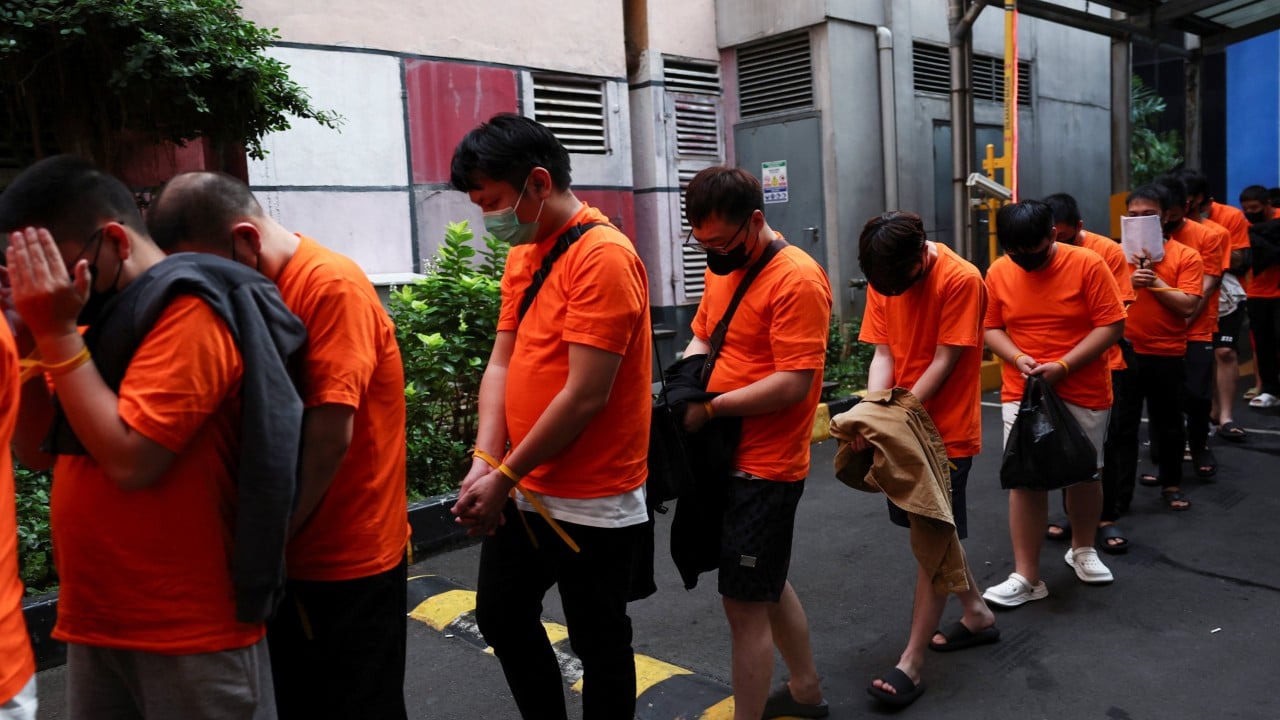
The headlines are lazy. They see a police raid in a Jakarta suburb, a few hundred seized smartphones, and a room full of trafficked workers, and they scream about a "new hub." They want you to believe that the geography of digital crime is shifting, as if scam syndicates are moving like a manufacturing plant looking for cheaper labor.
They are wrong. Indonesia isn't a new hub. It is a symptom of a borderless, decentralized infrastructure that the traditional law enforcement "raid-and-report" model is completely incapable of touching.
The mainstream narrative suggests that if we just shutter enough villas in Bali or office blocks in Batam, we win. That is a fantasy. Calling Indonesia the "new hub" implies there was an old hub that got "fixed." It ignores the reality that these syndicates operate as liquid networks. They don't have headquarters; they have nodes. And right now, the nodes are everywhere.
The Myth of the Static Syndicate
Most reporting on the recent Indonesian raids treats scam centers like brick-and-mortar businesses. It’s the "Al Capone" fallacy—the idea that there is a central boss and a physical vault you can kick down.
In reality, the infrastructure behind these "pig butchering" and crypto-scam operations is built on the same principles as the most successful Silicon Valley startups: high scalability, low overhead, and extreme decentralization. The "workers" arrested in Indonesia are often victims of human trafficking, but the architects—the ones holding the keys to the crypto-wallets and the server backends—are rarely in the same zip code, or even the same country.
When Indonesian authorities announce they’ve cleared a building, they haven't dismantled a syndicate. They’ve merely forced the network to re-route. Within forty-eight hours, the same scripts are being run by the same software on different hardware in a different jurisdiction.
I’ve watched investigators celebrate "massive wins" only to see the exact same scam ads reappear on social media before the press release even hits the wires. The physical location is the least important part of the equation.
The Broken Premise of Border Control
The media loves the "Indonesia" angle because it fits a neat, nationalist box. It allows other nations to feel secure, as if the threat is "over there."
People also ask: "Is it safe to travel to Indonesia given the rise in scam centers?"
This question is fundamentally flawed. The scam center next door has zero impact on your physical safety as a tourist, but the digital infrastructure those centers use is already in your pocket. The threat isn't geographic; it's algorithmic.
The focus on Indonesia ignores the fact that these syndicates are leveraging global platforms—Facebook, Telegram, WhatsApp, and Tinder—to find marks. The "hub" isn't a physical building in Jakarta; the hub is the social media feed of every vulnerable person on the planet. By focusing on the soil where the building sits, we ignore the digital pipes that make the building functional.
Why Law Enforcement is Losing the Data War
Police raids are great for photo ops. They look good on the evening news. But they are an analog solution to a high-frequency digital problem.
Consider the math of a raid:
- Intelligence gathering: 3–6 months.
- Operational planning: 1 month.
- Execution: 1 day.
- Total impact: A few hundred low-level operatives detained and some hardware seized.
Compare this to the syndicate’s math:
- Domain generation: 15 seconds.
- VoIP setup: 2 minutes.
- AI-driven lead generation: Constant.
- Total impact of raid: A temporary dip in "customer service" capacity.
We are fighting a war of attrition where the enemy has infinite respawns. The syndicates use what I call "Disposable Infrastructure." They expect to lose a site. They budget for it. The cost of a raid is a line item in their operational expenses, right next to the cost of purchasing lead lists.
The Talent Arbitrage of Southeast Asia
The reason we see an uptick in Indonesian activity isn't because of a lack of policing. It’s because of a surplus of connectivity.
Indonesia has one of the highest social media penetration rates in the world. Its youth are digitally native, often underemployed, and highly mobile. The syndicates aren't "choosing" Indonesia because it's a lawless frontier; they are choosing it because the digital literacy required to run these scams is now a commodity.
If you can use a smartphone, you can be trained to run a scam script. This is talent arbitrage in its purest, most cynical form. The syndicates are simply moving to where the "labor" is cheapest and most accessible. If Indonesia tightens its grip, the syndicates will move to the Philippines. If the Philippines cracks down, they will move to Vietnam.
The problem isn't the "hub." The problem is the ease with which human desperation can be plugged into a global scam machine.
Stopping the Money, Not the People
If you want to actually disrupt these networks, stop looking at the buildings and start looking at the liquidity.
The competitor's article focuses on the "raids." It should be focusing on the Tether (USDT) flows. These syndicates don't use Indonesian Rupiah. They don't use traditional banks for their primary movements. They use stablecoins because they are fast, borderless, and—if handled correctly—hard to claw back.
The real battlefield isn't a villa in North Jakarta; it's the off-ramps where crypto is converted back into fiat currency.
Every time a scammer convinces a victim to send $50,000 in crypto, that money enters a laundering machine that spans five different exchanges and a dozen "mule" accounts. Law enforcement is currently trying to catch water with a net. Until there is a coordinated, global effort to blacklist syndicate-linked wallets and pressure exchanges to freeze assets in real-time, the raids in Indonesia are just theater.
The Brutal Reality of "Victim-Operatives"
One of the most nuanced points missed by the "hub" narrative is the blur between perpetrator and victim.
Most of the people arrested in these Indonesian raids were lured there with promises of high-paying tech jobs. Once they arrive, their passports are seized, and they are forced to work under threat of violence. When the police burst in, these people are handcuffed and treated as criminals.
By labeling Indonesia a "scam hub," we dehumanize the labor force that is being trafficked to staff these centers. We treat it as a law-and-order issue when it is, in fact, a human rights catastrophe.
I’ve interviewed survivors who were beaten for failing to meet "sales targets." They aren't "scammers" in any traditional sense; they are slaves in a digital plantation. Calling the country a hub places the blame on the geography rather than the predatory global systems that allow human trafficking to flourish in the 21st century.
The Counter-Intuitive Solution
Stop asking how we can shut down scam centers. Start asking how we can make scamming unprofitable.
This requires three things that no one wants to do because they are expensive and difficult:
- Platform Accountability: Social media giants must be held liable for the scam ads they profit from. If a syndicate can buy $10,000 worth of "investment opportunity" ads targeting elderly people, the platform is an accomplice. Period.
- Financial Friction: We need to end the era of "instant, irreversible" transfers for large sums of money. We traded security for convenience, and the scammers are the only ones winning that trade.
- Digital Literacy Overhauls: We are teaching people how to code when we should be teaching them how to spot a social engineering attack. The most advanced firewall in the world is useless if the person behind the screen is convinced they’re talking to a soulmate or a genius investor.
Stop Following the Flawed Compass
If you are waiting for the "authorities" to solve this by raiding more office parks, you are going to be waiting a long time. The raids will continue. The headlines will repeat. And the scams will only get more sophisticated as they integrate generative AI to replace the trafficked workers.
The "Indonesia" narrative is a distraction. It's a way for us to pretend that the problem is localized, manageable, and "over there."
It’s not. The syndicate isn't in a building. It's in the code, the coins, and the very apps you use to read about the raids.
Delete the idea of hubs. Start looking at the network.