Diplomatic visits are the high-fructose corn syrup of international relations: sweet, cheap, and ultimately rot your ability to see reality.
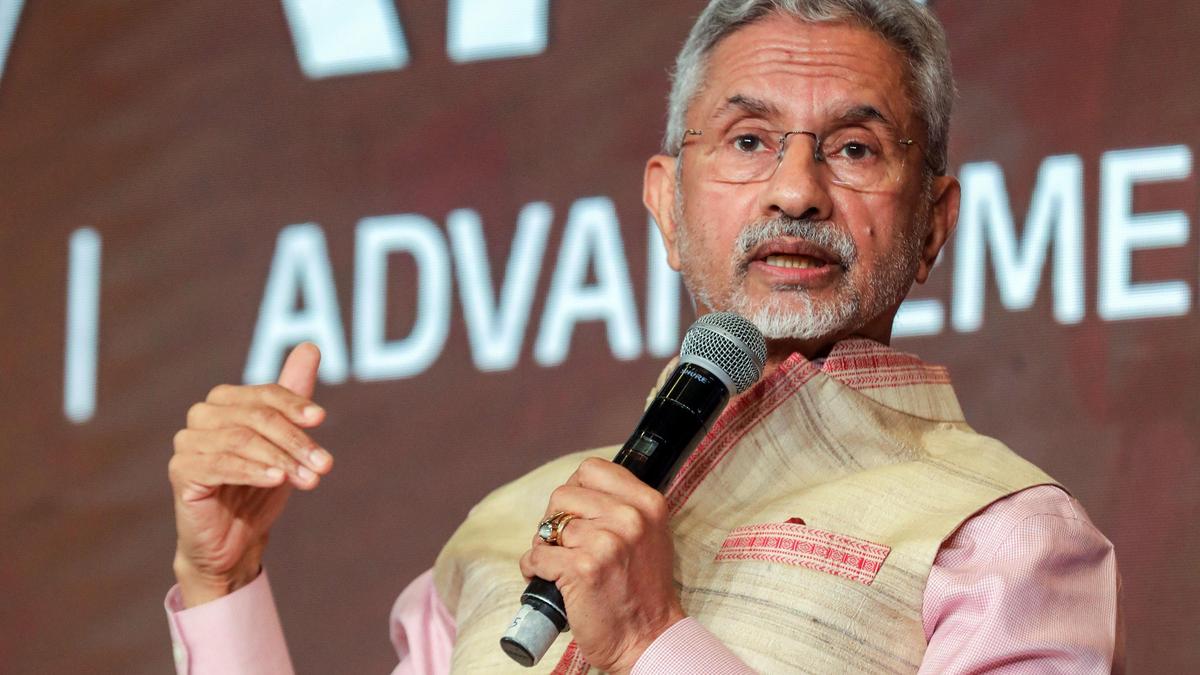
As External Affairs Minister S. Jaishankar touches down in Brussels for another round of high-level handshakes, the usual suspects in the commentariat are dusting off the same tired scripts. They talk about "shared democratic values." They whisper about "de-risking" from China. They point to the Trade and Technology Council (TTC) as if a committee ever moved a mountain.
It is theater. It is a performance for an audience that wants to believe the world is consolidating into neat, value-based blocs.
Here is the cold, hard truth that nobody in the Berlaymont or the South Block wants to admit: The India-EU relationship is not "stalled" or "evolving." It is fundamentally mismatched. We are witnessing two entities trying to play the same game with two different sets of physics. Until we stop pretending this is a "natural alliance," both sides will continue to waste billions in diplomatic capital on a partnership that exists mostly on paper.
The Myth of the "Values-Based" Trade Deal
The most persistent delusion in this discourse is that the Free Trade Agreement (FTA) is just one more round of negotiations away from reality.
The FTA has been "on the verge" of success since 2007. If a business project failed to deliver for nearly two decades, the board would have fired the CEO and liquidated the assets. Yet, we treat the India-EU FTA as a holy grail.
The EU is a regulatory superpower. It exports standards, not just goods. It wants to impose carbon taxes through the Carbon Border Adjustment Mechanism (CBAM) and enforce grueling labor and environmental standards on its partners.
India, conversely, is a developmental superpower. It needs growth at a scale that European bureaucrats, obsessed with the "Precautionary Principle," cannot comprehend. When Brussels demands "sustainability clauses," New Delhi hears "protectionism with a green coat of paint."
I have sat in rooms where these "standards" are discussed. European negotiators often approach India like a wayward student who needs to adopt the "European Way" to earn the privilege of market access. India, now the world's fifth-largest economy and the fastest-growing major power, has zero interest in being anyone’s student.
The mismatch is structural:
- Agriculture: The EU’s subsidies are a non-starter for India’s massive agrarian base.
- Data Sovereignty: India wants to own its data; the EU wants to govern it via GDPR-style extraterritoriality.
- Labor Mobility: India wants its professionals to move freely; Europe’s internal politics are currently a bonfire of anti-immigration sentiment.
Stop asking when the FTA will be signed. Start asking why we are still trying to force a square peg into a circular hole.
The China Distraction
The common refrain is that "the China factor" will force India and the EU together. This is a classic case of the "enemy of my enemy" logic failing in the face of economic reality.
Yes, both are wary of Beijing. But Europe’s "de-risking" is a luxury of the rich. They want to trim the edges of their dependency while maintaining the core of their luxury exports to the Chinese middle class. Germany’s industrial heartland literally cannot function without the Chinese market.
India’s situation is existential. It shares a disputed, militarized border with China. For India, "de-risking" isn't a policy tweak; it’s a national security imperative.
When Jaishankar talks to his counterparts in Brussels, they are speaking two different languages of power. Europe views power through the lens of institutional rules and "strategic autonomy"—a phrase that means everything and nothing. India views power through the lens of Realpolitik and multi-alignment.
India will buy Russian oil, conduct naval drills with the US, and trade with the EU simultaneously. Europe’s "with us or against us" undertones regarding the Ukraine conflict have revealed the deep fracture in this "strategic partnership." Brussels wants a deputy; New Delhi wants a multipolar world where Europe is just one of many stops.
The TTC Is a Paper Tiger
The Trade and Technology Council is often cited as the "engine" of the new relationship. It targets semiconductors, AI, and green tech.
In reality, the TTC is where difficult decisions go to die in a committee. While the US is throwing hundreds of billions at the CHIPS Act and the Inflation Reduction Act (IRA), the India-EU tech collaboration is mostly about "aligning regulatory frameworks."
You do not build a semiconductor ecosystem by aligning frameworks. You build it with capital, talent, and raw materials.
- India has the talent and the growing demand.
- The EU has the high-end machinery (ASML) and the capital.
But instead of a grand bargain, we get "working groups." Europe is too fragmented to offer a unified industrial policy that matches India’s "Make in India" speed. By the time a Brussels committee approves a joint venture, the technology has usually moved on two generations.
The "Democracy" Trap
We need to kill the idea that being "the world's two largest democracies" matters for trade or defense.
History is a graveyard of democratic alliances that collapsed because interests diverged. Interests, not values, govern the 21st century. The EU’s frequent critiques of India’s internal affairs—from Kashmir to press freedom—are not "constructive dialogue." They are friction points that convince the Indian leadership that Europe is an unreliable, moralizing partner.
If the EU wants to be a serious player in the Indo-Pacific, it needs to stop acting like a global HR department.
The Uncomfortable Advice for Investors
If you are waiting for a "breakthrough" in Brussels to green-light your India-EU strategy, you are already losing.
The real action isn't happening at the EU level. It’s happening at the bilateral level. India’s ties with France are a template for success precisely because they ignore the Brussels bureaucracy. Paris and New Delhi talk about jets, subs, and nuclear reactors—tangible power assets. They don't get bogged down in "harmonizing digital standards" for artisanal cheese.
The "Strategic Partnership" at the EU level is a hedge. It’s something politicians do to look busy.
What Actually Works:
- Bypass Brussels: Focus on the "minilateral" agreements. Deals with France, Germany (specifically on defense), and the Nordic countries (on green tech) are where the ROI lives.
- Expect Friction: The Carbon Border Adjustment Mechanism (CBAM) is going to be a trade war catalyst. If your supply chain relies on India-EU exports, price in a 20-30% "regulatory friction" tax over the next five years.
- Watch the Middle East: The India-Middle East-Europe Economic Corridor (IMEC) is the only project that actually matters. It bypasses the "values" talk and focuses on the only thing that binds these regions: moving cargo faster and cheaper.
The Failed Premise of "Convergence"
The "People Also Ask" sections of the internet are full of queries like "Is India moving closer to the EU?"
The premise is flawed. It assumes a linear progression toward a unified "West-plus-India" front. That world doesn't exist. India is moving closer to India. It is becoming a pole of its own.
The EU, meanwhile, is struggling to decide if it wants to be a museum, a regulatory body, or a geopolitical actor. It cannot be all three. As long as the EU tries to treat India as a "partner" that must eventually adopt European norms, this 2-day visit in Brussels is just another expensive lunch.
The "lazy consensus" says this visit is a step forward. The reality is that we are walking in circles in a very ornate hallway.
The India-EU relationship isn't breaking. It was never built on a solid foundation to begin with. It is a marriage of convenience where both parties are constantly looking at their watches and checking their phones.
Stop looking for a "new era" in the joint statements. The real story is the quiet, bilateral decoupling from the "strategic" facade in favor of cold, hard, transactionalism.
Go where the money and the metal are. Ignore the speeches.
Would you like me to analyze the specific impact of the CBAM regulations on Indian steel exports to the EU?