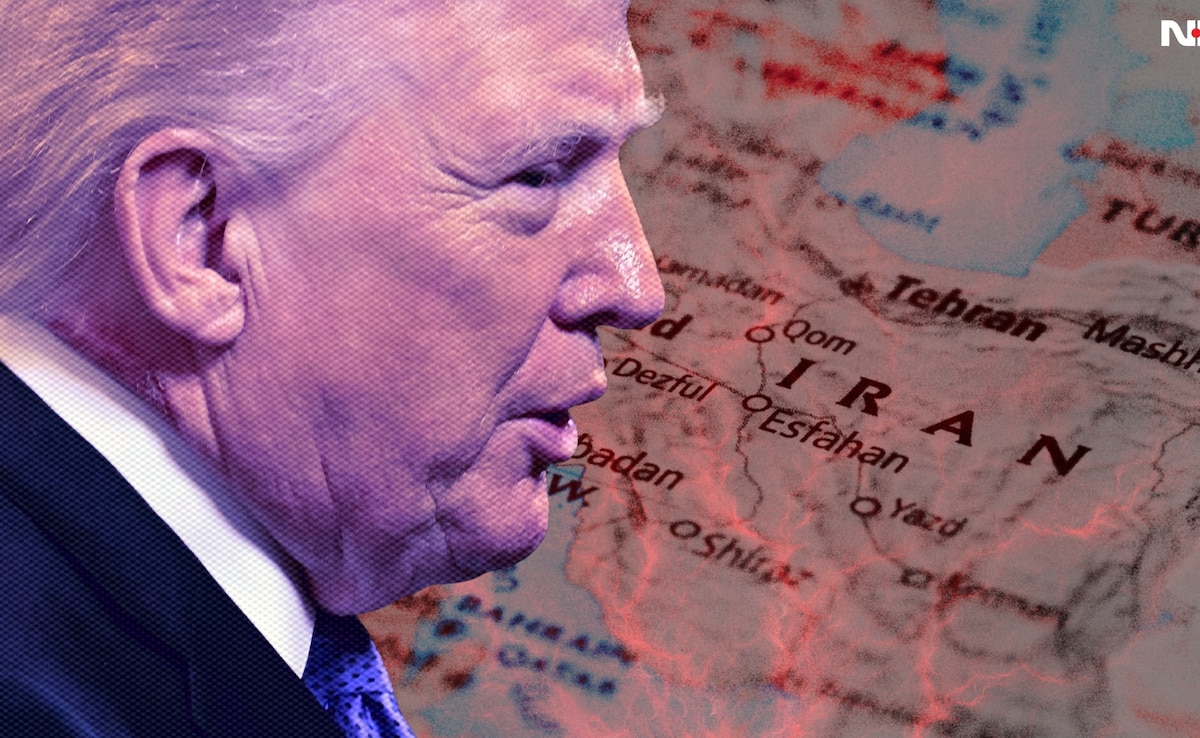
The headlines speak of a stalemate. They suggest that Washington has three neat military options waiting on a desk, like cards in a game of chance. This narrative is not merely wrong. It is dangerous.
As of late April 2026, the United States is not debating a selection of military paths forward. It is locked in a grinding, high-stakes war of attrition that began in late February with Operation Epic Fury. The conflict is not a static pause between rounds; it is a fluid, violent reality defined by a U.S. naval blockade, an Iranian counter-blockade, and a global economy buckling under the strain of a closed Strait of Hormuz. The assumption that the White House can simply toggle between kinetic strikes, containment, or diplomacy ignores the momentum of the war itself.
When the conflict erupted on February 28, the objectives were presented with clarity: degrade Iran’s nuclear program, neutralize its ballistic missile capabilities, and address the destabilizing influence of the Islamic Revolutionary Guard Corps. Two months later, those goals remain distant. The regime in Tehran has absorbed massive infrastructure damage, lost its Supreme Leader in the opening salvos, and faces internal unrest. Yet, the leadership architecture persists. The military establishment has pivoted from conventional defense to asymmetric denial, forcing the United States into a prolonged, costly deployment with no obvious off-ramp.
The Reality of the Blockade
To speak of options is to ignore the geography of the current crisis. The war has effectively moved from the skies and missile silos to the water. Following the failure of the Islamabad talks, the administration moved to seal off Iranian ports. This is not a surgical operation. It is a massive naval undertaking that drains resources and risks unintended escalation every single day.
Every ship intercepted in the Gulf of Oman carries the potential for a direct confrontation. The U.S. Navy is stretched thin, guarding tankers while simultaneously attempting to keep global energy prices from spiraling into a total market collapse. Iran, for its part, has turned the Strait of Hormuz into a minefield of both literal munitions and political leverage. Tehran knows that it cannot win a traditional naval engagement against the full might of the U.S. fleet. It does not need to win. It only needs to keep the strait contested long enough to fracture the international coalition supporting the blockade.
This is the first failure of the simplistic "three options" narrative. There is no option that preserves the status quo of global trade without direct, sustained military presence. The blockade is not a tool of pressure; it is a permanent tax on the global economy. Each day the ships remain anchored, the pressure on the U.S. administration to find a breakthrough—or to walk away—increases.
The Myth of Surgical Precision
Analysts often talk about "targeted strikes" as if they are a clean alternative to total war. The past two months have proven otherwise. The strikes carried out in March and April against Iranian energy infrastructure and military sites were intended to be precise. They were designed to avoid civilian casualties while crippling the regime's ability to wage war.
However, warfare against a state with the resources and depth of Iran is rarely precise. The strikes destroyed radar systems, satellite terminals, and launch facilities, yet they also pushed the regime into a corner. When a state perceives an existential threat, its calculus changes. Tehran has not retreated. Instead, it has doubled down on its proxy networks, utilizing the remaining, scattered remnants of its missile capabilities to harass U.S. forces and regional partners.
The belief that the U.S. can "mow the grass"—systematically degrading capabilities without triggering a regional conflagration—ignores the reality of the Iranian decision-making process. The hardliners, now firmly in control under Commander Ahmad Vahidi, view these strikes as validation of their ideology. They see the conflict not as a disaster to be mitigated, but as an opportunity to mobilize the population against an external invader. The more the U.S. strikes, the more it validates the regime's long-standing narrative of martyrdom and resistance.
The Internal Fracture
The most overlooked factor in the current strategic assessment is the fragility of the Iranian regime itself. We see reports of internal rifts, of hardliners arguing over the merits of secrecy in negotiations, and of a population ground down by economic misery and government brutality. There is a temptation to view this as a clear path: pressure the regime until it snaps, then wait for the successor.
This is a profound misreading of authoritarian resilience. When the regime killed thousands during the protest crackdown in early 2026, it did not demonstrate weakness. It demonstrated a brutal capacity to survive. The current economic deterioration, accelerated by the blockade and the internet shutdown, is indeed putting the regime under immense strain. But there is no organized opposition ready to step into the vacuum. A state collapse in Iran would not lead to a pro-Western democracy. It would lead to a period of chaotic, violent instability that could make the current conflict look orderly by comparison.
The U.S. administration is effectively betting on a collapse it cannot control and might not survive in its current political form. If the regime falls, who secures the nuclear material? Who keeps the remnants of the ballistic missile program from leaking to the black market? These are not hypothetical risks. They are the primary anxieties of military planners who understand that "winning" the war could trigger a catastrophe that spans decades.
The Global Dimension
The conflict is not contained within the Middle East. It acts as a massive, distorting force on global power dynamics. Russia and China, while initially cautious, have watched the United States pour billions of dollars and significant military focus into this regional theater.
Beijing and Moscow are not merely observers. They are the architects of the "non-aligned" trade routes that Iran is attempting to exploit to bypass the blockade. By providing a lifeline, however thin, they ensure that the U.S. campaign of maximum pressure never reaches the point of total asphyxiation. They are content to let the United States bear the cost, the risk, and the political blowback of maintaining the regional order.
This is where the idea of "three options" truly falls apart. Any decision to escalate or even to sustain the current intensity of the war must be weighed against the potential for direct competition with China or Russia elsewhere. The U.S. military is already stretched thin. It does not have the luxury of viewing Iran in a vacuum. It is playing a game of global endurance, and the longer it focuses on the Middle East, the more it creates openings for its peer competitors in the Pacific and Eastern Europe.
The Reality of the Exit
There is no elegant way out of this conflict. The U.S. finds itself in a position where the cost of leaving is the loss of regional credibility and the potential resurgence of a hostile, nuclear-capable Iran. Yet, the cost of staying is a permanent, unpredictable drain on American resources and a constant risk of escalation.
The negotiators in Islamabad are working against a clock that is ticking faster than the diplomats realize. Iran's latest proposals are not concessions; they are stalling tactics designed to test the limits of U.S. patience. They believe they can outlast the American political will, betting on a fatigued electorate and a distracted leadership in Washington.
The truth, stripped of the comforting language of strategic options, is that the United States is holding a position that cannot be maintained indefinitely. The blockade will eventually fail or force a total war. The diplomatic tracks will either yield a compromise that satisfies neither side or collapse entirely. There is no middle ground where the current tension can be safely managed.
The conflict has changed the regional order, but it has not broken the regime. It has depleted the Iranian arsenal, but it has not stripped the leadership of its will. It has unified the American political establishment behind a vague goal, but it has not provided a roadmap for what follows once the shooting stops.
We are watching the end of an era of managed tensions. Whatever happens next will not be the result of a calculated selection of pre-packaged options. It will be the result of the inevitable collision between a superpower that refuses to lose and a regime that has decided it has nothing left to gain by surrendering. The pause, the ceasefire, and the talk of negotiations are merely the calm before the next, unavoidable surge of violence.



